Lưu ý: Bản dịch của mục này hiện đang được kiểm tra chất lượng, vì vậy một số nội dung tạm thời chỉ hiển thị bằng tiếng Anh.
Mục từ này chưa được dịch sang ngôn ngữ của bạn, vì vậy nội dung gốc được hiển thị bên dưới.
and
The primary function is additive, acting as a linguistic bridge that joins elements without creating a hierarchy. It suggests a simultaneous existence or a simple list where items are given equal weight.
When used to connect actions, it often implies a chronological sequence (first A, then B), moving the narrative forward in time.
In conditional contexts, it functions as a logical trigger. Unlike 'if', which sets a premise, 'and' in these structures creates a feeling of inevitable consequence or a promise of result.
💬Trò chuyện
Hey, are you going to optimize your screen time and actually touch grass today?
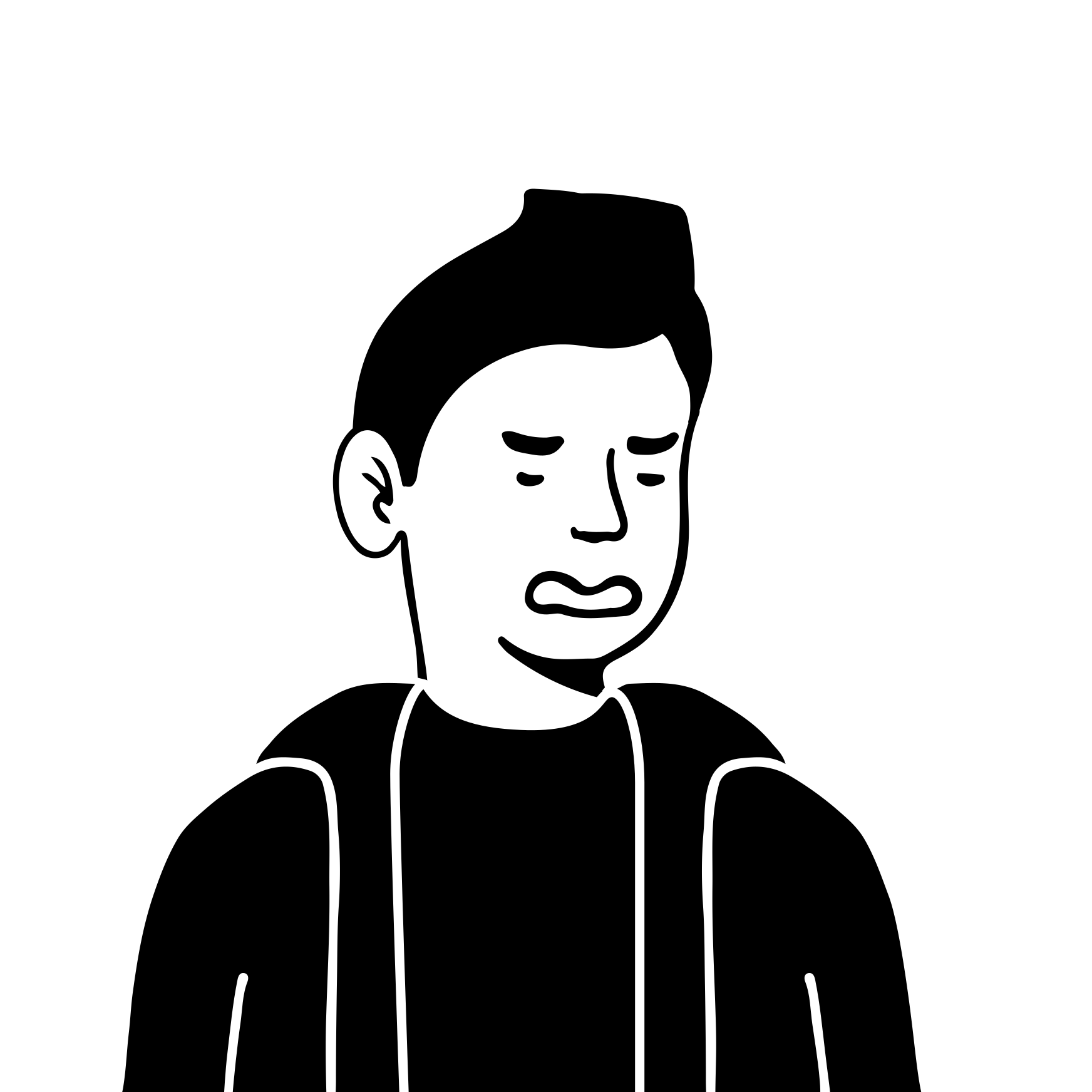

Bruh, I already gamed with Ryan outside. That counts.
Ý nghĩa
Ví dụ
Cats and dogs.
Cats and dogs.
Thành ngữ & Tục ngữ
live and learn
realize that you can always learn more, especially from mistakes
pros and cons
the advantages and disadvantages of something
trial and error
a method of solving a problem by trying various solutions until one works
wear and tear
damage that happens to something because it is used normally
Bối cảnh văn hóa
In our daily lives, we are often trapped by the logic of the binary. We are told we must choose: are you a creative or a logical thinker? Are you a leader or a follower? This is the realm of "or," a word that creates boundaries and forces a choice, often stripping away the complexity of the human experience.
However, there is a profound psychological shift that occurs when we embrace the power of and. In psychology and philosophy, this is often linked to the concept of dialectics—the ability to hold two seemingly contradictory ideas in one's mind at the same time. When we replace "or" with "and," we move from a mindset of limitation to one of expansion. Instead of asking, "Should I be professional or authentic?" we ask, "How can I be professional and authentic?"
This linguistic shift has real-world implications in fields like design thinking and emotional intelligence. By using and, we allow for the coexistence of opposites. It is the foundation of the "both/and" approach, which encourages synthesis over compromise. In a compromise, both sides lose something to reach a middle ground. In a synthesis—powered by and—both sides are integrated to create something entirely new and more robust.
Even in the world of computing, the "AND" gate is a fundamental building block of digital logic, requiring multiple conditions to be true simultaneously before an output is produced. This mirrors the human capacity for complexity. To live a full life is to accept that we can be happy and sad, confident and terrified, an expert and a beginner, all at once. By leaning into the word and, we stop dividing our identities into fragments and start seeing ourselves as a cohesive, multifaceted whole. It is the smallest word in the English language, yet it carries the heaviest weight in how we perceive possibility.
Từ nguyên
The word 'and' comes from Old English 'and', which itself derives from Proto-Germanic 'enda' or 'anda'. It is related to words in other Germanic languages like German 'und' and Dutch 'en'. Its primary function has always been to connect words, phrases, or clauses, indicating addition or continuation.