Note: The translation for this entry is currently under quality review. Some content is temporarily displayed in English only.
strand
When used as a noun to describe hair or thread, "strand" is a countable noun. You can have one strand or several strands. As a verb, the word is most commonly used in the passive voice (e.g., "was stranded") to describe people who are stuck somewhere without a way to leave. The meaning of "the shore" (noun) is quite poetic and rare in modern daily conversation; you will mostly find it in literature or older poems.
💬Trò chuyện
DAVID THE AIRPORT SHUTTLE NEVER CAME I AM STRANDED AT GATE B
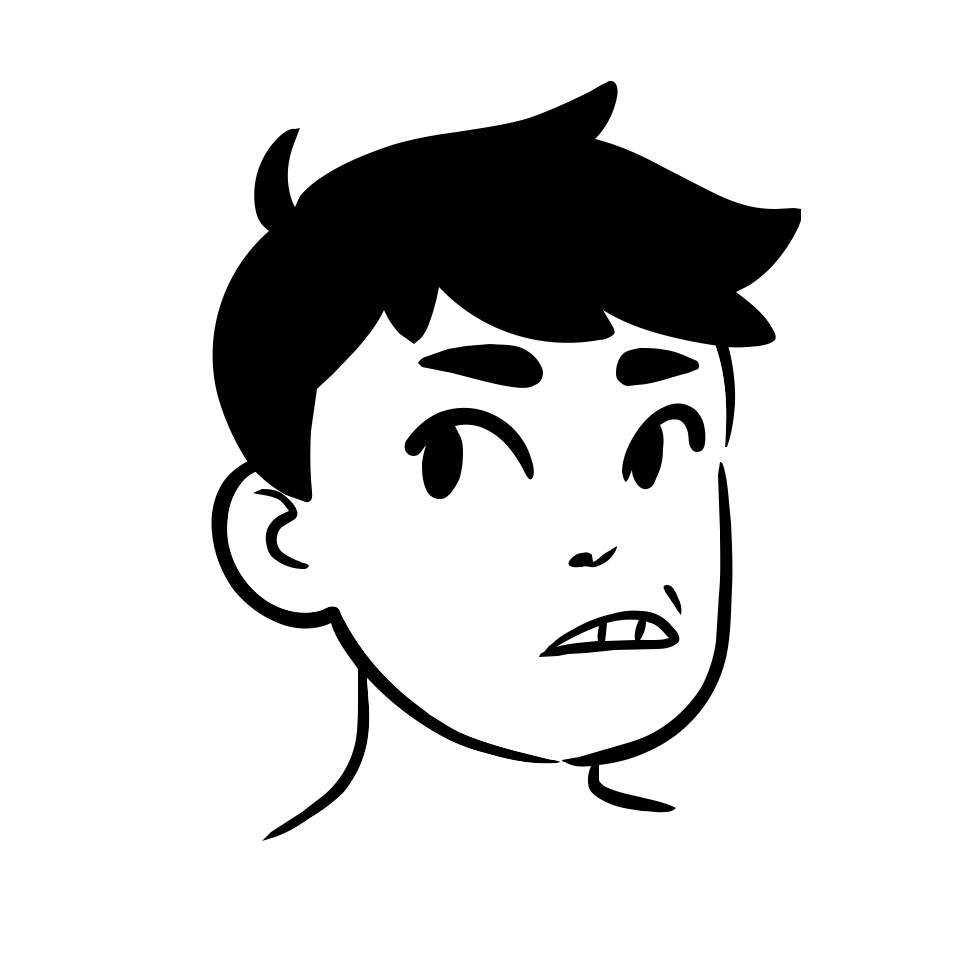
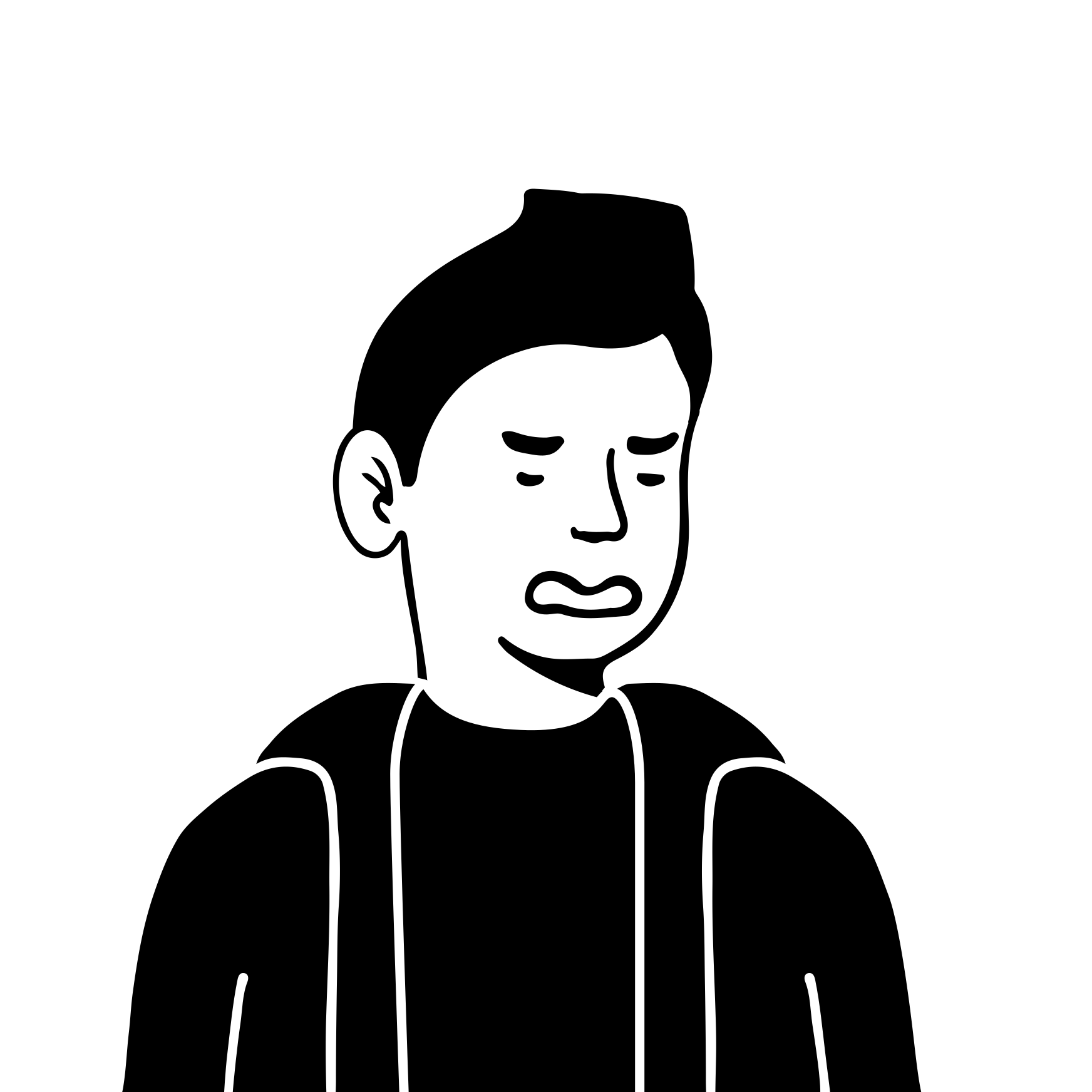
Mom, I'm in a sync. Just hail an Uber and we'll touch base later.
Ý nghĩa
A single thin length of thread, wire, or fiber from which a rope, cable, or hair is made.
"A single strand of hair was found at the crime scene."
The shore of a sea or lake; a beach.
"They walked along the sandy strand as the sun began to set."
To leave someone or something aground or in a helpless position, especially by departing without them.
"The sudden cancellation of the flight stranded hundreds of passengers at the airport."
To be left aground or stranded; to run ashore.
"The small boat stranded on the sandbar during low tide."