Note: The translation for this entry is currently under quality review. Some content is temporarily displayed in English only.
nurture
/ˈnɜːɹ.tʃəɹ/
💬Casual Conversation
David just said we need to really 'nurture' the new client. Seriously?
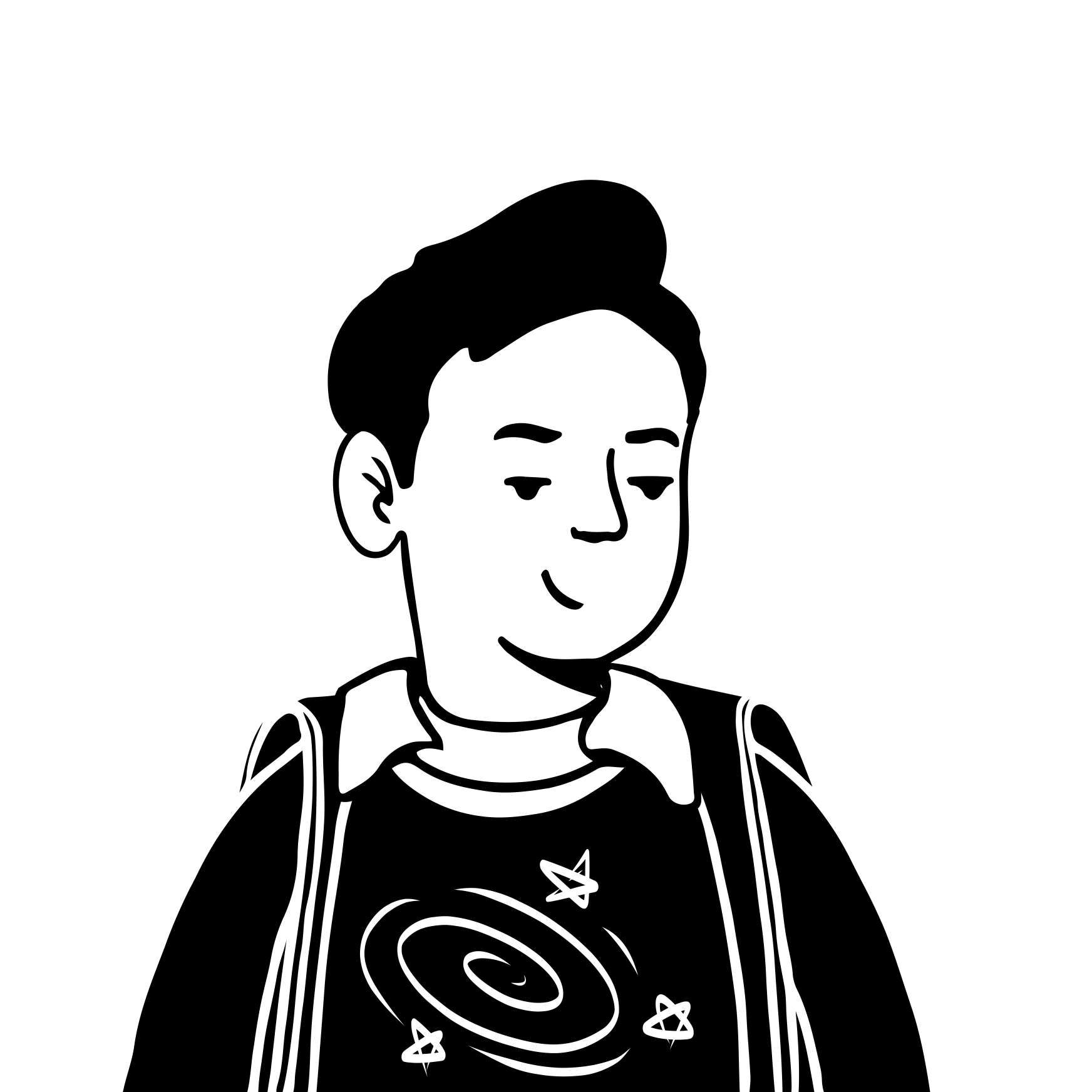

Ugh, what does that even entail? Another happy hour I gotta bail on?
Cultural Context
The age-old debate of nature versus nurture has captivated thinkers for centuries. But what if the prevailing wisdom about how much our upbringing truly shapes us is, well, a little off? Enter the 'nurture assumption,' a concept that gained significant traction in the latter half of the 20th century, largely thanks to the groundbreaking work of behavioral geneticists like Robert Plomin.
The nurture assumption is, in essence, the widespread belief that parents and the home environment are the primary forces that mold a child's personality, intelligence, and behavior. It’s intuitive, right? We spend our formative years under the direct influence of our caregivers, learning their values, imitating their actions, and absorbing their attitudes. This leads us to believe that the way our parents raise us is the most critical factor in determining who we become.
However, decades of twin studies, adoption studies, and other behavioral genetics research have consistently challenged this notion. These studies reveal a surprising truth: genetic influences on personality and behavior tend to be far more significant than environmental influences unique to the family. While identical twins raised apart often share remarkable similarities, studies comparing identical twins raised together show that their differences are often more pronounced than expected, suggesting that the shared home environment doesn't 'level the playing field' as much as we might think.
This doesn't mean parenting is unimportant. It simply suggests that the specific ways parents try to nurture their children might not have the long-lasting, deterministic impact we often assume. Instead, factors like genetics, peer groups, schooling, and even random life events seem to play a larger role in shaping our individual trajectories. Understanding this can be liberating. It means we aren't solely products of our parents' best or worst efforts. It allows us to take ownership of our own development and recognize that while our origins are important, the power to grow and change lies within us, influenced by a complex interplay of factors far beyond the home.