HomeDictionaryTthing

Note: The translation for this entry is currently under quality review. Some content is temporarily displayed in English only.

thing

/θɪŋ/

The word "thing" is one of the most common words in English because it is very general. You can use it when you do not know the specific name of an object or when you want to talk about a general idea. Because it is so general, using "thing" too often in formal writing (like an essay or a business report) can make your writing seem vague. In those cases, try to use more specific words like "object," "issue," or "situation." In casual conversation, people often use the phrase "the thing is..." to introduce the most important point or a problem they are facing.

💬Casual Conversation

🎬Tuesday afternoon in a quiet office breakroom.
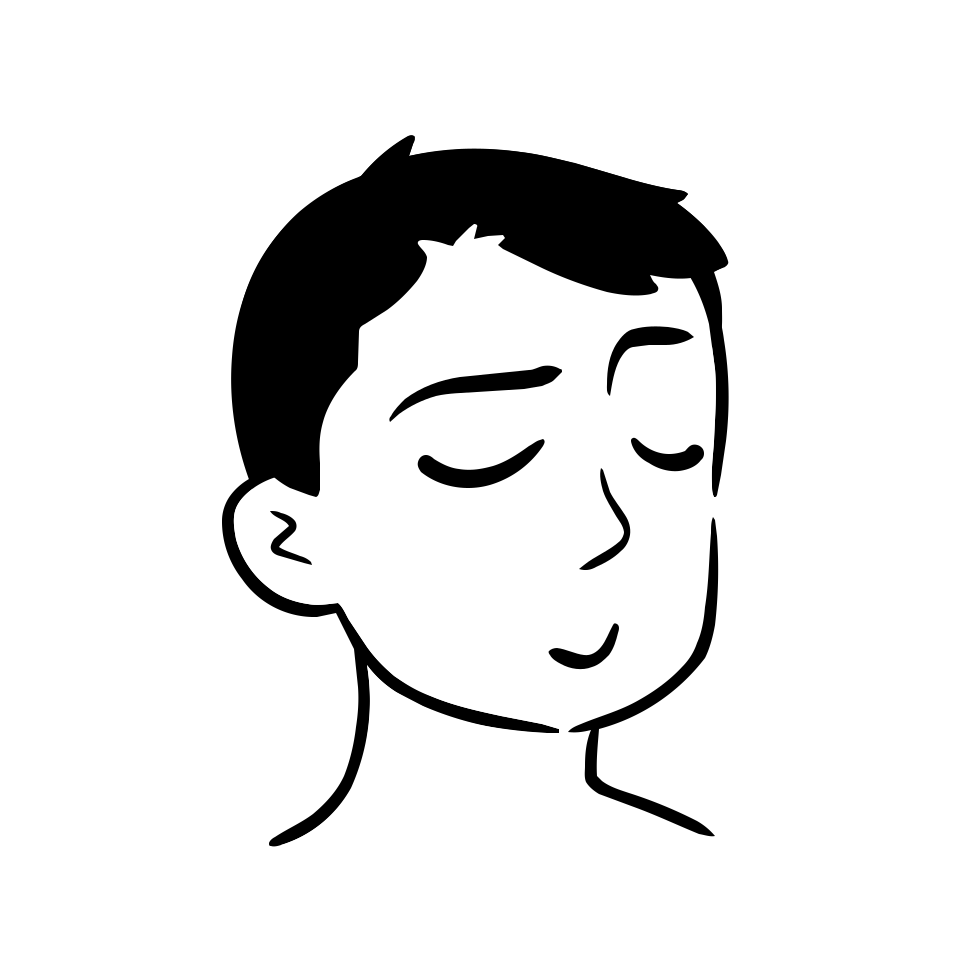
Jessica

Did you finally finish that one thing for David?

Jessica
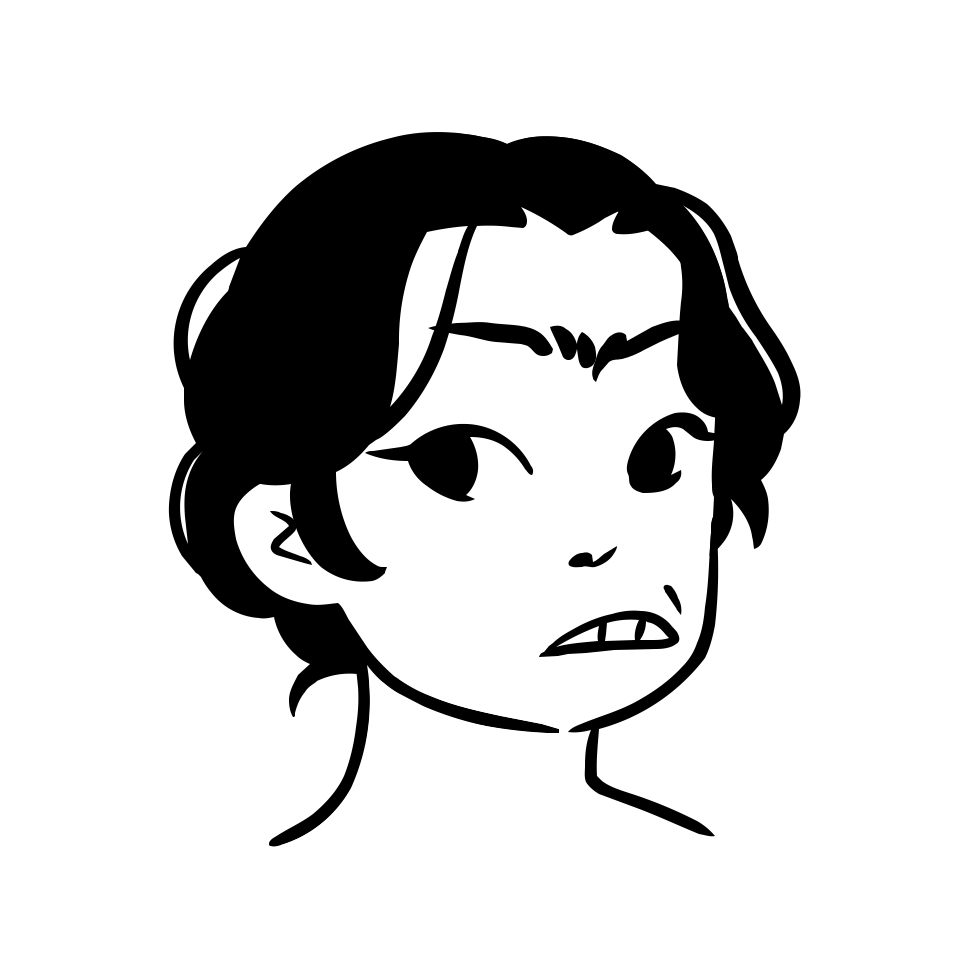
Mark
Mark

I'm still figuring it out. Total head-scratcher.

💡
Jessica uses 'thing' to refer to a specific task or action (Definition 2), while Mark uses the idiom 'head-scratcher' to describe something confusing, reflecting his slacker persona and weaponized incompetence.

Meanings

noun

An object that one may see, touch, or remember.

"What is that strange thing on the table?"

noun

An idea, quality, action, or circumstance.

"The most important thing is to stay calm during the exam."

noun

A situation, event, or set of circumstances.

"It was a wonderful thing to see the family reunited."

Examples

What is that weird thing in the box?

I just can't believe this one thing happened!

One more thing, please pass the salt.

Stop doing that thing with your face right now!

Is this thing supposed to be making that noise?

It is just a small thing, don't worry about it.

Look, the most important thing here is your safety.

I forgot one last thing in the car.

You always do this thing where you ignore me!

I have a thing about people who chew loudly.

Collocations & Compounds

one thing

A single specific idea, quality, or object.

living thing

An organism that possesses life (an object one may see and touch).

the thing is

Used to introduce the most important point or circumstance in a situation.

strange thing

An unusual object, event, or occurrence.

another thing

An additional idea, action, or item to be considered.

Idioms & Sayings

the thing is

used to introduce the most important point or a problem in a situation

do your own thing

to behave or act in a way that is characteristic of yourself, regardless of others

a thing of the past

something that no longer happens or exists

it's a thing

used to indicate that something has become a recognized trend or common practice

one thing leads to another

a series of events happens where each event causes the next

Cultural Context

The Thing in the Shadows: The Psychology of the Unnamed Horror

In the realm of horror and suspense, there is a terrifying psychological phenomenon where the most frightening thing is not what is shown, but what remains hidden. This is the essence of 'the thing'—an entity defined by its lack of definition. From H.P. Lovecraft's cosmic horrors to John Carpenter's 1982 masterpiece "The Thing," the horror stems from the ambiguity of the object or creature. When we cannot categorize a thing, our brains enter a state of high alert known as cognitive dissonance.

Human psychology is wired for pattern recognition. We feel safe when we can label an object: 'that is a dog,' 'that is a tree.' However, when we encounter something that defies classificationa shape-shifting entity or a nameless voidthe mind begins to fill in the gaps with its own deepest fears. The "thing" becomes a mirror for our personal anxieties. In Carpenter's film, the horror isn't just the gore; it is the paranoia of not knowing which person is actually a human and which is the thing. This transforms a physical monster into a psychological weapon, attacking the very foundation of trust.

This concept extends to the 'Uncanny Valley,' where something looks almost human but not quite. That slight deviation creates a visceral feeling of revulsion because the brain registers it as a "wrong thing." Whether it is a ghost in a gothic novel or an alien parasite, the power of the unnamed thing lies in its flexibility. By refusing to give the monster a name or a fixed form, the storyteller forces the audience to imagine the worst possible scenario.

Ultimately, our obsession with the mysterious thing reveals a fundamental truth about human nature: we are more afraid of the unknown than the known. A dragon is scary, but a "thing" that could be anyone or anything is an existential nightmare. It reminds us that despite all our scientific progress, there are still shadows in the corners of our perception where the undefined resides.

Etymology

Derived from Old English 'thing', meaning 'an object, matter, or lawsuit', originating from Proto-Germanic 'thingą'. The root originally referred to a 'judicial assembly' or 'council' (still seen in the Icelandic 'Althing'), evolving from the concept of a legal matter discussed at an assembly to any general matter, idea, or physical object.

Related Words

Last Updated: May 22, 2026Report an Error