person
/ˈpɜːsən/
The term primarily serves as the standard designation for a single human entity, emphasizing individuality over biological classification. It is frequently used to categorize people based on specific traits or roles within a social structure. In a more nuanced sense, it can refer to the outward manifestation of a personality or a curated social identity. This usage highlights the distinction between a private self and the public image presented to the world.
Countable as an individual.
💬Casual Conversation
I need a person who can actually handle the synergy here.
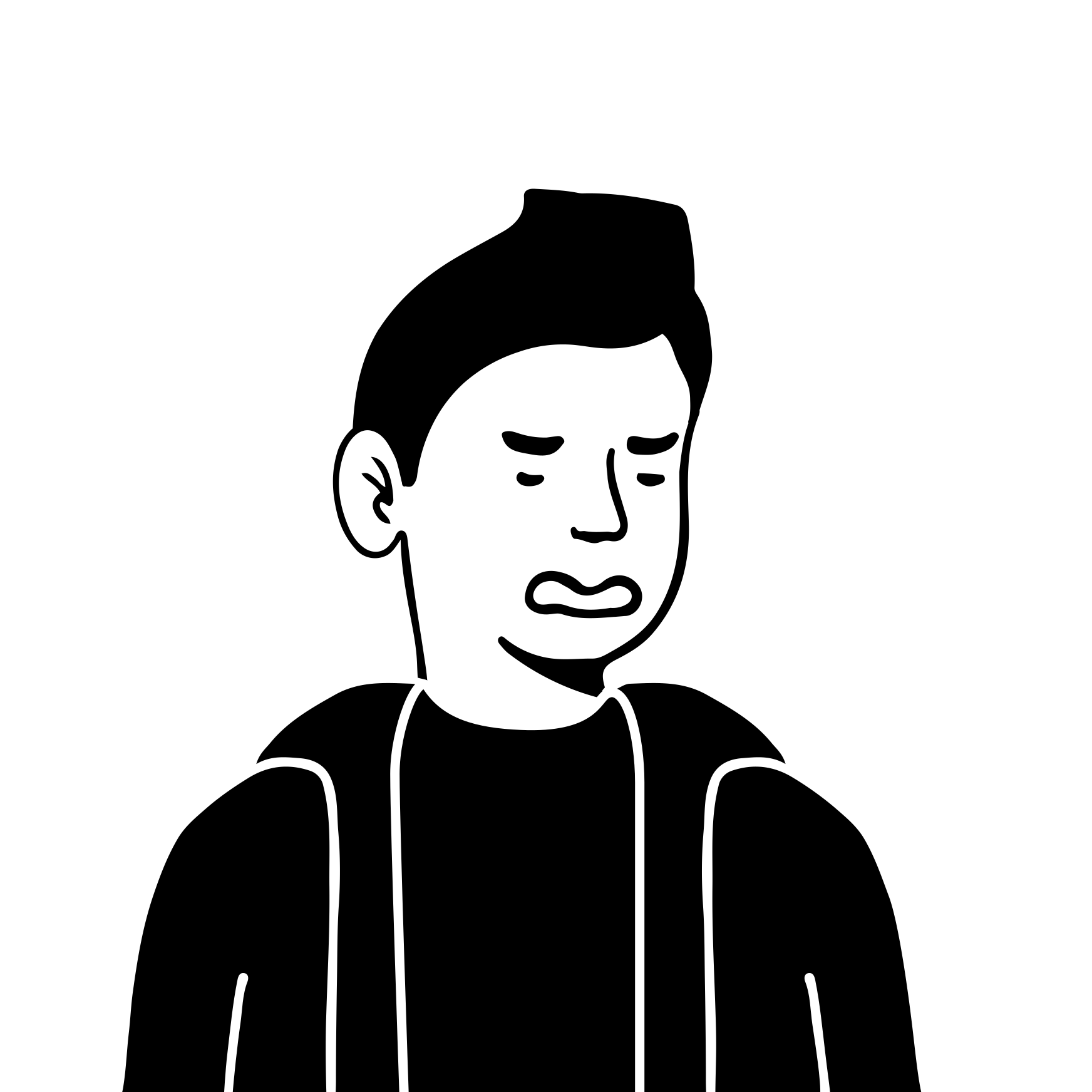

I'm a total people person, boss. Just let me vibe.
Meanings
A human being regarded as an individual.
"She is a very kind person who always helps others."
Examples
I just want to be a better person for you.
Look, I am just one person, I can't do everything!
Is there any person here who can actually speak French?
You are the most incredible person I have ever met.
Wait, who is that person standing right behind you?
I swear, that person is trying to sabotage my entire career!
Sir, you are a person of great influence in this city.
I am a private person, so please stop asking questions.
Why is that person still staring at me like that?
Collocations & Compounds
private person
someone who keeps their life secret
He has always been a very private person.
responsible person
someone reliable and trustworthy
We need a responsible person to manage the funds.
natural person
a human being as opposed to a legal entity
The contract specifies that the signer must be a natural person.
public person
someone well-known in society
Being a public person means sacrificing your privacy.
kind person
someone who is friendly and generous
She is such a kind person to strangers.
Idioms & Sayings
a people person
someone who is sociable and good with others
Sarah is a real people person.
Cultural Context
The word person has a fascinating origin that reveals how we perceive identity. In ancient Roman theater, a persona was a physical mask worn by an actor to project a specific character to the audience. This literal mask evolved into a metaphorical concept: the role an individual plays in society.<br><br>This transition from a physical object to a legal and philosophical category created the foundation of modern law. The concept of a legal person allows entities like corporations to have rights and responsibilities similar to a human being, separating the biological human from the legal persona. This distinction is what allows a company to sign a contract or be sued in court independently of its owners.<br><br>Psychologically, we all maintain multiple personas. We are one person at work, another with our parents, and yet another when we are alone. The tension between our true inner self and the persona we present to the world is a central theme in Jungian psychology. By understanding that the word person began as a mask, we can better appreciate the complex dance between our private identities and our public roles.
Etymology
Derived from Old French 'persone', which stems from the Latin 'persona' meaning 'mask' (originally used by actors in theater), itself derived from the Greek 'prosopon' ('face, mask'). The term evolved from referring to a theatrical role or mask to describing the legal and social identity of an individual.