man
[mɛn]
Esta palavra serve como uma ponte entre uma identidade biológica específica e uma identidade coletiva universal. Quando utilizada para descrever um único indivíduo adulto do sexo masculino, ela atua como um substantivo concreto que indica gênero e idade. Já quando descreve a espécie, torna-se um substantivo abstrato, frequentemente aparecendo sem artigo para representar a totalidade da experiência humana.
Como verbo, o termo deixa de lado a identidade para focar na utilidade. Ele descreve o ato de ocupar uma função operacional, independentemente do gênero da pessoa que realiza a tarefa. Essa transição de substantivo para verbo evidencia a associação histórica entre o conceito de masculinidade e os deveres de trabalho, defesa e supervisão operacional.
💬Casual Conversation
Do you think the man in the portrait is a real person?
Você acha que o homem no retrato é uma pessoa real?

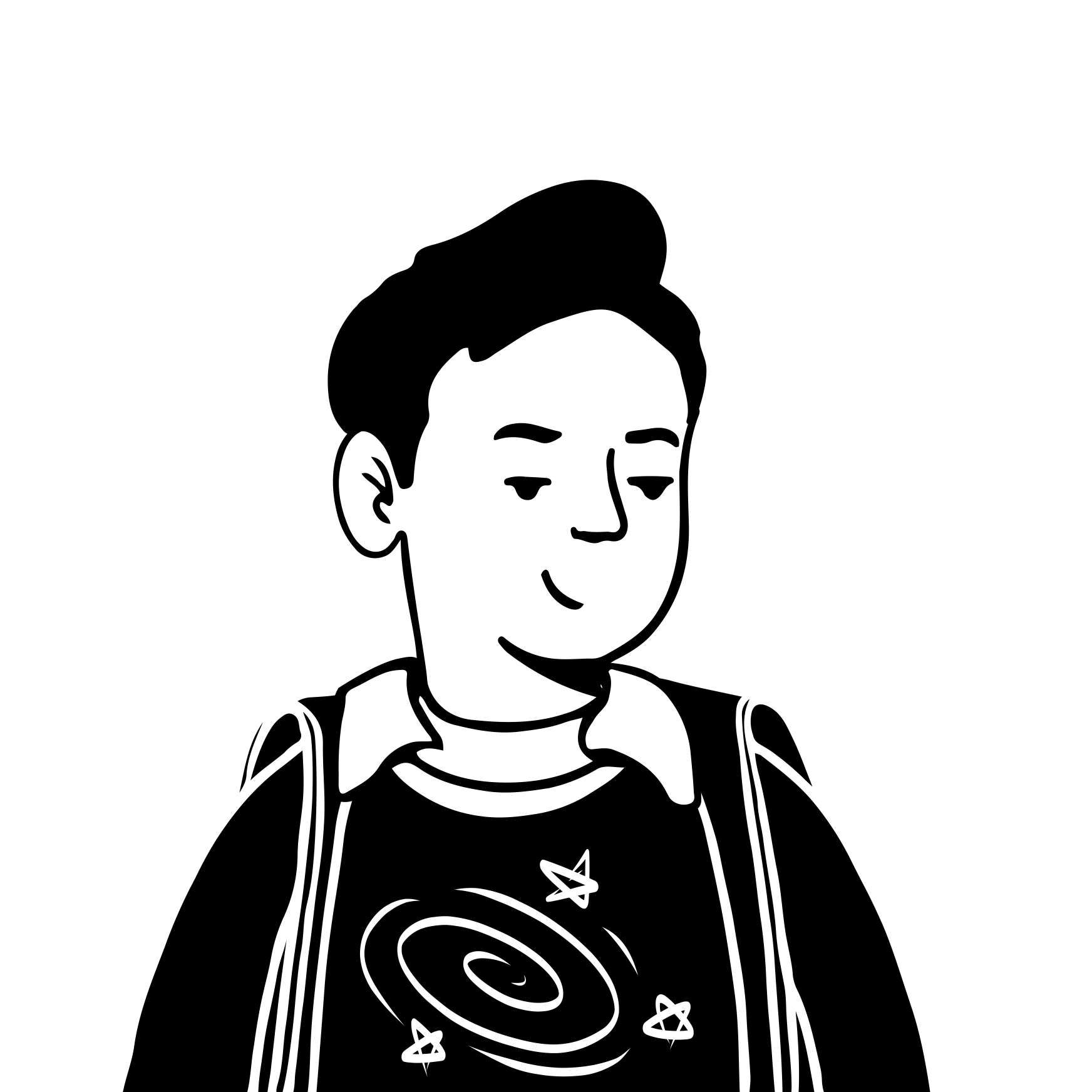
Probably, though he looks like a stylized version of man as a whole.
Provavelmente, embora ele pareça uma versão estilizada do homem como um todo.
Meanings
ser humano adulto do sexo masculino
The man walked his dog through the park.
O homem passeou com seu cachorro pelo parque.
ser humano, independentemente do gênero
The first man to step on the moon changed history.
O primeiro homem a pisar na lua mudou a história.
pessoa considerada corajosa, forte ou confiável
He proved himself to be a real man during the crisis.
Ele provou ser um homem de verdade durante a crise.
pequeno objeto, como uma peça ou marcador, usado em um jogo de tabuleiro
Move your man to the third square on the board.
Mova sua peça para o terceiro quadrado do tabuleiro.
fornecer a um local ou equipamento a equipe necessária
They need more volunteers to man the registration desk.
Eles precisam de mais voluntários para operar a mesa de inscrição.
servir como tripulação de um navio ou aeronave
The sailors worked quickly to man the battle stations.
Os marinheiros trabalharam rapidamente para guarnecer as estações de combate.
Examples
The old man sat on the bench for hours.
O velho homem ficou sentado no banco por horas.
The evolution of man is a central theme in biology.
A evolução do ser humano é um tema central na biologia.
We need more staff to man the booths at the trade show.
Precisamos de mais funcionários para operar os estandes na feira comercial.
The guards were told to man the walls until dawn.
Os guardas foram instruídos a guarnecer as muralhas até o amanhecer.
Collocations & Compounds
middle-aged man
homem de meia-idade
The middle-aged man looked tired.
O homem de meia-idade parecia cansado.
family man
homem de família
He is a true family man who never misses a recital.
Ele é um verdadeiro homem de família que nunca perde um recital.
common man
homem comum
The politician claimed to speak for the common man.
O político afirmou falar em nome do homem comum.
man of honor
homem de honra
He proved himself to be a man of honor during the trial.
Ele provou ser um homem de honra durante o julgamento.
man hour
homem-hora
The project will take approximately five hundred man hours to complete.
O projeto levará aproximadamente quinhentas horas-homem para ser concluído.
Phrasal Verbs
man up
virar homem
He needs to man up and admit his mistake.
Ele precisa virar homem e admitir seu erro.
Idioms & Sayings
man of his word
homem de palavra
He said he would help, and he is a man of his word.
Ele disse que ajudaria, e ele é um homem de palavra.
a man of the world
um homem do mundo
After years of traveling, he became a man of the world.
Após anos viajando, ele se tornou um homem do mundo.
Cultural Context
The Measure of Man: From Biological Specimen to Philosophical Ideal
man para descrever a raça humana migrou amplamente para termos mais inclusivos, como "humanidade".