Nota: La traducción de esta entrada está actualmente en revisión de calidad, por lo que parte del contenido se muestra temporalmente solo en inglés.
Esta entrada aún no se ha traducido a tu idioma, así que se muestra el original a continuación.
startling
/ˈstɑː.tl̩.ɪŋ/
Describes a shock that is sudden and sharp, often evoking a physical reaction like a jump or a gasp. It differs from 'surprising' by implying a higher intensity and a level of unexpectedness that demands immediate attention.
While it can be used for negative shocks, it frequently carries a neutral or even positive connotation in intellectual contexts—such as a "startling revelation"—where the surprise comes from a sudden shift in understanding or an unexpected piece of evidence.
In professional or academic writing, it is used to highlight anomalies or striking contrasts without being as emotionally charged as 'appalling' or 'terrifying'.
💬Conversación Casual
It's frankly startling how many of your tasks are still untouched on the shared doc.

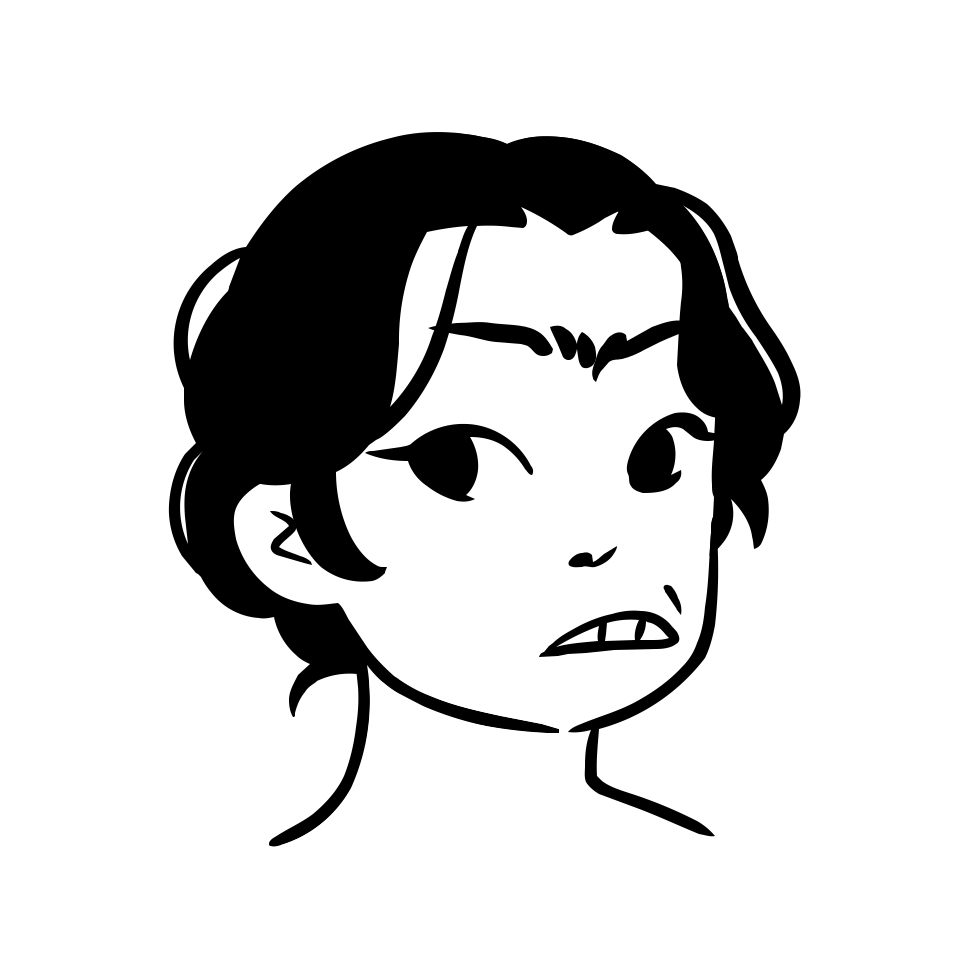
Oh, was that due this week? Thought I had more time.
Meanings
Examples
The results of the clinical trial were startling.
It is startlingly quiet in the library today.
That is a startling realization to have mid-meeting.
The detective found a startling clue hidden in the attic.
She looked startlingly different with her hair dyed neon blue.
The historical records reveal a startling truth about the dynasty.
I cannot believe how startlingly fast the project is moving.
Collocations & Compounds
startling effect
The impact or impression caused by being surprising.
startling contrast
A difference between two things that is very noticeable and surprising.
startling discovery
A finding that is very surprising or shocking.
The startling discovery in the archaeological dig changed everything.
startling increase
A rise in number or amount that is very surprising.
Etymology
The word 'startling' originates from the Middle English verb 'startlen', meaning 'to leap suddenly, to move convulsively, to frighten'. This verb itself is likely of imitative origin, suggesting the sudden, sharp sound or movement associated with being startled. It entered the language around the 14th century. The adjective form 'startling' developed from this verb, describing something that causes such a sudden movement or fright.