work
/wɜːk/
The term encompasses a vast spectrum of activity, ranging from the professional employment used to secure a livelihood to the internal mechanical operation of a device. It distinguishes itself from "play" or "leisure" by the presence of a goal-oriented objective or a requirement of exertion. In a scientific or physical sense, the word describes the transfer of energy that occurs when an object is moved over a distance by an external force. This technical application removes the connotation of effort or boredom associated with employment, focusing instead on the measurable result of force applied to mass.
💬Casual Conversation
I'm trying to leverage our synergy to work better.
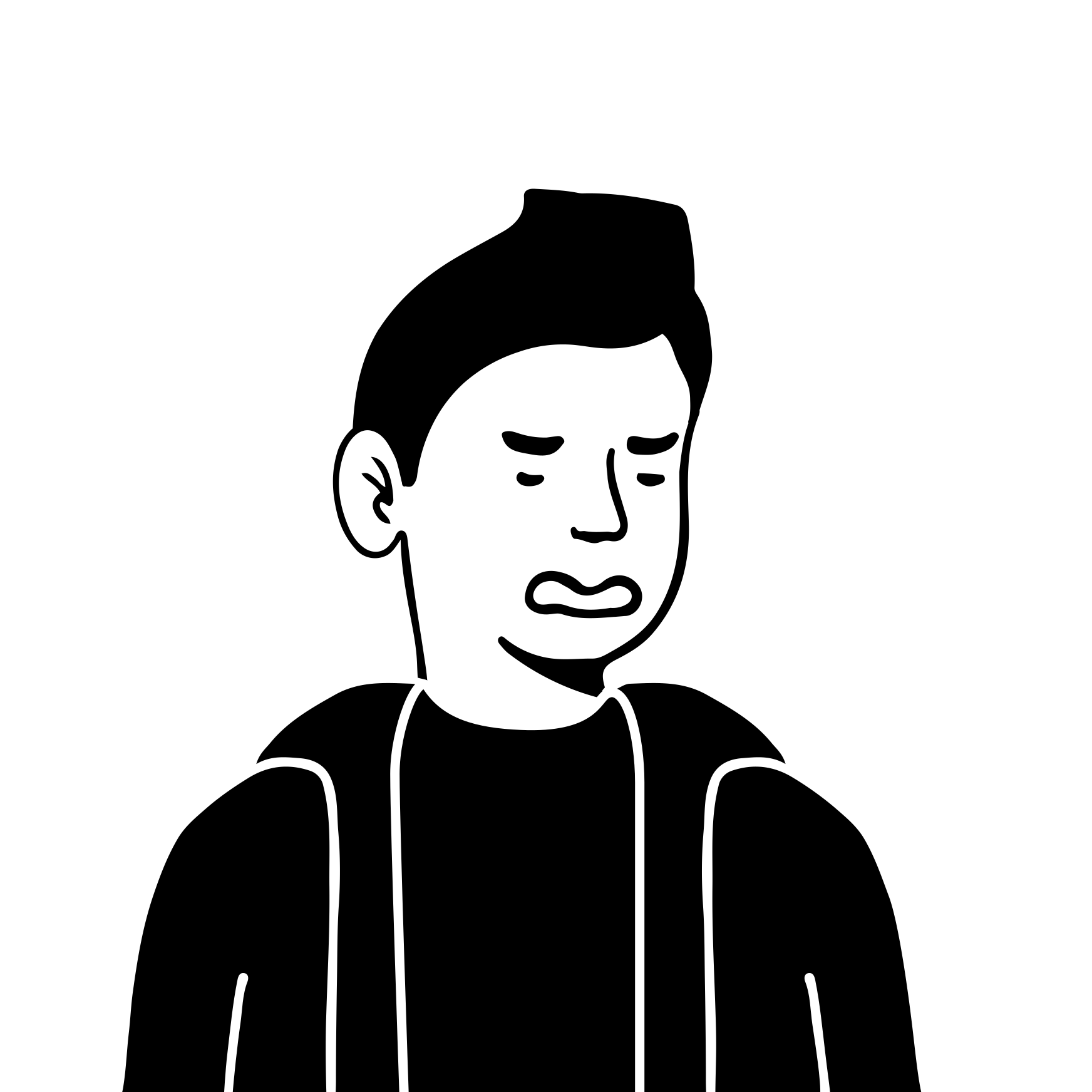
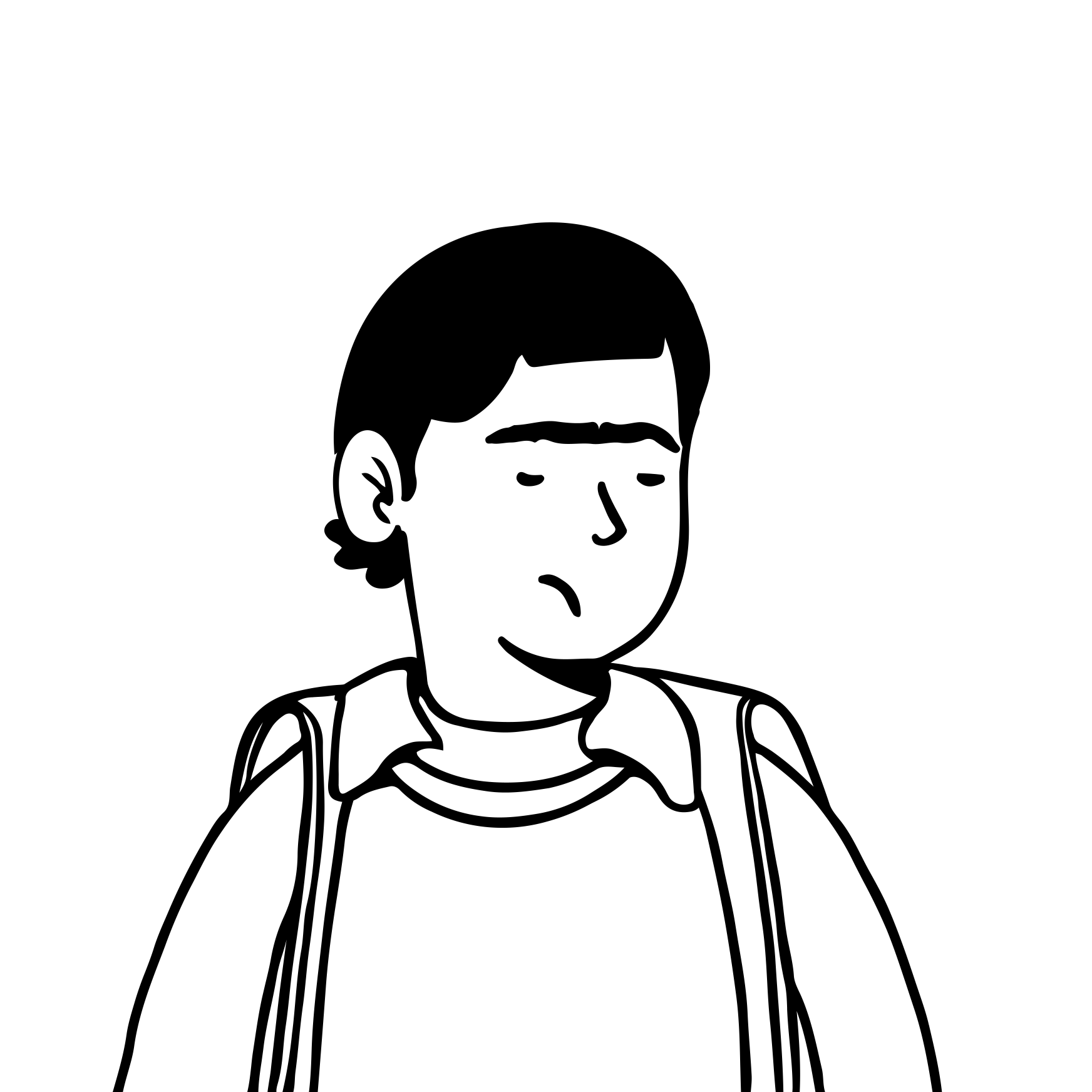
Right on, boss. I'll get right on that after my nap.
Meanings
Examples
I have to work late tonight to finish the report.
Look, I just can't work under these conditions!
Does this old printer even work anymore?
You're really going to work me into the ground, aren't you?
I'm sorry, but I simply cannot work with that budget.
Wait, so you actually work for the government?
I've been working on this puzzle for three hours!
Stop talking and just work on your presentation!
Collocations & Compounds
work hard
put in a lot of effort
You have to work hard to get a promotion.
work remotely
do a job from home
Many tech companies allow employees to work remotely.
work overtime
work beyond standard hours
I had to work overtime to meet the deadline.
work together
collaborate
We need to work together to solve this.
work shifts
work in rotating time slots
Nurses often work shifts to cover the hospital 24/7.
Phrasal Verbs
work out
to exercise or to solve a problem
I try to work out at the gym every morning.
work up
to gradually develop a feeling or appetite
I managed to work up the courage to ask for a raise.
work through
to deal with a complex issue step by step
We need to work through the details of the contract.
work off
to get rid of something through effort
He tried to work off his stress by running.
work around
to find a way to bypass a problem
We found a way to work around the software bug.
Idioms & Sayings
work your fingers to the bone
work extremely hard
She worked her fingers to the bone to provide for her kids.
all in a day's work
a normal part of a job
Dealing with angry customers is all in a day's work.
work like a charm
function perfectly
The new update works like a charm.
put in the work
invest the necessary effort
If you want to win, you have to put in the work.
work a miracle
achieve something seemingly impossible
The mechanic worked a miracle on my old engine.
Cultural Context
The concept of work transitioned from a necessary burden to a moral imperative during the Reformation. Max Weber, a pioneering sociologist, theorized that the Protestant work ethic—specifically within Calvinism—transformed the act of working into a sign of spiritual salvation.<br><br>Before this shift, labor was often viewed as a punishment or a simple means of survival. However, the belief that worldly success and diligent labor were evidence of one's election by God created a psychological drive for extreme productivity and frugality. This cultural evolution laid the groundwork for the rise of modern capitalism, as the accumulation of wealth became a byproduct of a religious duty to work tirelessly.<br><br>Today, this legacy persists in the "hustle culture" of the 21st century. While we no longer view a promotion as a sign of divine favor, the internalized pressure to constantly work and optimize every hour of our lives is a direct descendant of this historical shift. The transition of work from a physical necessity to a core component of individual identity continues to shape how we define success and self-worth in a globalized economy.