huge
This term conveys a sense of overwhelming scale that often exceeds the expected or normal limit. It is frequently used to emphasize a dramatic impact or a shocking quantity, carrying a more emotive and subjective weight than the clinical precision of words like massive or immense. While it can describe physical dimensions, it is equally common in abstract contexts to describe success, failure, or influence. In casual conversation, the word often functions as an intensifier to signal strong approval or disapproval, such as describing a mistake as huge to highlight its severity. It lacks the architectural or geological connotations of colossal, making it versatile enough for both a tiny insect and a global corporation.
💬Casual Conversation
I think the huge server crash just wiped my slides.
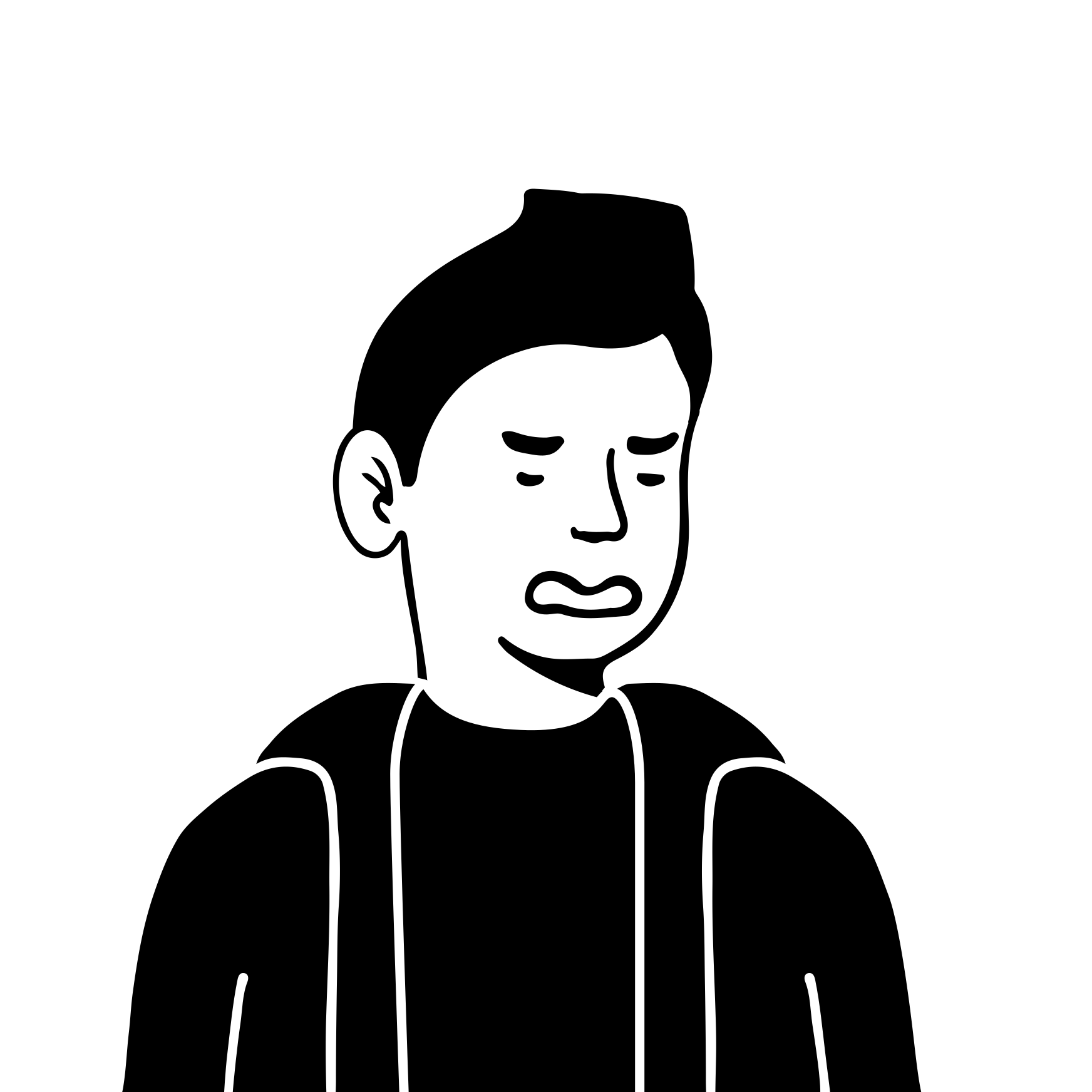
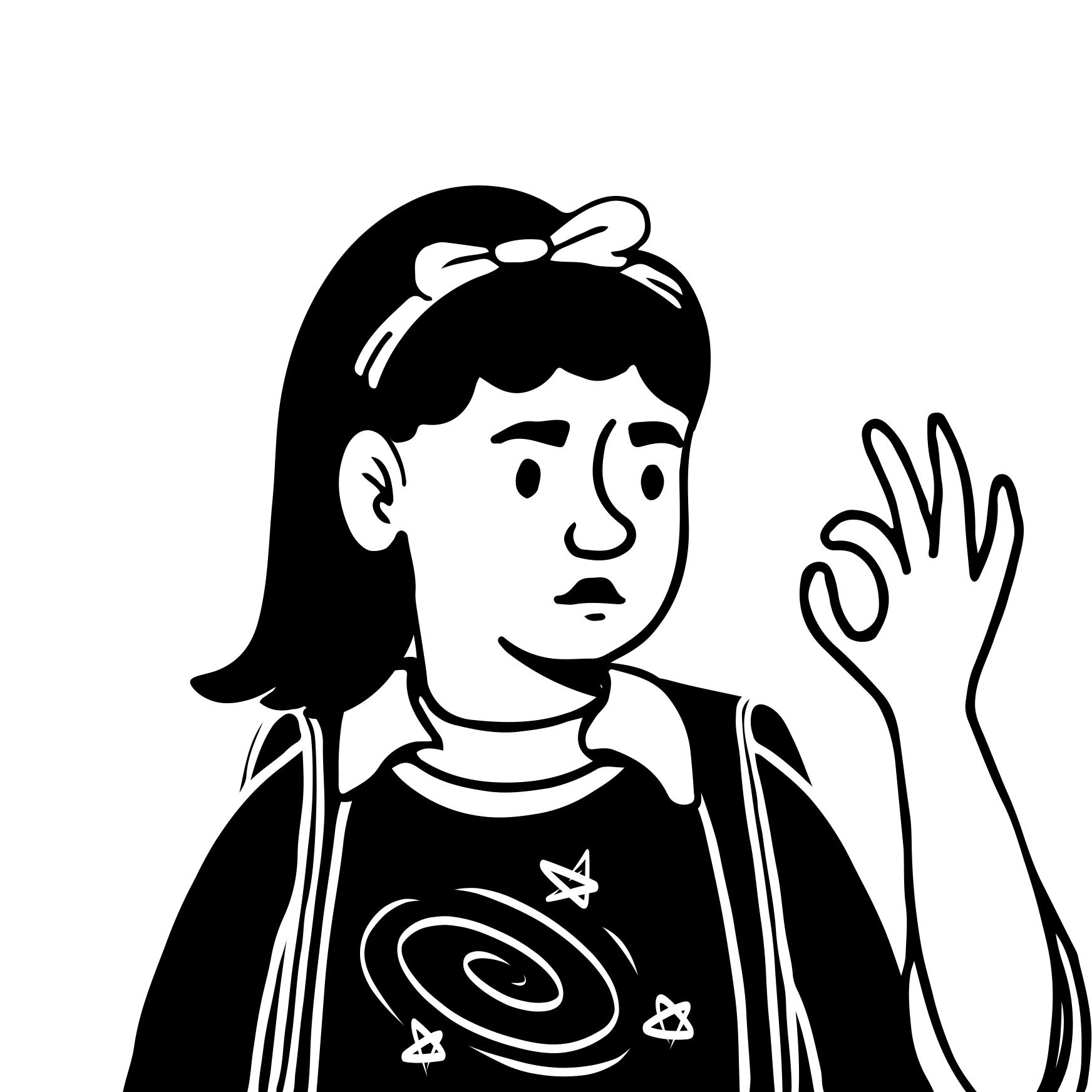
Did you restart it or are you just venting?
Meanings
Examples
I can't believe we have a huge pile of laundry again.
Look at that huge dog! Is it actually a wolf?
Listen, this is a huge mistake and you know it!
I'm sorry, but the huge gap in your resume is concerning.
God, the huge amount of blood is just... sickening.
Wait, you spent a huge amount of money on a cat?
Seriously, why is there a huge spider on your shoulder?
Collocations & Compounds
huge amount
a very large quantity
There was a huge amount of traffic on the highway.
huge success
a great achievement
The product launch was a huge success.
huge difference
a significant disparity
There is a huge difference between the two models.
huge impact
a powerful effect
The new law had a huge impact on small businesses.
huge sum
a large amount of money
They paid a huge sum for the antique painting.
Cultural Context
The Psychology of Scale: Why We Love Huge Things
The human fascination with the huge is deeply rooted in a psychological phenomenon known as the sublime. When we encounter something truly huge—like the vastness of the Grand Canyon or the towering height of a skyscraper—we experience a mixture of awe and terror. This sensation occurs because the scale of the object dwarfs our own existence, forcing a cognitive shift in how we perceive our place in the universe.\n\nIn modern pop culture, this obsession manifests in the "Kaiju" genre of cinema. From Godzilla to the colossal titans of Attack on Titan, the concept of the huge monster serves as a metaphor for uncontrollable forces of nature or societal anxieties. By visualizing a threat as physically huge, creators can externalize internal fears, making the invisible weight of trauma or war something tangible that can be fought. This drive to build and imagine the enormous reflects a fundamental human desire to push boundaries and test the limits of physical possibility, whether through the construction of the Great Pyramids or the exploration of the huge reaches of interstellar space.