tidy
/ˈtaɪdi/
The primary sense describes a state of visual order and discipline. It is softer and more domestic than "immaculate" or "spotless," implying that things are simply where they belong rather than being surgically clean.
In its informal adjective form, it refers to an amount of money that is satisfyingly substantial without being ostentatious. It carries a subtle tone of modesty or understated success—a "tidy sum" is enough to be impressive but not so large as to be shocking.
As a verb, it focuses on the act of organizing surface-level clutter. It differs from "cleaning," which implies scrubbing or removing dirt; "tidying" is about restoring order and arrangement.
💬Casual Conversation
YOUR APARTMENT IS NOT VERY TIDY, SWEETIE.
YOUR APARTMENT IS NOT VERY TIDY, SWEETIE.

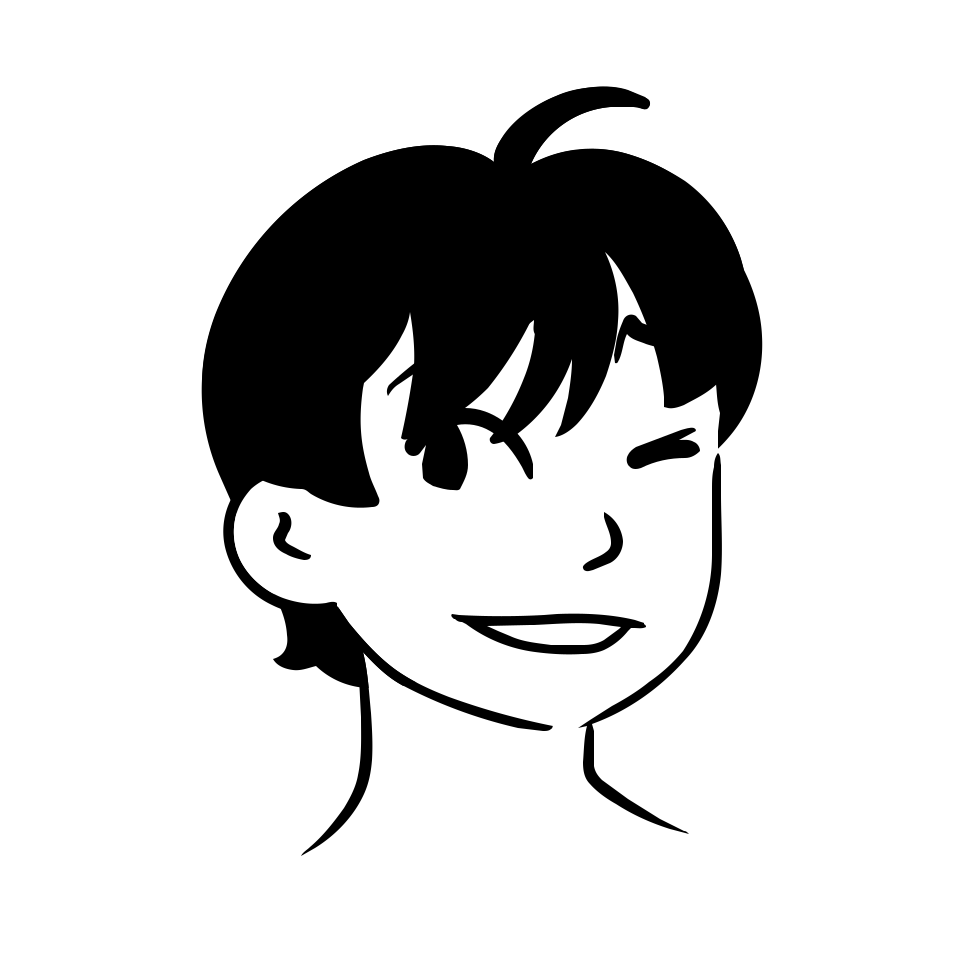
I know, Grandma. I'm drowning in assignments, it's a hot mess.
I know, Grandma. I'm drowning in assignments, it's a hot mess.
Meanings
Examples
Tidy your toys.
Collocations & Compounds
tidy sum
A large amount of money.
He won a tidy sum in the lottery.
tidy up
To clean and organize a place.
Please tidy up your room before guests arrive.
tidy house
A house that is clean and well-organized.
She likes to keep a tidy house.
tidy desk
A desk that is neat and free of clutter.
He always maintains a tidy desk.
tidy appearance
A neat and well-groomed look.
The soldiers had a tidy appearance.
Phrasal Verbs
tidy up
To clean and organize a place or oneself.
I need to tidy up the garage this weekend.
tidy away
To put things away in their proper place after use.
Please tidy away your toys when you're finished playing.
tidy out
To clean out and organize the contents of something, like a cupboard or drawer.
She decided to tidy out her wardrobe.
Idioms & Sayings
in good tidy order
Arranged neatly and systematically.
She likes to keep all her books in good tidy order.
tidy as a new pin
Extremely neat and clean.
Her kitchen was always tidy as a new pin.
Etymology
The word 'tidy' originates from the Middle English word 'tid(i)e', meaning 'timely' or 'orderly'. It evolved from the Old English 'tīd', meaning 'time'. Initially, it related to the proper ordering of things in time, and later extended to the ordering of space and physical objects. The adjective form developed in the 16th century, and the verb form in the 17th century.