mold
/mɔʊld/
The word oscillates between two completely unrelated concepts: physical shaping and organic decay. When used in the context of shaping, it carries a sense of intentionality and control, whether working with tactile materials like clay or abstract concepts like a child's character. In its figurative sense (molding a mind), it suggests a gradual, nurturing, yet authoritative influence. It is more deliberate than "influence" and more structured than "guide." Conversely, as a fungus, the word evokes unpleasant sensations of dampness, age, and neglect. While the shaping meaning is often creative or productive, the fungal meaning is almost always destructive or repulsive.
Countable when referring to the physical container used for shaping objects ('I bought three silicone molds for baking'). Uncountable when referring to the fuzzy green fungus growing on a piece of damp bread.
💬Casual Conversation
Yo, some dude's Tupperware has legit mold growing on it.

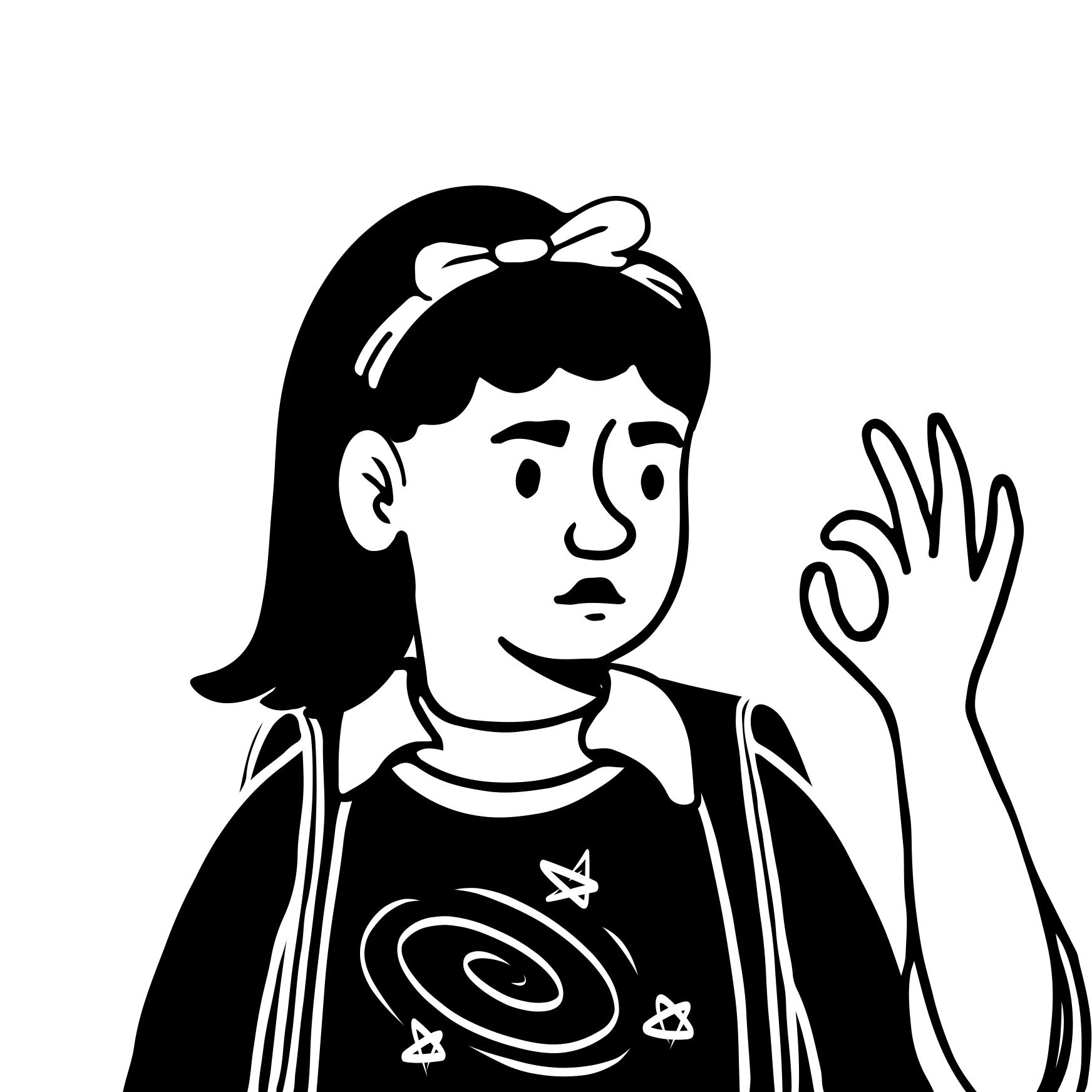
Toss it. I'm not dealing with a biohazard today.
Meanings
A hollow container used to give shape to molten or hot liquid material when it cools and hardens.
"Pour the melted chocolate into the mold."
A fungus that grows in the form of multicellular filaments and resembles a soft coating on organic matter.
"The old bread was covered in green mold."
To shape something by pressing it into a mold or by shaping it with the hands.
"The artist began to mold the clay into a human figure."
To influence the development of someone's character or beliefs.
"Teachers help mold the minds of young children."
To form into a particular shape or pattern.
"The plastic begins to mold as it reaches the correct temperature."
Etymology
The word exists as two distinct homonyms with separate origins. The sense referring to a hollow container or the act of shaping derives from the Middle English "mould," originating from the Old English "molde" meaning earth or soil, which reflects the ancient practice of using packed earth to cast metal. The sense referring to the fungus comes from the Middle English "mould," derived from the Old French "moisure," which traces back to the Latin "mutura," referring to a blight or mildew.