ease
/iːz/
The word conveys a sense of friction being removed—whether that friction is physical (a tight fit), emotional (anxiety), or physiological (pain).
As a noun, it describes a state of fluidity and lack of tension. Unlike "comfort," which can be passive or luxury-based, "ease" often implies the absence of a previous struggle or the presence of natural skill.
When used as a verb for pain or intensity, it is gentler than "stop" or "cure." It suggests a gradual reduction in pressure or distress, like a tide receding.
In physical movement, it describes a precise, cautious control. It is the opposite of a sudden or forceful motion; it is the act of gliding into place with minimal resistance.
Uncountable when referring to the general quality of being effortless or comfortable. Countable when referring to a specific instance of facility or a specific state of comfort.
💬Casual Conversation
I'm totally spiraling over this thesis. Need something to ease the anxiety.
I'm totally spiraling over this thesis. Need something to ease the anxiety.

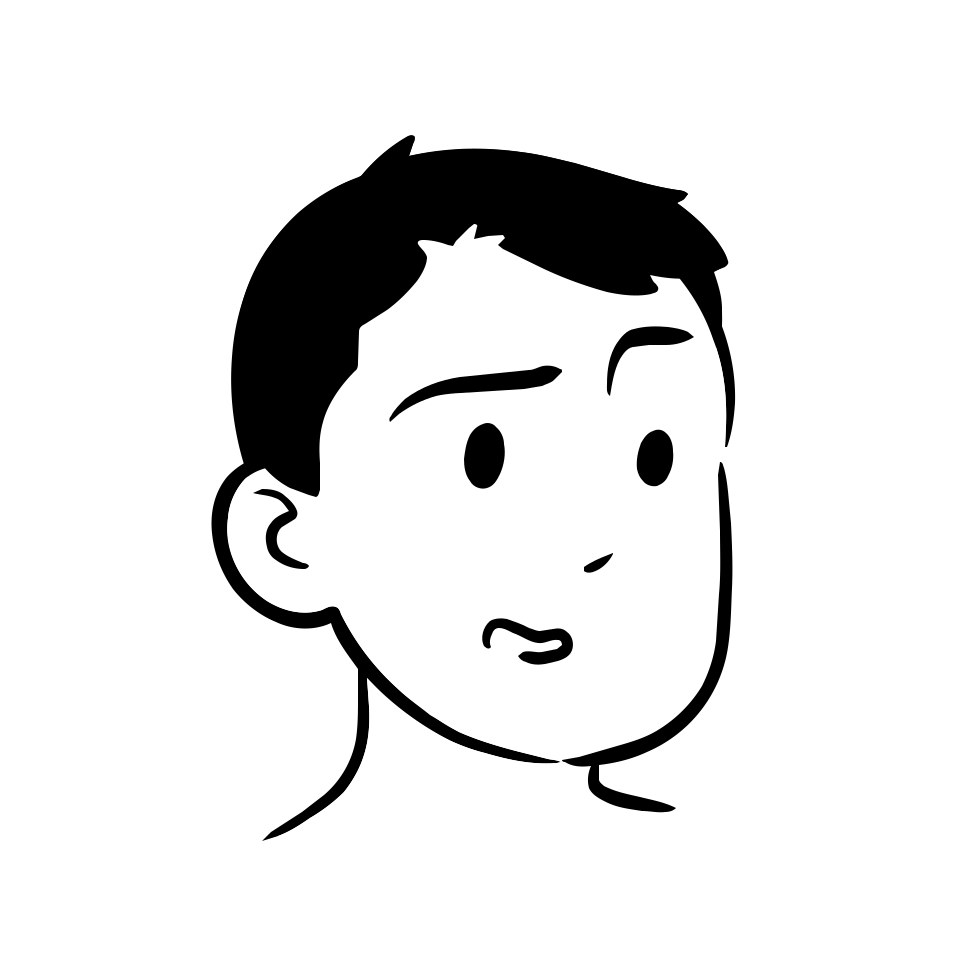
Stop overthinking it and just touch grass for five minutes.
Stop overthinking it and just touch grass for five minutes.
Meanings
The state of being comfortable or free from pain, constraint, or difficulty.
After a long day of work, she finally felt at ease.
To make something less painful, difficult, or intense.
The new medication helped to ease the pain in his joints.