cap
/kæp/
A physical cover or lid designed to seal an opening or protect the top of something. It suggests a snug fit and a functional purpose, whether it is a bottle cap, a baseball cap, or a protective lens cap. In financial and regulatory contexts, it refers to an artificial upper limit placed on spending, prices, or interest rates. This usage carries a sense of restriction or a 'ceiling' that prevents further growth or increase. In modern slang (Gen Z/Alpha), "cap" means to lie or exaggerate. To "no cap" is to assert that one is telling the absolute truth. This usage is highly informal and common in social media and youth culture.
Countable when referring to physical headwear or a lid on a bottle. Uncountable when referring to an artificial upper limit imposed on spending, salaries, or emissions.
💬Casual Conversation
Can't make it to the store, my internet's been acting up all day.
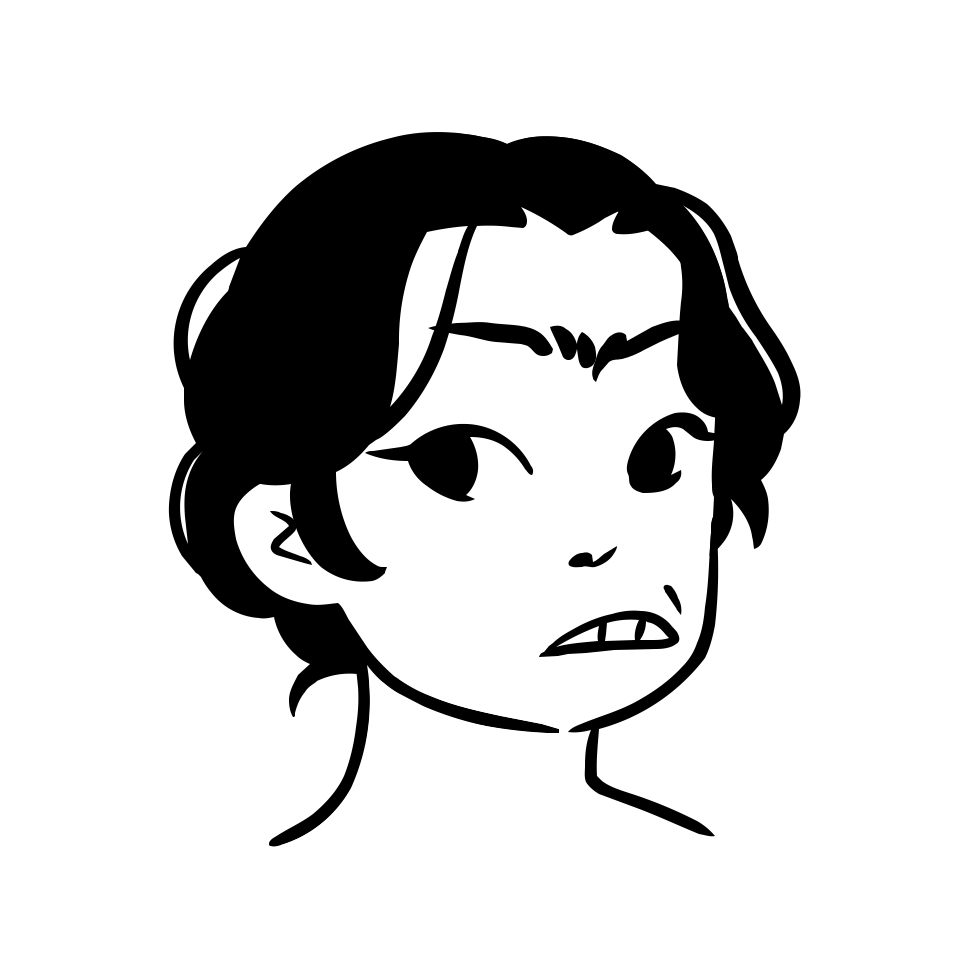

That's cap. Your internet's always 'acting up' when there are errands.
Meanings
An upper limit placed on spending or a quantity.
"The government imposed a cap on inflation."
To place a lid or cover on something.
"Cap the bottle before putting it in the bag."
Etymology
Derived from the Late Latin "cappa," meaning a hooded cloak or cape, which entered Middle English via Old French. The term evolved from describing a large garment covering the head and shoulders to referring specifically to a close-fitting head covering. By the 19th century, the term expanded metaphorically to describe any lid or cover, and subsequently to denote a maximum limit or ceiling in financial and regulatory contexts.