war
/wɔː/
At its core, "war" represents a state of organized, large-scale violent conflict between sovereign states or distinct political entities. It evokes images of systemic destruction, strategic mobilization, and profound human suffering. While "fight" or "battle" refers to specific instances of combat, "war" describes the overarching period or condition of hostility. It carries a heavy, somber connotation, suggesting an existential struggle rather than a mere disagreement. In modern usage, the term is frequently extended metaphorically to describe intense competition or prolonged struggles (e.g., "a war on drugs" or "a price war"). In these contexts, it retains the nuance of total commitment and aggressive strategy, though without the literal bloodshed.
💬Casual Conversation
This Q3 budget discussion is a total war. I'm drowning.
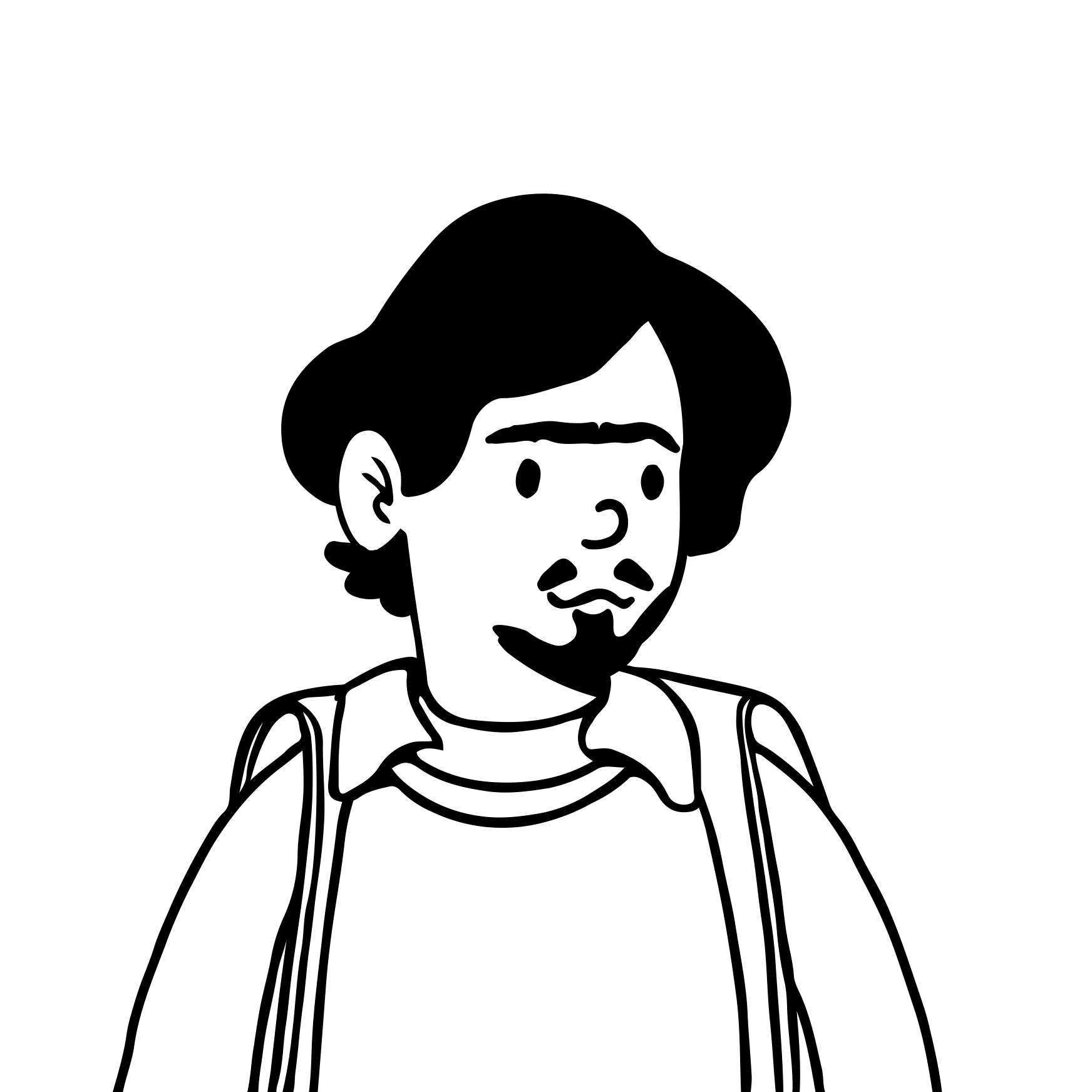
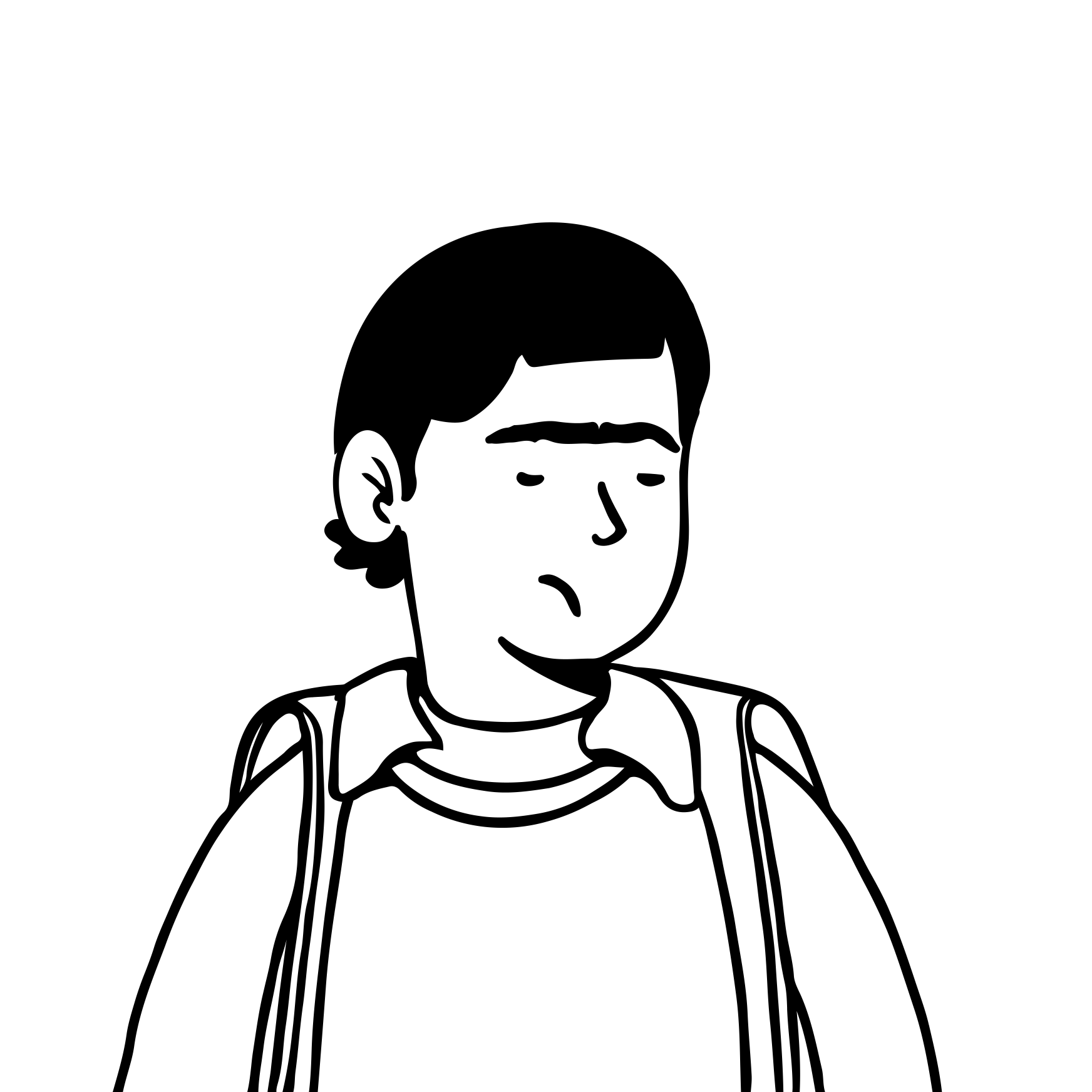
Rough. Just gotta ride the wave, right?
Meanings
a state of armed conflict between different nations or groups.
"The two countries have been at war for over a decade."
a prolonged and intense activity or conflict of a specific type.
"The government is intensifying its war on drugs."
a state of intense disagreement or hostility between individuals or groups.
"The siblings have been engaged in a constant war of words."
To carry on a war against an enemy.
"The empire sought to war against its neighbors to expand its territory."
To engage in a war.
"The tribes continued to war with each other for generations."
Collocations & Compounds
World War
A global conflict involving many countries.
World War II was a devastating global conflict.
civil war
A war between organized groups within the same state or country.
The country has been plagued by civil war for decades.
cold war
A state of geopolitical tension between the Soviet Union and the United States and their respective allies after World War II.
The cold war era was marked by proxy conflicts and an arms race.
war crimes
Violations of the laws of war.
The tribunal was established to prosecute individuals accused of war crimes.
war effort
The total mobilization of resources and people in a nation for a war.
The entire nation was united in the war effort.
Phrasal Verbs
war against
To fight or campaign against an enemy or a problem.
The government declared a war against poverty and unemployment.
war on
To wage war or conduct a campaign against.
The president announced a new war on drugs.
Idioms & Sayings
all is fair in love and war
People tend to behave unfairly or unscrupulously in love and war.
He didn't tell her the truth about why he left, but all is fair in love and war.
declare war
To formally announce that a state of war exists with another country or group.
The nation was forced to declare war after the invasion.
go to war
To begin fighting in a war.
The two countries threatened to go to war over the disputed territory.
make war
To engage in warfare.
It is a tragedy when nations choose to make war instead of peace.
theatre of war
The geographical area in which a war is fought.
Troops were deployed to the main theatre of war.
Etymology
The word 'war' comes from Old English 'wyrre', which itself derives from a Germanic root found in words like Old Norse 'styrr' (uproar, tumult) and Old High German 'werre' (strife, battle). It entered English around the 13th century, replacing the Old English term 'guð'. Its origins are linked to the concept of violent conflict and armed struggle.