man
[mɛn]
The word functions as a bridge between a specific biological identity and a universal collective identity. When used to describe a single adult male, it is a concrete noun denoting gender and age. When used to describe the species, it becomes an abstract noun, often appearing without an article to represent the totality of human experience. As a verb, the term shifts from identity to utility. It describes the act of occupying a functional role, regardless of the actual gender of the person performing the task. This transition from noun to verb highlights the historical association between the concept of manhood and the duties of labor, defense, and operational oversight.
💬Casual Conversation
Do you think the man in the portrait is a real person?

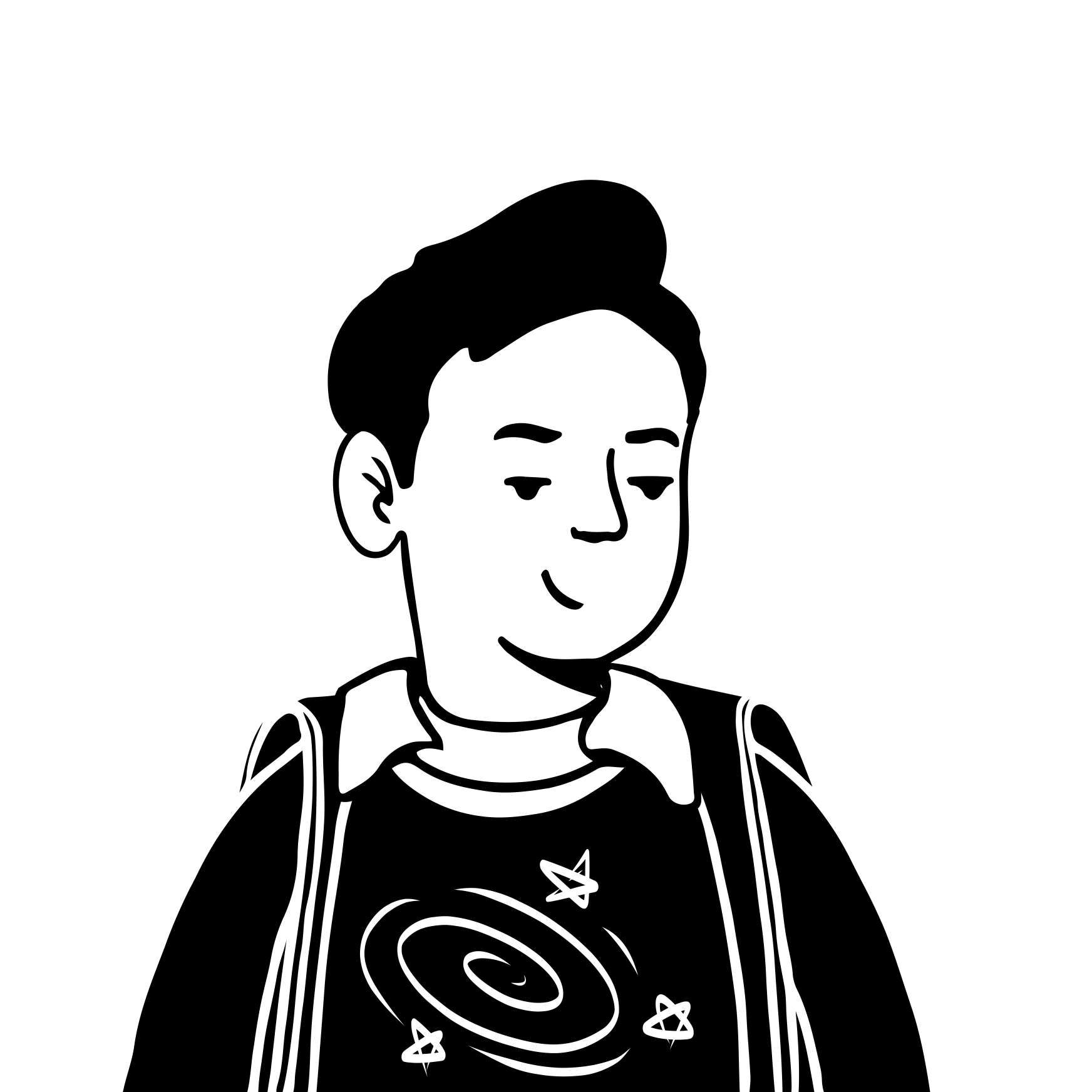
Probably, though he looks like a stylized version of man as a whole.
Meanings
a human being regardless of gender.
"The first man to step on the moon changed history."
a person who is considered to be brave, strong, or reliable.
"He proved himself to be a real man during the crisis."
a small object, such as a piece or token, used in a board game.
"Move your man to the third square on the board."
Examples
The old man sat on the bench for hours.
The evolution of man is a central theme in biology.
We need more staff to man the booths at the trade show.
The guards were told to man the walls until dawn.
Collocations & Compounds
middle-aged man
a man in his mid-forties
The middle-aged man looked tired.
family man
a man dedicated to his home and children
He is a true family man who never misses a recital.
common man
an ordinary person without special status
The politician claimed to speak for the common man.
man of honor
a person with strong moral principles
He proved himself to be a man of honor during the trial.
man hour
the amount of work performed by one person in one hour
The project will take approximately five hundred man hours to complete.
Phrasal Verbs
man up
to behave bravely or take responsibility
He needs to man up and admit his mistake.
Idioms & Sayings
man of his word
someone who keeps their promises
He said he would help, and he is a man of his word.
a man of the world
someone experienced in life and society
After years of traveling, he became a man of the world.
Cultural Context
The Measure of Man: From Biological Specimen to Philosophical Ideal
The concept of the man has undergone a radical transformation throughout history, shifting from a biological description to a symbol of cosmic proportions. In the Renaissance, this shift was epitomized by Leonardo da Vinci's Vitruvian Man. This iconic drawing was not merely an anatomical study but a philosophical statement about the proportion and harmony of the human body, suggesting that man was the center of the universe and a reflection of divine geometry.<br><br>Beyond art, the term man has historically functioned as a universal signifier for the entire species, as seen in the phrase the rights of man. This linguistic habit reflects a period where the masculine was used as the default for humanity. However, as our understanding of sociology and gender evolved, the usage of man to describe the human race has largely shifted toward more inclusive terms like humankind. Despite this, the legacy of the word persists in our idioms and legal histories, reminding us how language evolves to reflect the changing social structures of the people it describes.