distance
/ˈdɪs.təns/
The word operates on a spectrum from the physical to the psychological. In its most literal sense, it is clinical and objective, describing a measurable gap in space.
When applied to human relationships, it shifts toward a cold or sterile connotation. It suggests a lack of intimacy or a deliberate wall built between individuals, often implying a feeling of isolation or detachment.
As a verb, the word carries a strategic or defensive nuance. It is frequently used in professional or political contexts where someone is attempting to protect their reputation by creating a perceived gap between themselves and a negative association.
Countable when referring to specific measured gaps or intervals (e.g., several distances were measured). Uncountable when referring to the general concept of space or the abstract state of being aloof.
💬Casual Conversation
Dude, gotta keep my distance from David's new 'brainstorm'. It's always a trap.
Dude, gotta keep my distance from David's new 'brainstorm'. It's always a trap.
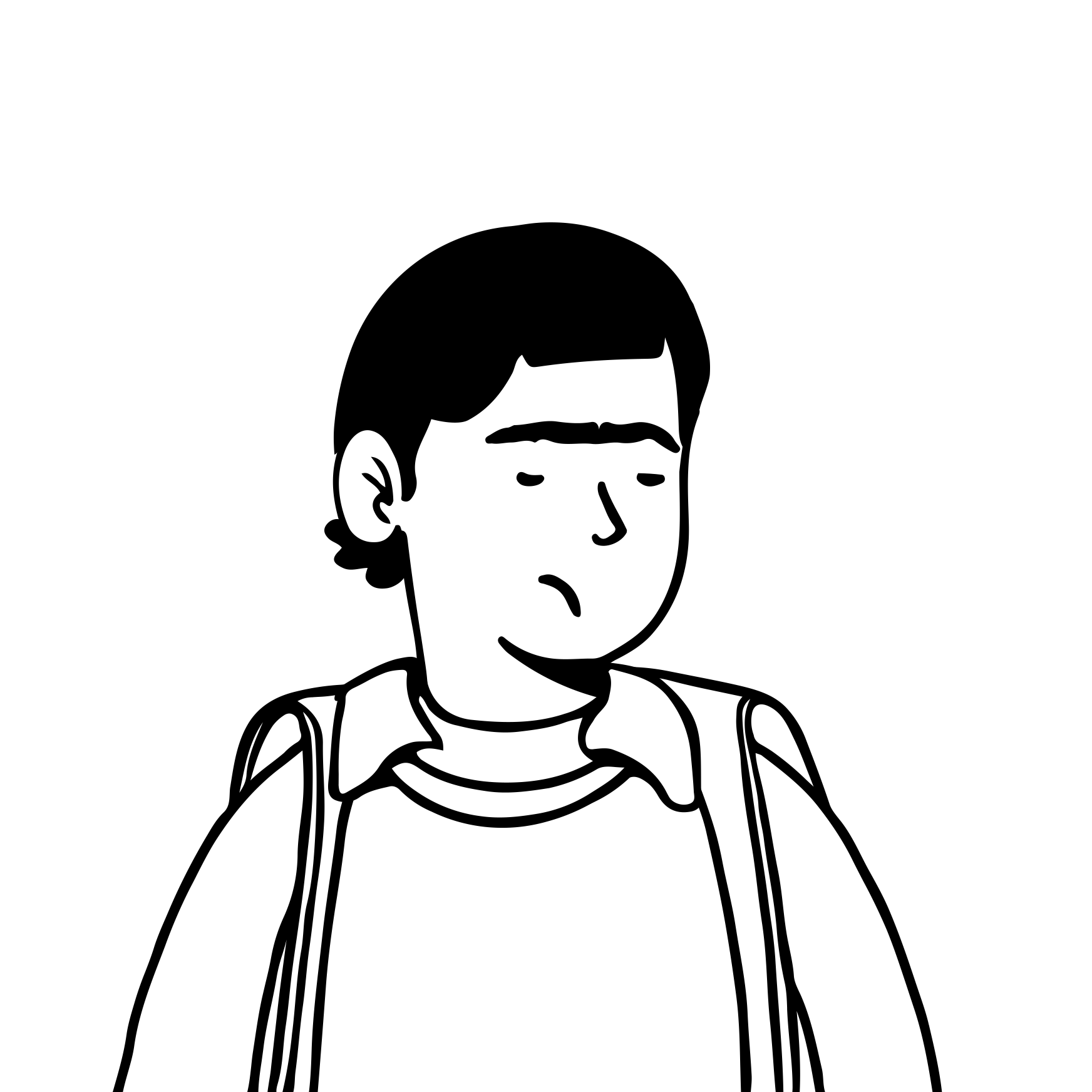

For real. He'll just try to dump more work on us if you engage.
For real. He'll just try to dump more work on us if you engage.
Meanings
Examples
The distance between the two cities is approximately 50 miles.
There was a certain emotional distance between the couple during the dinner.
The politician tried to distance himself from the scandal.
Collocations & Compounds
short distance
a small length of space between two points.
The shop is only a short distance from here.
long distance
a great length of space between two points.
They traveled a long distance to reach the coast.
walking distance
a distance that is short enough to be covered on foot.
The apartment is within walking distance of the park.
at a distance
far away from someone or something.
He preferred to observe the crowd at a distance.
measure the distance
to determine how far apart two points are.
We need to measure the distance between the two cities.
Phrasal Verbs
put distance between
to create or increase a separation between people or things.
She tried to put distance between herself and her past.
distance oneself from
to deliberately avoid becoming involved with or associated with someone or something.
The politician tried to distance himself from the scandal.
Idioms & Sayings
in the distance
far away and not clearly visible.
We could see a ship in the distance.
keep one's distance
to stay away from someone or something.
It's best to keep your distance from wild animals.
a stone's throw distance
a very short distance.
The beach is just a stone's throw distance from the hotel.
Etymology
The word 'distance' comes from the Latin word 'distantia', meaning 'remoteness' or 'difference'. This, in turn, derives from 'distare', which is a compound of 'dis-' (apart) and 'stare' (to stand). So, literally, it means 'to stand apart'. It entered English in the late 14th century, initially referring to space or interval between two points, and later extended to abstract concepts like time, difference, or remoteness in social standing.