short
/ʃoːt/
This term primarily describes a physical dimension that fails to reach a standard or expected length. It is frequently used to contrast with "tall" when referring to people or "long" when referring to objects, creating a spatial binary that defines the scale of an entity. In a descriptive sense, the word often carries a connotation of insufficiency or limitation. When a physical object is described as short, it implies a lack of extension that may render the object impractical for a specific purpose, such as a piece of clothing that does not cover the ankle.
💬Casual Conversation
I can't use this ethernet cable, it's too short.
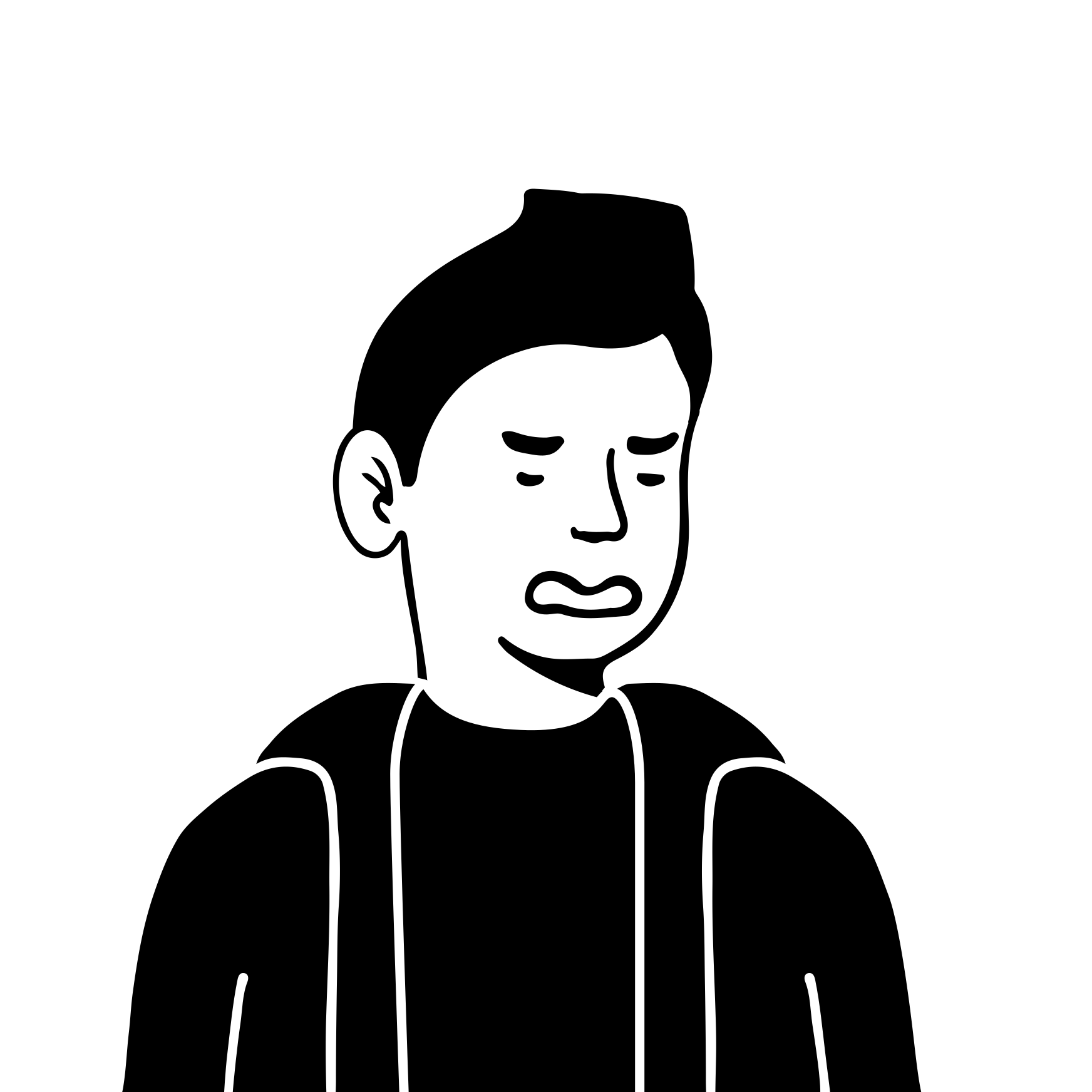
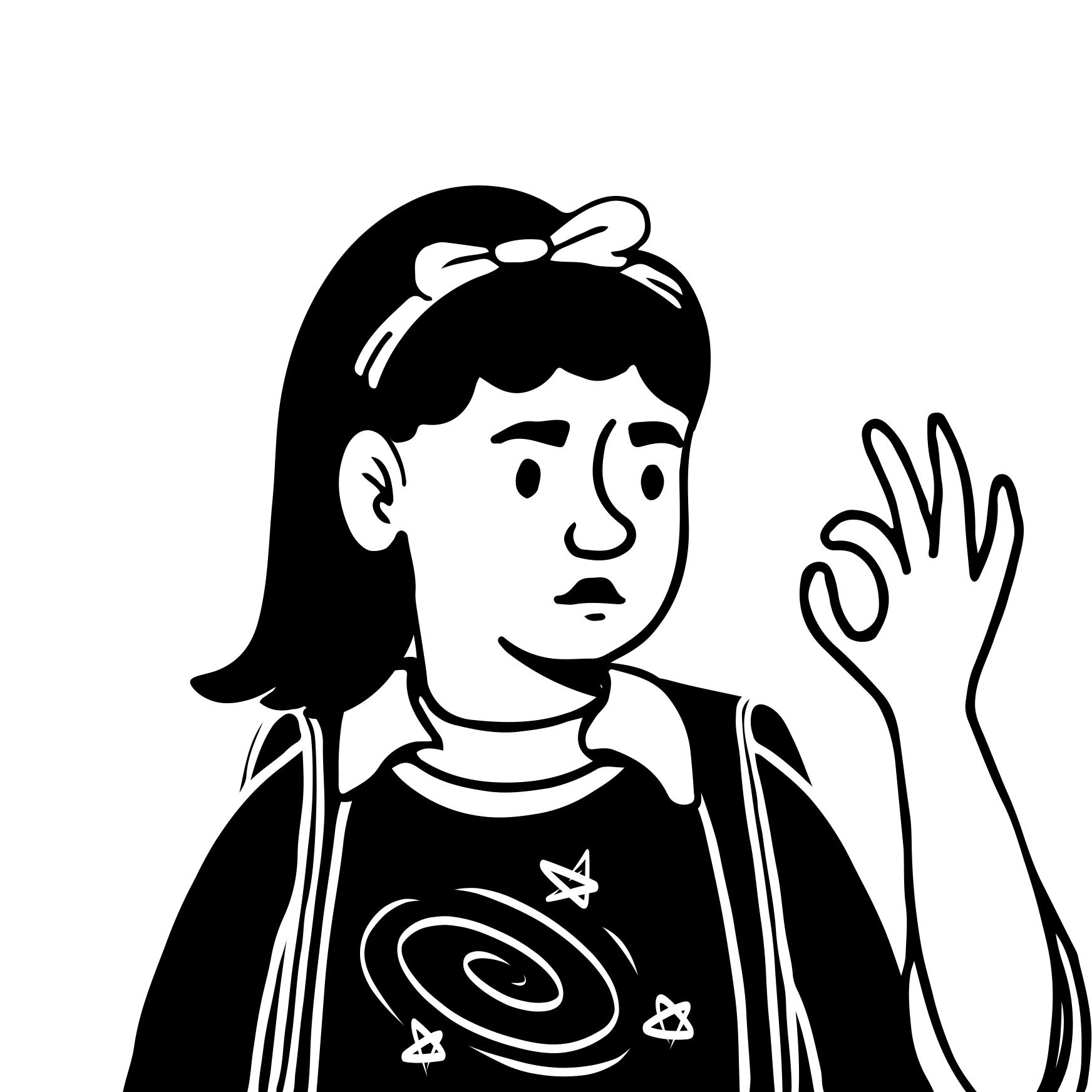
Just stop trying to move your desk and deal with it.
Meanings
Examples
I can't reach the top shelf because I am too short.
Look, your hair is way too short for that style!
Wait, is this dress too short for a wedding?
Get rid of that short fence, it is a total eyesore!
I just think the curtains are a bit too short.
Why on earth is this table so short? It is useless!
He is too short to ride the roller coaster, kid.
Stop complaining that you are short, you are just right!
Collocations & Compounds
short distance
a small amount of space
It is a short distance to the store.
short stature
having a small height
The athlete is known for his short stature.
short length
a brief measurement
The rope was of a short length.
short cut
a shorter route
I found a short cut through the alley.
short range
covering a small area
This is a short range radio.
Cultural Context
In the world of professional golf, the term short game refers to the critical sequence of shots played near the green, including chipping and putting. While the long drive captures the crowd's attention with raw power, the short game is where championships are actually won or lost. It is a realm where brute force is useless and replaced by a delicate, surgical precision.<br><br>The psychology of the short game is a fascinating study in tension and focus. When a player is within a few yards of the hole, the margin for error becomes infinitesimally small. A deviation of a single millimeter at the point of impact can result in a ball rolling several feet past the target. This creates a high-pressure environment where mental fortitude is as important as physical skill. Players must enter a state of flow, silencing the noise of the gallery to focus entirely on the texture of the grass and the slope of the land.<br><br>Historically, the evolution of short game techniques has mirrored the evolution of golf course architecture. As greens became faster and more undulating, golfers had to develop more sophisticated methods of controlling spin and trajectory. The mastery of the short game represents the ultimate triumph of finesse over force, proving that in sports, as in life, the most subtle movements often yield the most significant results.