hole
The primary image is one of absence—a void where material should be. It describes a rupture in the expected continuity of a surface, whether that surface is physical (like skin or fabric) or conceptual (like a legal argument).
In physical contexts, it ranges from intentional structures (a golf hole) to accidental damage (a hole in a sock). The feeling is often one of failure or vulnerability when referring to clothing or security, but can be neutral when describing nature.
When used metaphorically for arguments or systems, the connotation is sharply negative, suggesting a critical flaw that renders the entire structure unstable or invalid. This differs from a 'gap', which might just be a missing piece; a 'hole' implies something has been punctured or is fundamentally broken.
💬Casual Conversation
Just noticed a massive hole in your logic for that thesis.
Just noticed a massive hole in your logic for that thesis.
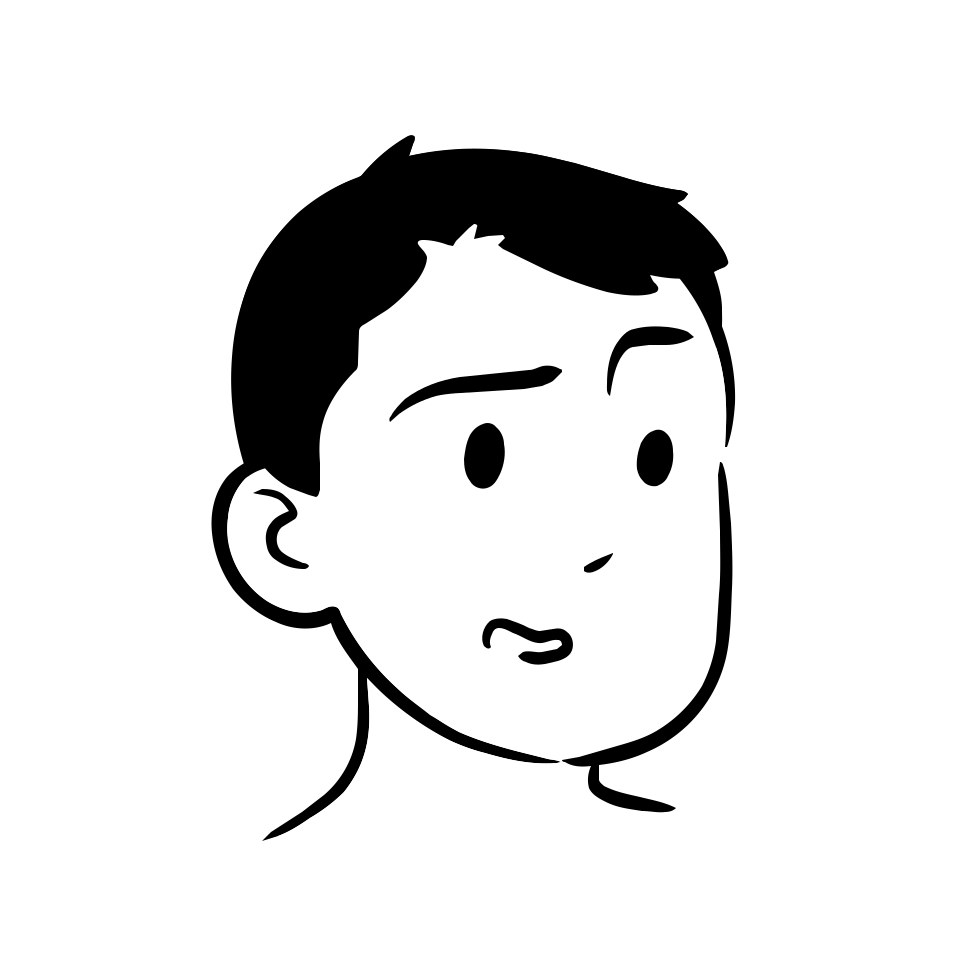

Don't mess with my head right now, I'm already stressed.
Don't mess with my head right now, I'm already stressed.
Meanings
Examples
The rabbit disappeared into a deep hole in the ground.
There is a small hole in the toe of my sock.
The detective discovered a glaring hole in the suspect's alibi.
The sharp nail holed the bottom of the plastic bucket.