child
/t͡ʃaɪld/
This term carries a dual identity, shifting between a biological age marker and a relational status. When referring to age, it evokes innocence, vulnerability, and a state of development. When used relationally, it describes a permanent kinship bond regardless of the person's actual age, allowing an adult to remain a child in the eyes of their parents. In a behavioral sense, the word often takes on a pejorative tone to describe adults who lack emotional maturity or sophistication. It also functions as a conceptual metaphor for causality, where an idea or invention is viewed as the direct offspring of a specific historical era or intellectual movement.
💬Casual Conversation
DAVID YOU ARE STILL MY CHILD NO MATTER HOW OLD YOU GET.

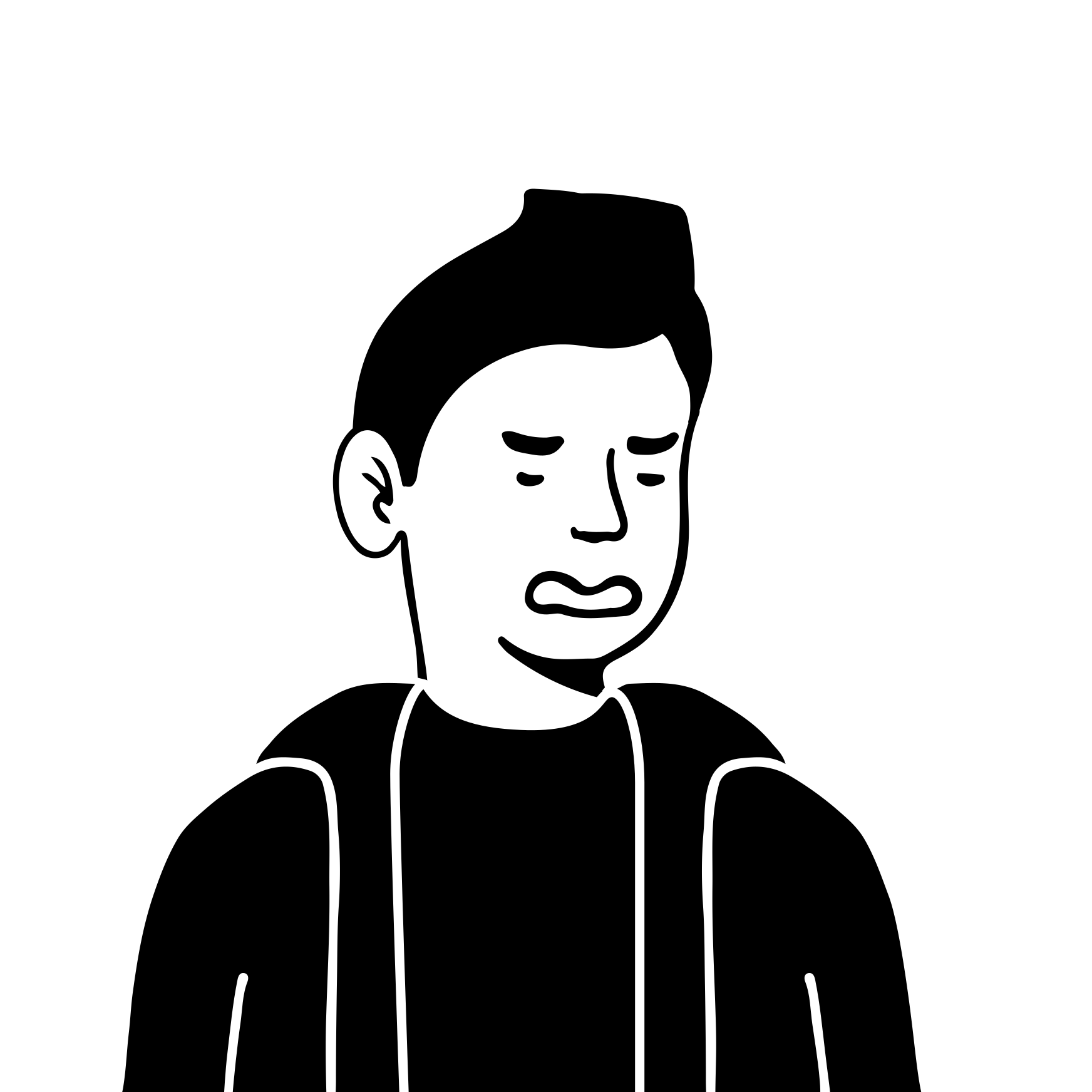
Mom please, I'm literally in a sync with the VPs right now.
Meanings
a young human being below the age of puberty.
"The child played with blocks on the floor."
a son or daughter of any age in relation to their parents.
"She is an only child of elderly parents."
Examples
The child needs supervision.
Look, that child is wandering toward the street!
Is your child allergic to any of these ingredients?
I just want to be a good father to my child.
She is my child.
I can't believe my adult child still asks for money!
He's a big child.
Stop acting like a child and just apologize already!
This book is my child.
This project is my child, so please be gentle!
Collocations & Compounds
only child
a person with no siblings
Being an only child can be lonely sometimes.
child labor
the employment of children in industry
Laws were passed to abolish child labor in the nineteenth century.
child prodigy
a child with extraordinary talent
The young pianist was hailed as a child prodigy.
child care
the care of children while parents work
Many parents struggle to find affordable child care.
child psychology
the study of children's mental processes
She specializes in child psychology to help kids with anxiety.
Idioms & Sayings
child's play
something very easy
Fixing this is just child's play.
Etymology
The word 'child' has deep roots in the Proto-Germanic language, stemming from the word 'kheldaz'. This, in turn, is believed to derive from a Proto-Indo-European root 'kelh₂-', possibly meaning 'to protect' or 'to nourish'. This connection suggests an ancient conceptualization of a child as someone needing care and protection. The word evolved through Old English as 'cild', retaining a similar sound and meaning. In Germanic languages, cognates like German 'Kind' and Dutch 'kind' show a shared linguistic heritage. The spelling and pronunciation have remained remarkably stable over centuries, making 'child' one of the more consistent words in the English lexicon. Its core meaning has always referred to a young human being, a testament to the universal and enduring nature of this life stage.