লক্ষ্য করুন: এই এন্ট্রির অনুবাদ বর্তমানে মান পর্যালোচনার অধীনে রয়েছে, তাই কিছু বিষয়বস্তু সাময়িকভাবে শুধুমাত্র ইংরেজিতে প্রদর্শিত হচ্ছে।
এই এন্ট্রিটি এখনও আপনার ভাষায় অনুবাদ করা হয়নি, তাই নিচে মূল লেখাটি দেখানো হচ্ছে।
types
/taɪps/
The word primarily functions as a tool for classification. It suggests a grouping based on shared characteristics, often used to organize complex information into manageable categories.
In social contexts, it carries a more subjective weight. When referring to people (e.g., "my type"), it shifts from objective classification to personal preference or stereotypical archetypes. This usage is common in dating and character analysis.
Compared to "kind" or "sort," "type" often feels slightly more precise or technical, though in casual speech they are frequently interchangeable.
Used to categorize distinct groups or varieties, such as identifying different 'types' of clouds or recognizing someone as a specific 'type' of person.
💬Casual Conversation
u think ryan's just not my type or am i just overthinking it?
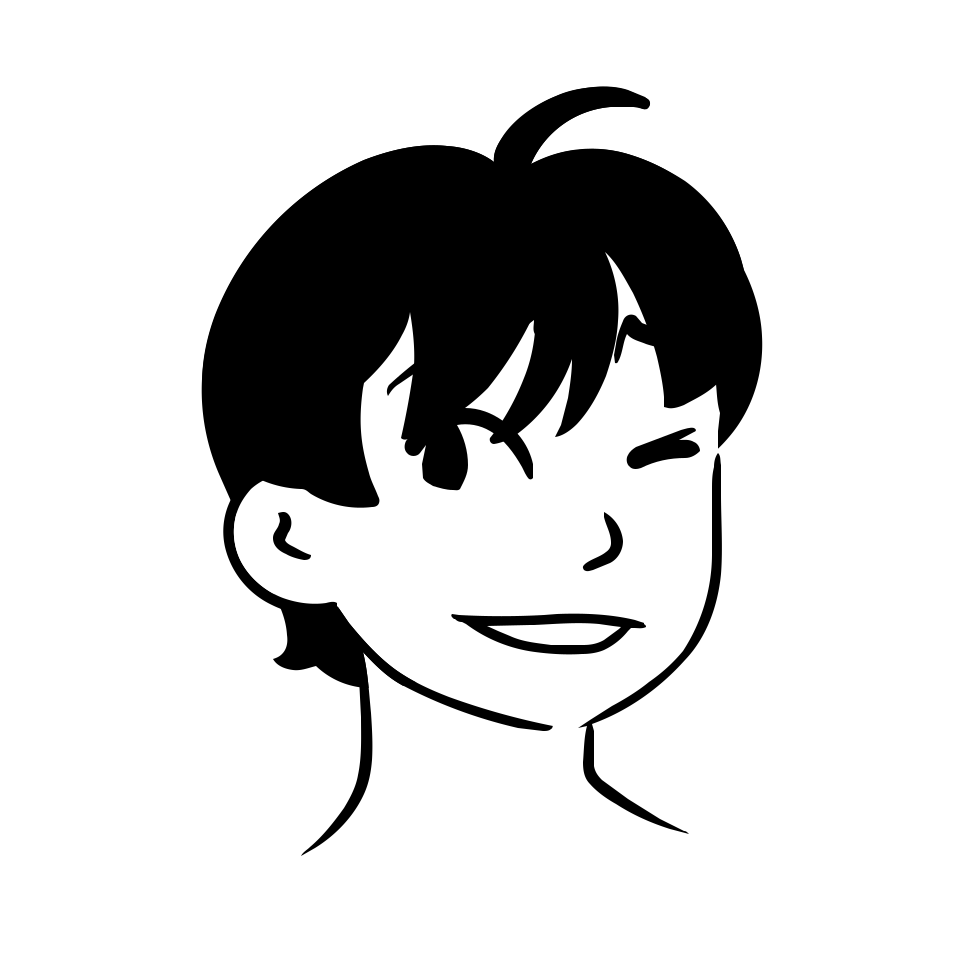
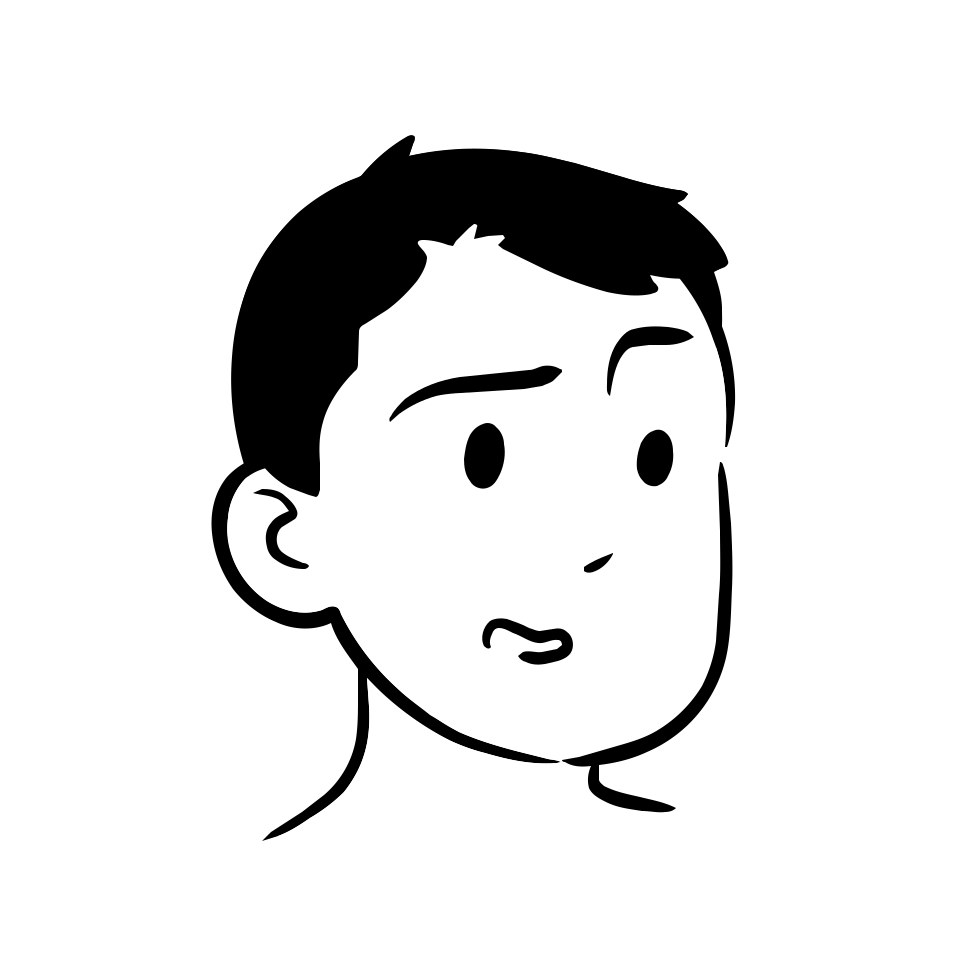
girl pls, he's a total flake. you're just settling.
Meanings
Examples
There are many different types of bacteria in the soil.
I wonder what types of monsters live in this dungeon.
We need to categorize these files into different types.
We need to categorize these files into different types.
What types of architecture are common in this city?
He is exactly the type of witness the police are looking for.
I cannot believe there are so many types of tea here.
The museum displays various types of ancient pottery.
Collocations & Compounds
certain types
Specific, but not explicitly named, kinds or categories.
this type
Referring to a specific kind or category already mentioned or understood.
specific types
Particular kinds or categories that are clearly identified.
They specialize in specific types of art.
Phrasal Verbs
Idioms & Sayings
not my type
Someone who is not attractive or compatible with one's preferences.
the typical type
The most common or representative example of a category.
Etymology
The word 'type' comes from the Greek word 'typos', meaning 'impression', 'mark', or 'blow'. This, in turn, derives from 'typtein', meaning 'to strike'. The word entered English in the late 14th century through Old French 'type', referring to a symbolic figure or representation, especially in religious contexts. By the 15th century, it had evolved to mean a class or category of persons or things with common characteristics. The sense related to 'printing type' emerged in the late 15th century, referring to the raised metal characters used in printing presses, which literally 'struck' the paper to make an impression. This printing sense is the direct ancestor of many modern uses, including the concept of a standard or model.