contrast
The word centers on the visual or conceptual act of placing two opposing things side-by-side to make their differences more obvious. It is not just about difference, but about the effect created by that difference. In a visual sense, it refers to the tension between light and dark or complementary colors. In an intellectual sense, it describes the jarring realization of how two things diverge when viewed simultaneously. Unlike 'compare', which often looks for similarities, 'contrast' is laser-focused on divergence. It carries a neutral to analytical tone, commonly used in academic writing, art criticism, and debate.
Uncountable when referring to the general quality of difference (e.g., 'the contrast between light and dark'). Countable when referring to a specific instance or a distinct point of difference discovered during a comparison.
💬Casual Conversation
LOOK AT THIS OLD PIC OF YOU AND LEO. THE CONTRAST IN YOUR TEMPERAMENTS IS HILARIOUS.

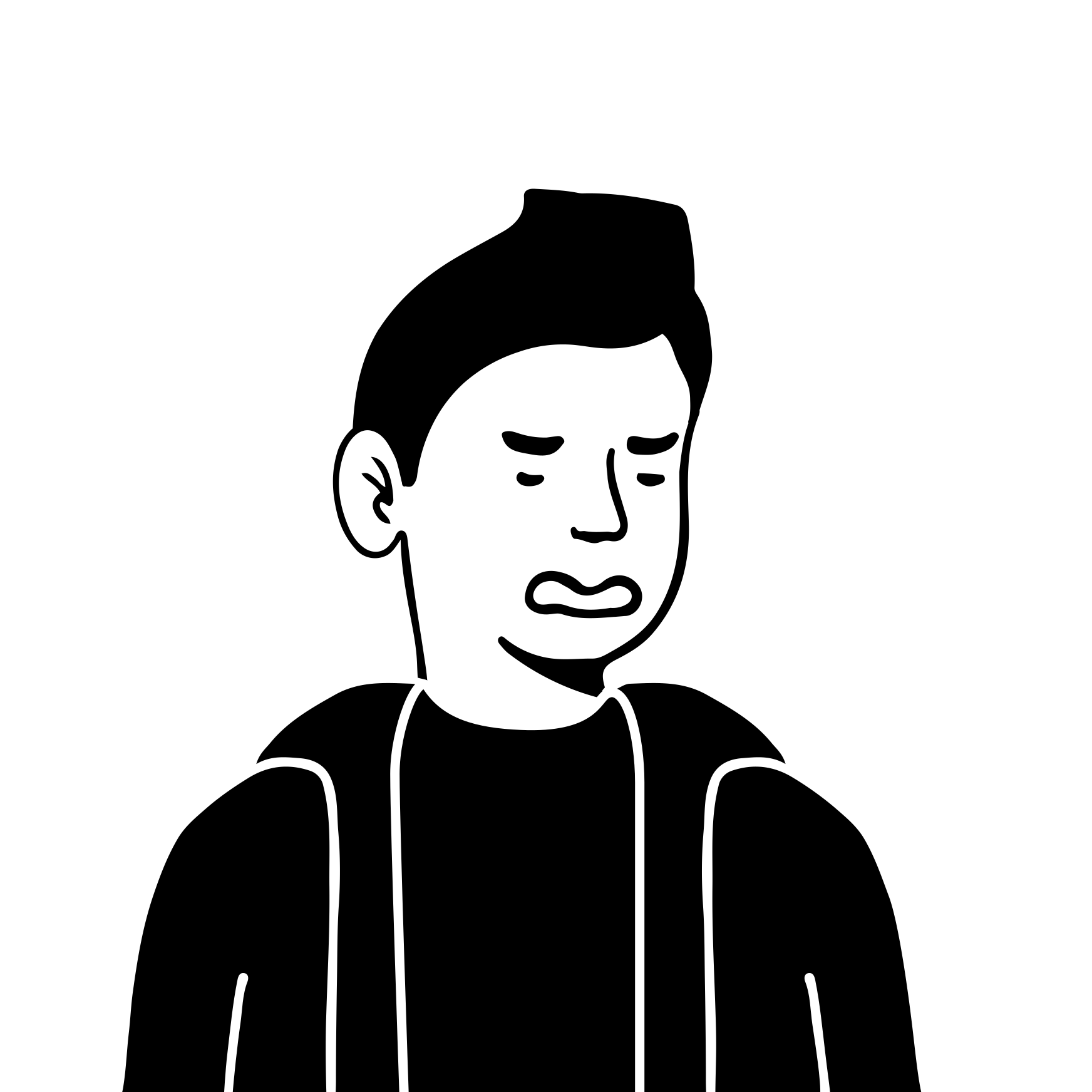
Mom, please. I'm trying to circle back with my team right now.
Meanings
The state of being strikingly different from something else in juxtaposition or comparison.
"There is a sharp contrast between the two political candidates' platforms."
To compare two or more things in order to emphasize their differences.
"The essay asks students to contrast the themes of love and hate in the novel."
To be strikingly different from something else.
"Her quiet demeanor contrasts sharply with her brother's boisterous personality."