blow
The word revolves around the sudden, forceful movement of air or a physical impact. There is a shared sense of "suddenness" and "force" whether it is atmospheric, biological, or physical. In its literal sense, it describes the invisible power of wind or the active expulsion of breath. It feels neutral to descriptive, though descriptors like "fiercely" can add intensity. When shifted to a physical strike (noun or verb), it carries a connotation of violence or impact. This transitions seamlessly into a metaphorical meaning: an emotional or psychological shock. A "blow" in this sense is not just bad news, but news that feels like a physical hit—sudden, jarring, and potentially devastating.
Countable whether referring to a physical strike ('a blow to the head') or an emotional shock ('a sudden blow to one's confidence').
💬Casual Conversation
David just scrapped the whole project. Total blow to my ego, man.
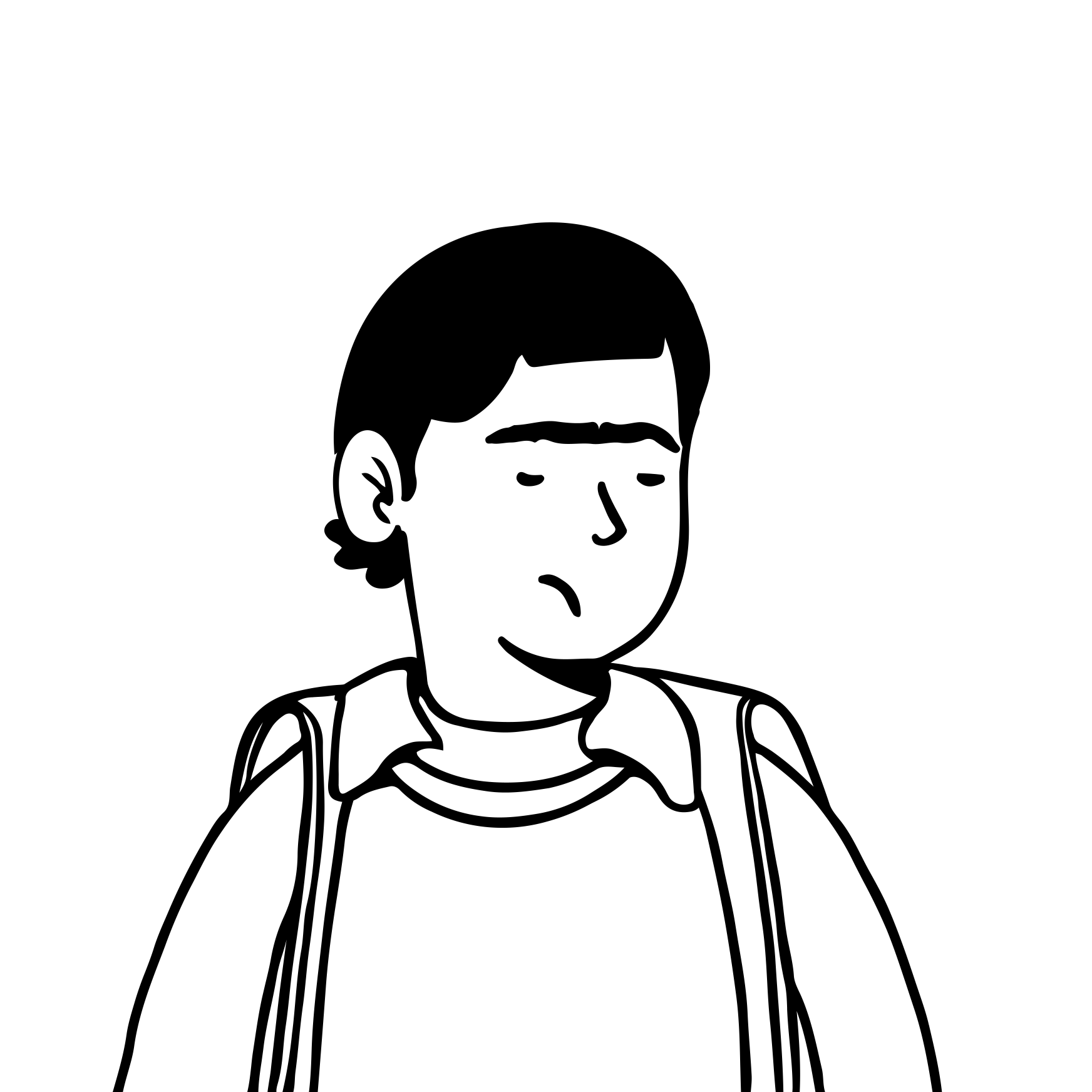

Sucks for you. I'm just glad it means less work for me.
Meanings
To move as a current of air; to be moved by the wind.
"The wind began to blow fiercely from the north."
To expel air from the mouth or through an instrument.
"She had to blow the whistle to start the race."
To strike a hard blow with a fist or weapon.
"The boxer managed to blow a powerful punch to his opponent's jaw."
A hard hit with a hand, weapon, or heavy object.
"He received a crushing blow to the head during the accident."
An unexpected event that causes shock or disappointment.
"The news of the company's bankruptcy was a terrible blow to the employees."
Phrasal Verbs
blow out
extinguish a flame by blowing air on it
She blew out the candles on her birthday cake.
blow up
explode or cause to explode
The soldiers used dynamite to blow up the bridge.
blow over
pass or end without serious consequences
We hope the argument will blow over by tomorrow.
blow away
impress someone greatly or knock something over with air
The magician's final trick completely blew away the audience.
blow off
ignore or cancel a planned event or person
He decided to blow off the meeting to go to the beach.