bristle
/ˈbɹɪs.l̩/
The word evokes a physical sensation of stiffness and sudden tension. It bridges the gap between a tangible object (stiff hairs) and an emotional state (defensiveness).
As a noun, it suggests rigidity and utility, like the coarse fibers of a brush. There is a sense of durability and resistance to bending.
As a verb, it describes a sudden shift toward hostility or agitation. Unlike 'anger', which is a general emotion, 'bristling' is a reactive posture. It captures the image of an animal raising its fur to look larger and more threatening.
In social contexts, it denotes a visible, prickly irritation. When someone bristles at a comment, they aren't just offended; they are reacting with a sharp, defensive energy that signals they are ready for conflict.
💬Casual Conversation
You seemed to bristle when I brought up the Q3 budget cuts.
You seemed to bristle when I brought up the Q3 budget cuts.

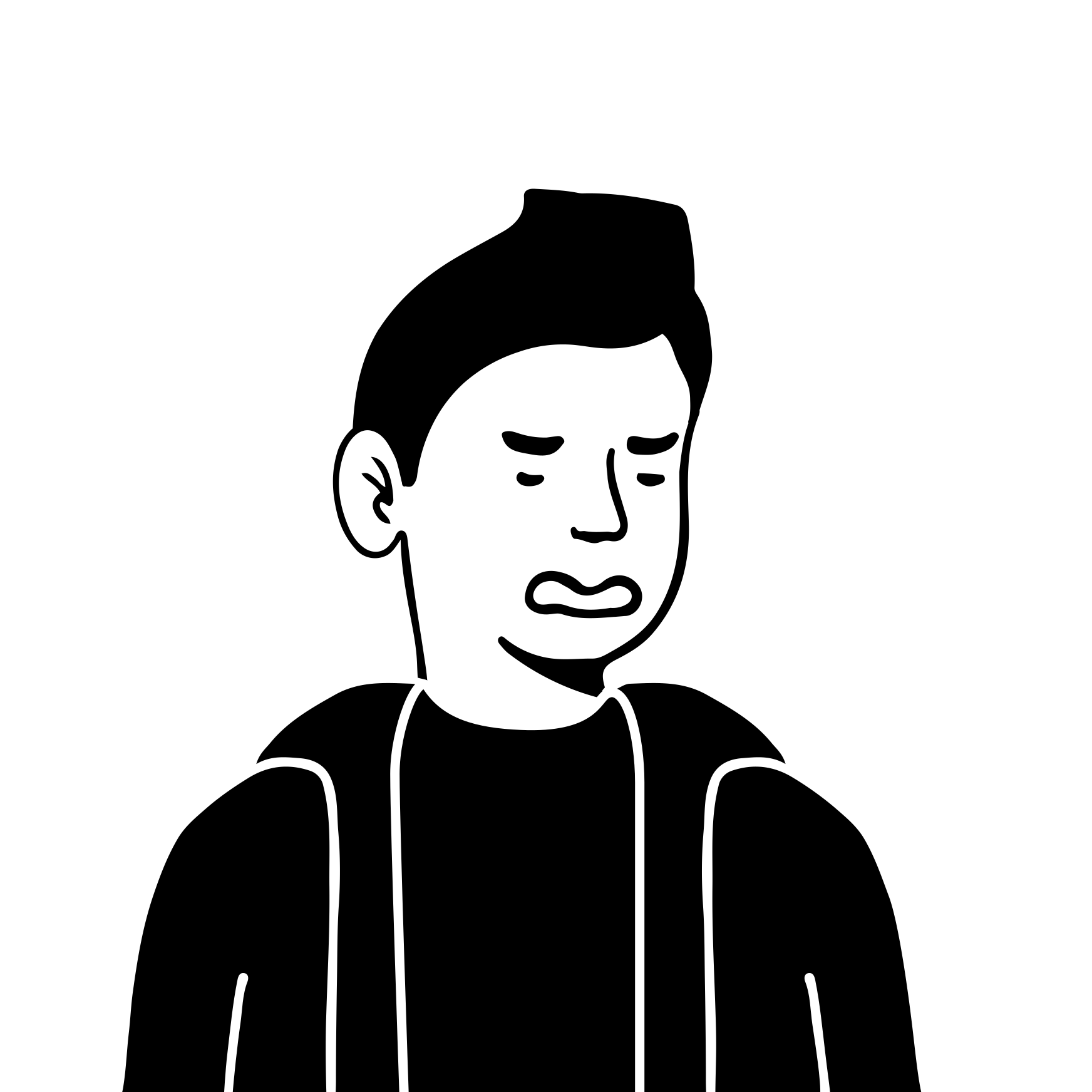
Just ensuring fiscal optimization, Victoria. No resistance here.
Just ensuring fiscal optimization, Victoria. No resistance here.
Meanings
Collocations & Compounds
bristle cone
A type of pine tree with cones that have sharp points.
The bristle cone pine is known for its longevity.
bristle worm
A type of marine annelid worm with stiff bristles.
Be careful not to touch the bristle worm; its spines can cause irritation.
bristle brush
A brush made with stiff hairs or bristles.
She used a bristle brush to scrub the floor.
bristle like
Resembling bristles in texture or appearance.
His hair stood up, bristle like, in the wind.
Phrasal Verbs
bristle up
To become angry or defensive; to show hostility.
The dog began to bristle up at the stranger's approach.