fact
/fækt/
A statement of objective truth that remains true regardless of individual belief or opinion. It carries a weight of certainty and finality, often used to shut down debate or provide a foundation for an argument.
In contrast to 'truth', which can be subjective or philosophical, a 'fact' is typically verifiable through evidence or observation. It represents the concrete "what is" of a situation.
Often used in formal, scientific, or legal contexts where precision and empirical proof are paramount. When used colloquially (e.g., "the fact of the matter"), it emphasizes reality over perception.
Countable when referring to a single piece of information ('one interesting fact'). Uncountable when referring to the overall reality or truth of a situation ('the facts of the case').
💬Casual Conversation
Consistency and leveraging your strengths are key deliverables. That's a fact.
Consistency and leveraging your strengths are key deliverables. That's a fact.
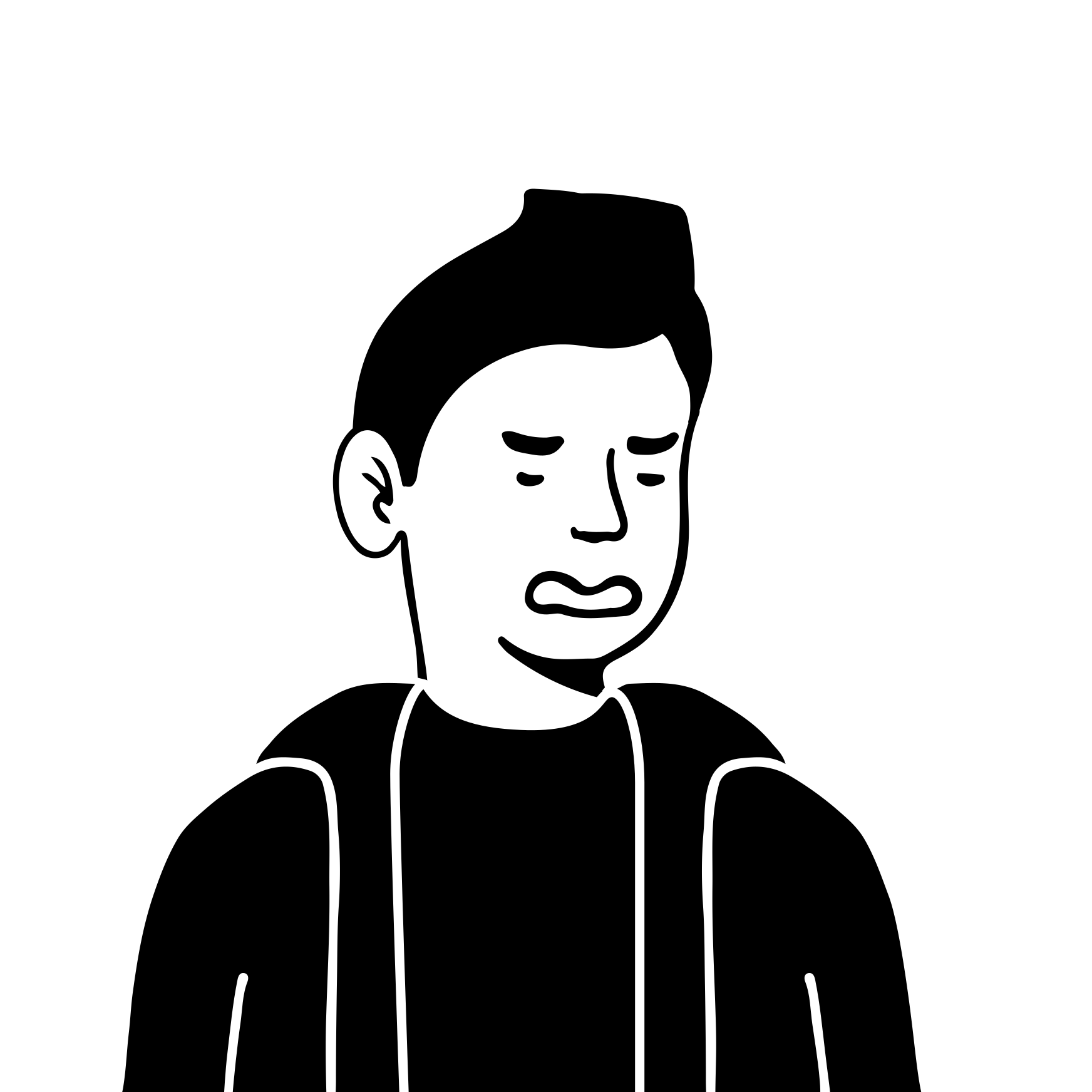

Okay, Boomer. It's called 'grinding' and you get loot.
Okay, Boomer. It's called 'grinding' and you get loot.
Meanings
Examples
Collocations & Compounds
historical fact
Something that is known to have happened or existed in the past.
The existence of the pyramids is a historical fact.
scientific fact
A statement or concept that is proven to be true through the scientific method.
plain fact
Something that is definitely true and cannot be disputed.
a matter of fact
Used to emphasize that something is true, often when it might be surprising.
Idioms & Sayings
face the facts
To accept and deal with an unpleasant reality.
get the facts
To obtain accurate information about a situation.
twist the facts
To present information in a way that is misleading or dishonest.
fact of life
Something that is unavoidable and must be accepted.
Aging is a fact of life that everyone experiences.
Etymology
The word 'fact' comes from the Latin word 'factum', meaning 'a deed' or 'something done'. It entered English around the 14th century, initially referring to actions or deeds. By the 15th century, its meaning evolved to encompass things that have happened or are true, aligning with its modern sense of verifiable reality.