reddened
/ˈrɛd.ənd/
The word describes a transition into redness, often carrying a visceral or emotional quality. It is less about a static color (like "red") and more about the process of changing hue due to an internal or external stimulus.
When applied to people, it strongly suggests involuntary physiological responses. It is most frequently associated with shame, modesty, anger, or physical irritation. There is often a sense of vulnerability or exposure accompanying this change.
In environmental contexts, such as sunsets or fires, it conveys a sweeping, atmospheric transformation. Unlike "crimson" or "scarlet," which describe specific shades, "reddened" emphasizes the act of becoming red.
💬Casual Conversation
Omg I just saw Ryan and his face totally reddened when he saw me. He's shook.
Omg I just saw Ryan and his face totally reddened when he saw me. He's shook.
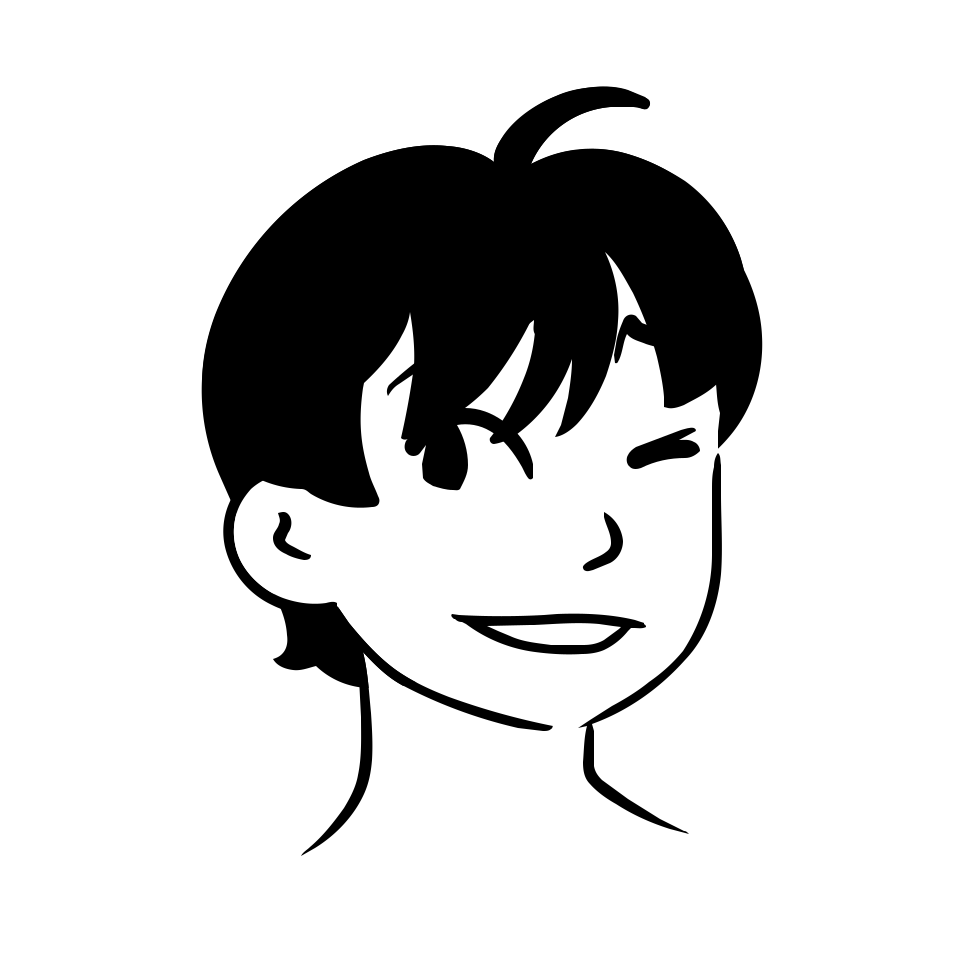

Stop messing around and get back to the lab before we're toast.
Stop messing around and get back to the lab before we're toast.
Meanings
Etymology
Derived from the Middle English word red, originating from the Old English read, which stems from the Proto-Germanic raudaz. The suffix -en was added to create the verb redden, a common Germanic process of forming verbs from adjectives to denote a change in state, followed by the past participle or adjective suffix -ed.