pale
/peɪl/
The word evokes a sense of subtraction—whether it is the loss of pigment from skin, the lack of saturation in a color, or the disappearance of vigor from an emotion. When describing people, it often carries a negative or fragile connotation associated with illness, fear, or exhaustion. It suggests a vulnerability or a "drained" state, contrasting sharply with words like "vibrant" or "flushed." In a figurative sense, it describes something that is an inferior version of the original. A "pale imitation" isn't just different; it is perceived as weaker and less impactful, lacking the soul or intensity of the source. As a verb, it captures the process of fading. It can be a sudden physical reaction (shock) or a slow emotional decay (boredom), emphasizing a transition from strength to weakness.
💬Casual Conversation
Man, Leo looks so pale. Is he even sleeping?

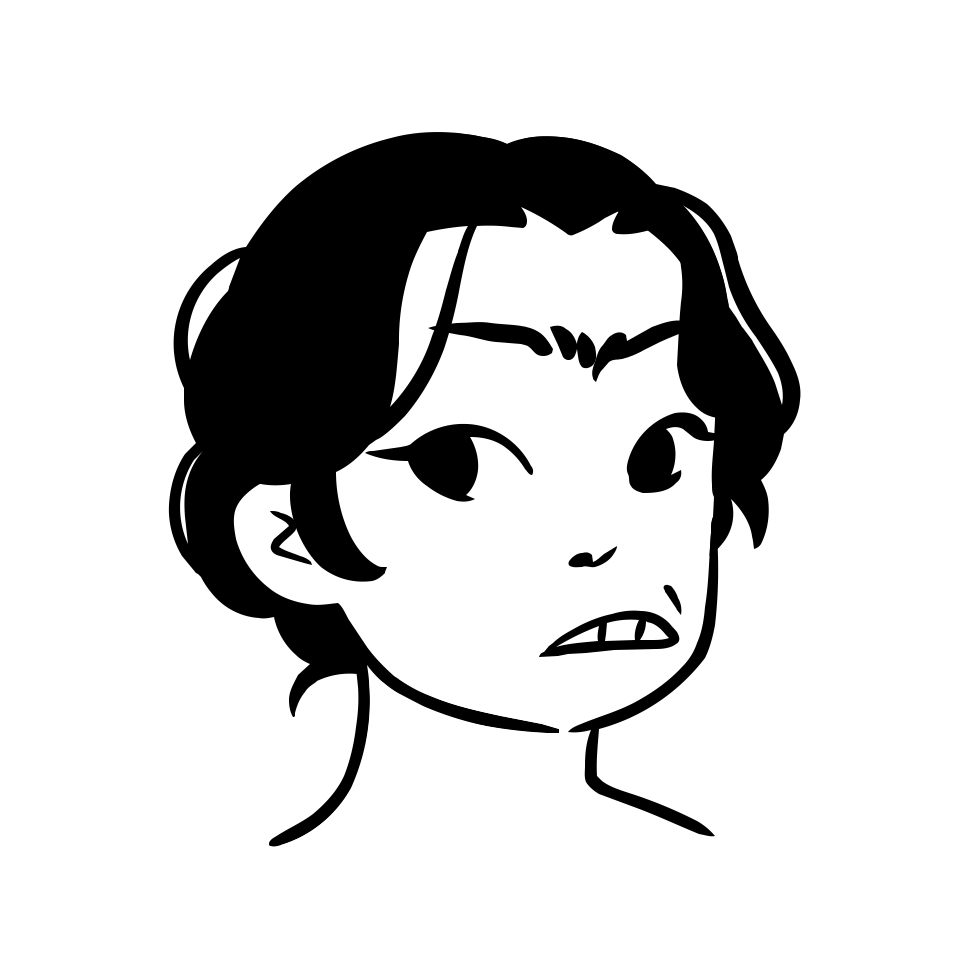
Nah, he's just been grinding that new raid. Probably pulling all-nighters.
Meanings
Collocations & Compounds
pale face
A face that is lighter in color than usual, often due to fear, illness, or shock.
Her pale face told me something was wrong.
pale skin
Skin that is naturally light in color or has become lighter due to lack of sun exposure or illness.
He had pale skin that burned easily in the sun.
pale moonlight
The light from the moon when it appears weak or dim, often due to clouds or atmospheric conditions.
They walked through the woods in the pale moonlight.
pale imitation
Something that is a poor or inferior copy of something else.
The new restaurant was just a pale imitation of the original.
pale blue
A light shade of blue.
She wore a dress of pale blue.
Phrasal Verbs
pale in comparison
To seem much less impressive or important when compared to something else.
My achievements pale in comparison to hers.
Idioms & Sayings
beyond the pale
Outside the bounds of acceptable behavior or standards.
His comments were completely beyond the pale.
make pale
To make something seem less impressive or important by comparison.
The new technology will make the old methods pale.
Etymology
The word 'pale' comes from the Latin word 'pallidus', meaning 'pale, wan, or colorless'. This Latin root is also the source of English words like 'pallid' and 'pallor'. The word entered Old French as 'pale' and then into Middle English around the 13th century, initially referring to a lack of color, especially in the face, often associated with illness or fear. Over time, its meaning extended to describe light colors in general and, metaphorically, a lack of intensity or vigor.