wild
/waɪld/
The central image is one of absence: the absence of human control, boundaries, or domestication. It evokes a sense of raw, untapped energy and unpredictability. When applied to nature, it carries a neutral or positive connotation of purity and freedom, though in some contexts, it suggests danger or hostility (the "wilds"). When describing human behavior, it shifts toward an emotional peak. It describes a state where social filters and inhibitions are dropped, often associated with excitement, chaos, or passion. In the context of ideas or guesses, it implies a leap of faith. It suggests a lack of evidence, leaning into the improbable or the imaginative rather than the logical.
Countable when referring to a specific wild area or region. Uncountable when referring to the general state of being uninhabited or the concept of nature.
💬Casual Conversation
Bro that last clutch was wild. How'd you even pull that off?

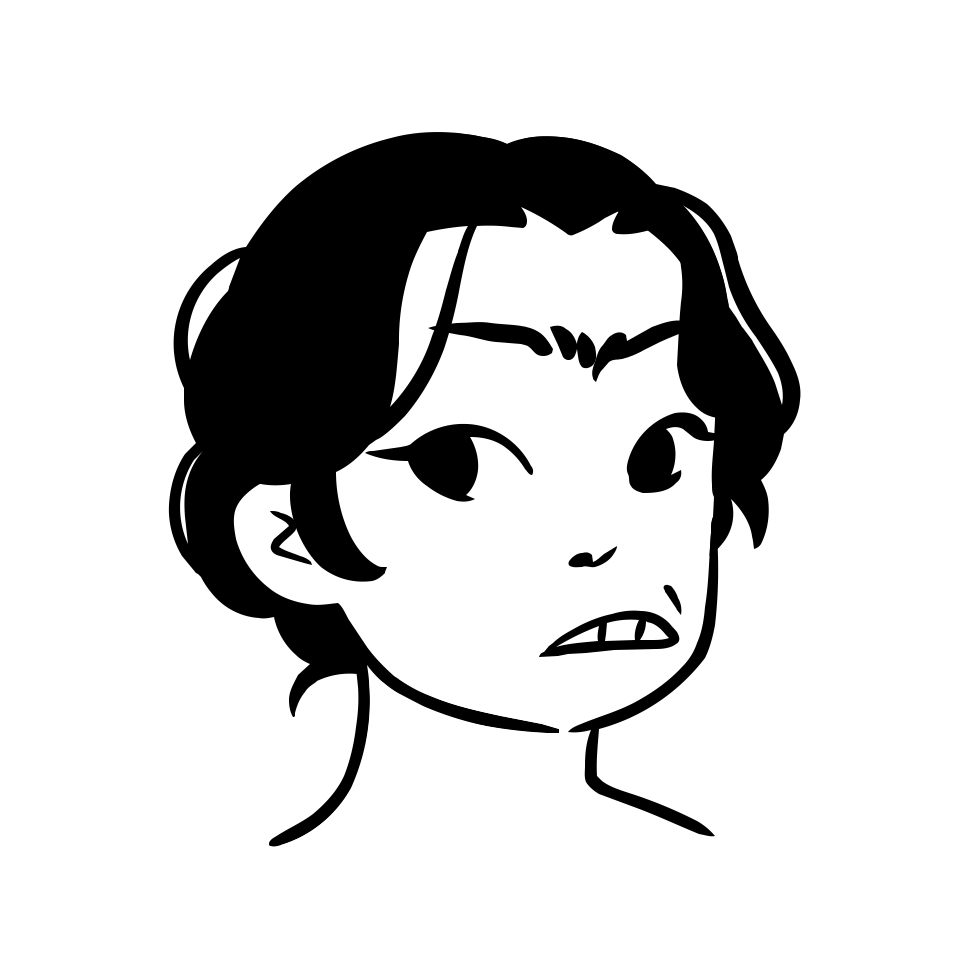
Idk man, just pure luck I guess. My heart was pounding.
Meanings
Living or growing in a natural state; not domesticated or cultivated.
"We saw several wild horses running across the plains."
Lacking discipline or restraint; uncontrolled and exuberant.
"The crowd went wild when the band finally took the stage."
Produced by an unrestrained imagination; fantastic or improbable.
"That is a wild guess, but it might actually be correct."
An uncultivated, uninhabited region; the wilderness.
"They spent three weeks trekking through the remote wild of Alaska."
Collocations & Compounds
wild animals
Animals that live in a natural state and are not domesticated.
go wild
To become uncontrolled, exuberant, or lose one's restraint.
wild guess
A conjecture based on little or no evidence; a fantastic or improbable guess.
into the wild
Entering an uncultivated, uninhabited region or wilderness.
wild imagination
An unrestrained capacity for creating fantastic or improbable mental images.
Idioms & Sayings
run wild
To behave in an unrestrained or uncontrolled manner.
go wild
To become very excited, enthusiastic, or out of control.
a wild goose chase
A foolish or hopeless search for something unattainable.
wild guess
An estimate or conjecture made without any supporting evidence.
in the wild
In a natural state; not in captivity or a controlled environment.
Etymology
Derived from Old English 'wild', from Proto-Germanic 'wilþaz', originating from the Proto-Indo-European root 'wel-', meaning 'to will' or 'to wish'. In its earliest Germanic contexts, it referred to that which is "willful" or uncontrolled, evolving into the sense of being untamed, natural, or unrestrained.