species
/ˈspiːsiːz/
In biological contexts, the word carries a clinical, precise weight. It is the gold standard for classification, evoking images of evolutionary trees and genetic boundaries. It feels objective and scientific. When applied to people or objects metaphorically, it shifts toward a descriptive or slightly judgmental tone. Using "species" instead of "type" or "kind" often implies a deep-seated, inherent difference—as if the person belongs to an entirely different branch of humanity. In casual or dated usage, referring to someone as a "strange species" suggests they are an anomaly or an oddity, adding a layer of detachment or curiosity to the observation.
The word is morphologically invariant; 'species' serves as both the singular form (e.g., 'a rare species of orchid') and the plural form (e.g., 'many endangered species').
💬Casual Conversation
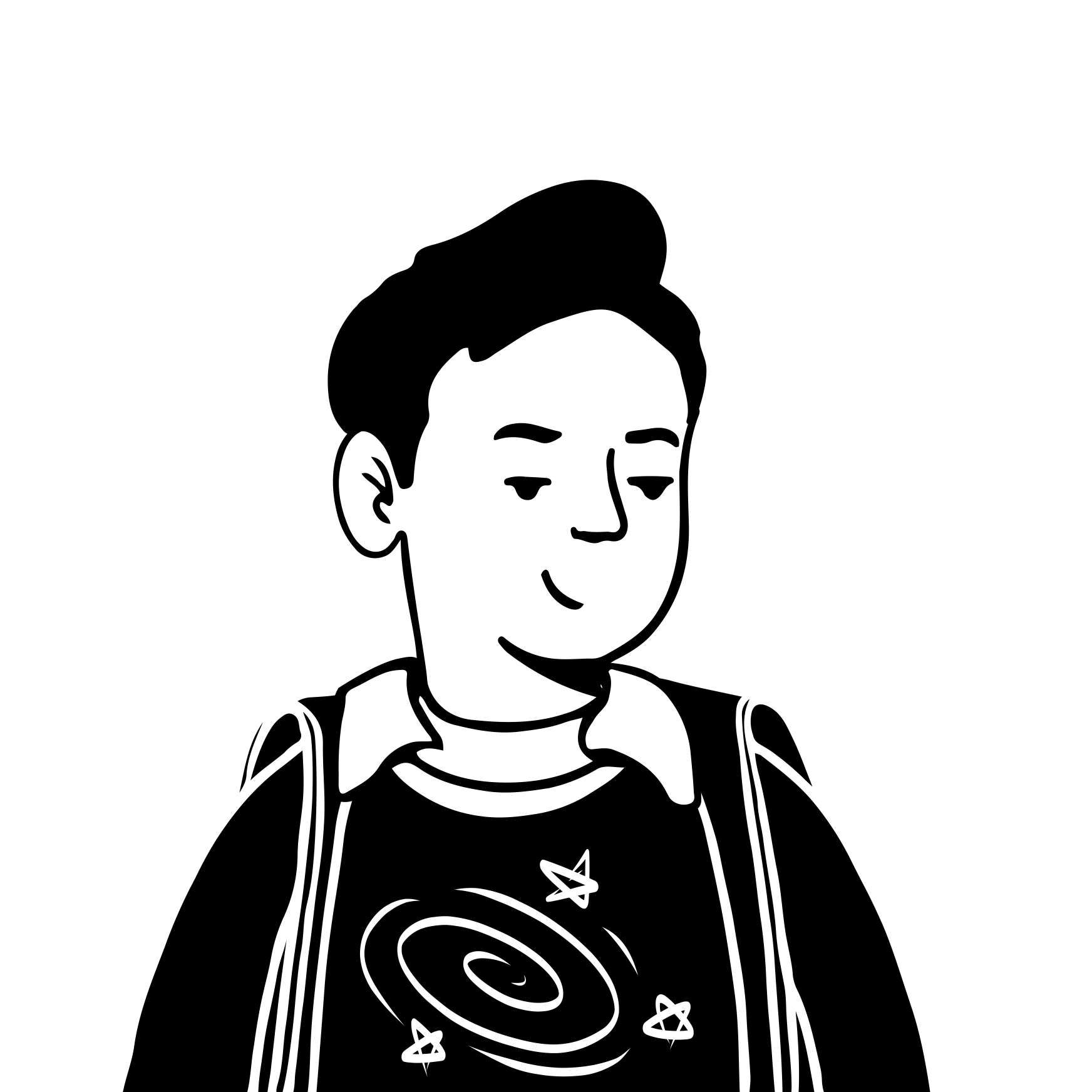
This new client is a whole different species. I can't make heads or tails of these notes.
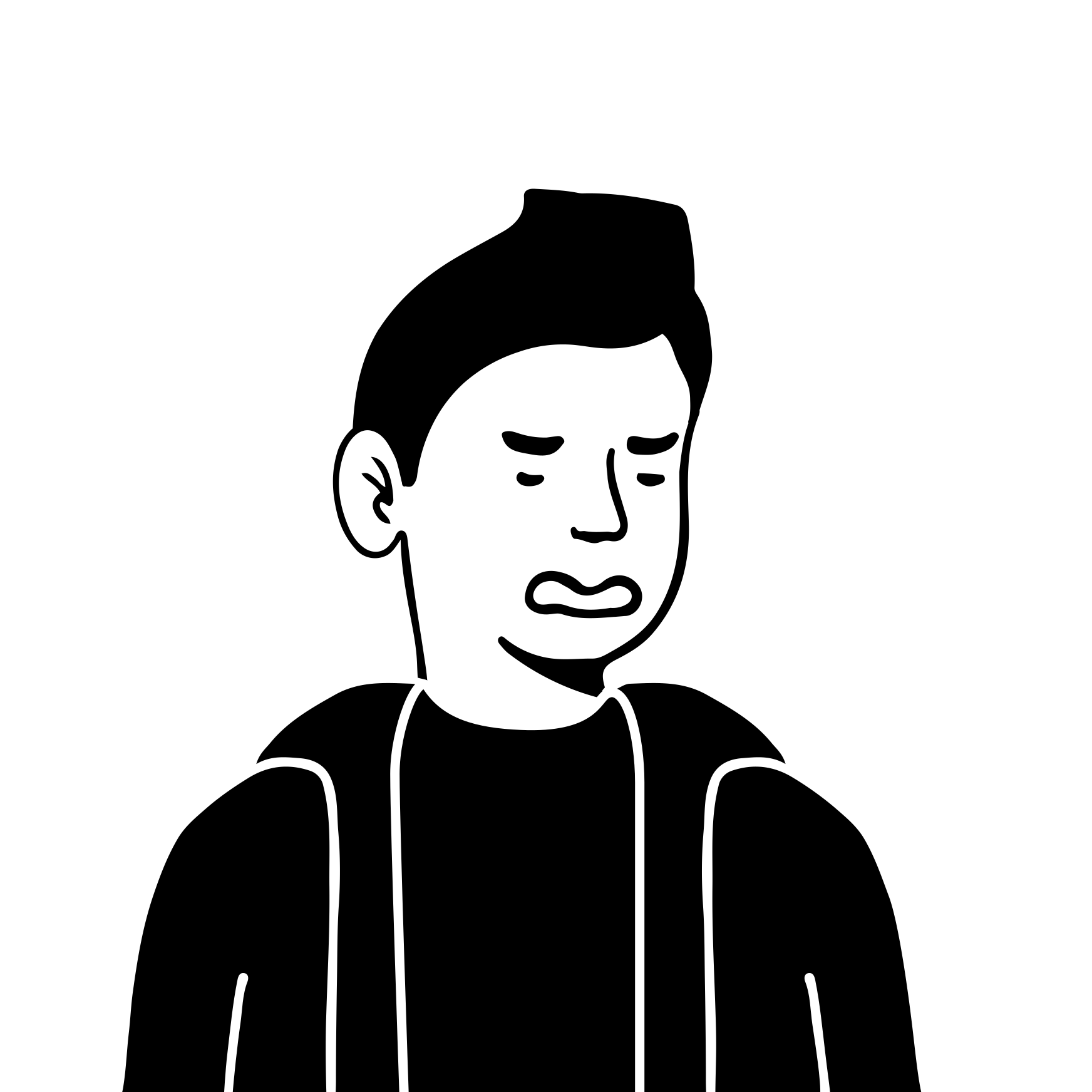
Just pivot the strategy. We need to leverage our synergy here.
Meanings
A group of living organisms that can reproduce with one another and produce fertile offspring, constituting a fundamental category of taxonomic classification.
"The species is endangered."
Collocations & Compounds
endangered species
A species at serious risk of extinction.
We must protect endangered species.
extinct species
A species that no longer has any living members.
Dinosaurs are an extinct species.
new species
A species that has recently been discovered or identified.
Scientists found a new species in the deep sea.
human species
The species Homo sapiens, comprising modern humans.
The human species has spread globally.
native species
A species that originates or naturally occurs in a particular place.
Protecting native species is crucial.
Idioms & Sayings
a different species
Used to describe someone or something that is completely different from others.
His approach to problem-solving is a different species.
a peculiar species
Used humorously to describe a person with odd or unusual characteristics.
He's really a peculiar species, isn't he?
Etymology
The word 'species' comes from Latin, meaning 'appearance', 'sort', or 'kind'. It was first used in English in the late 16th century to refer to a particular kind or sort of thing. In the 17th century, its biological meaning began to develop, referring to a group of organisms sharing common characteristics. This biological sense was popularized by scientists like John Ray and Carl Linnaeus, who used it as a fundamental unit in their systems of classification. Linnaeus, in particular, established the binomial nomenclature system where 'species' became the second part of a scientific name (e.g., Homo sapiens). The term's usage evolved from a general concept of 'kind' to a precise scientific category based on reproduction and shared characteristics.