sad
/sæd/
A general-purpose term for emotional distress, sorrow, or unhappiness. It describes a state of low spirits often triggered by loss, disappointment, or a sense of helplessness. Unlike "depressed," which implies a clinical or prolonged state, "sad" is typically used for transient emotions. Compared to "miserable," it is less intense and more common in everyday conversation. In certain contexts, it can shift from an emotional state to a judgment of quality or behavior, suggesting something is pathetic, regrettable, or inadequate (e.g., "a sad excuse for a meal").
💬Casual Conversation
Just saw Mrs. Henderson's post about her cat. It's really sad.

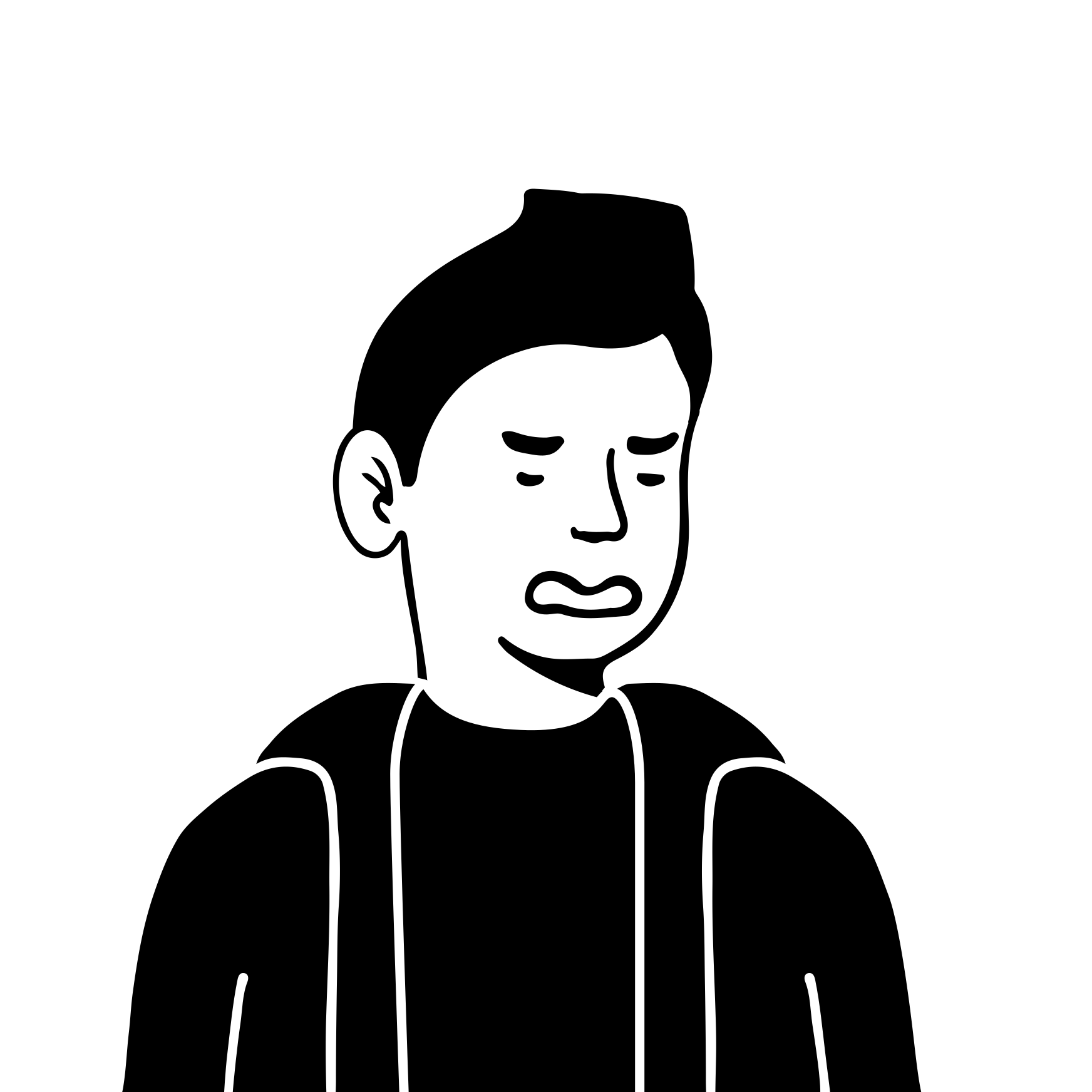
Oh, the one with the crazy eyes? It's just part of the lifecycle, Karen. We'll iterate.
Meanings
Unable to be remedied or alleviated; regrettable.
"It is a sad state of affairs when neighbors do not speak."
Collocations & Compounds
sad news
Unpleasant or unfortunate information.
I received some sad news about my grandfather's health.
sad story
A narrative that evokes feelings of sorrow or pity.
The documentary told the sad story of a family displaced by war.
sad face
A facial expression indicating unhappiness or disappointment.
He drew a sad face on the fogged-up window.
sad occasion
An event or circumstance that causes unhappiness or grief.
The funeral was a very sad occasion for everyone involved.
sad state
A condition of misfortune, distress, or decline.
The abandoned house was in a sad state of disrepair.
Idioms & Sayings
sad but true
Used to introduce a statement that is unfortunate or regrettable but factual.
Sad but true, the company had to lay off half its staff.
Etymology
The word 'sad' comes from the Old English word 'sæd,' meaning 'satiated' or 'weary.' Over time, its meaning shifted to denote a feeling of sorrow or unhappiness, likely influenced by similar-sounding words and a gradual change in semantic focus from physical fullness to emotional state. It is related to the German word 'satt' (full).