party
/ˈpɑ(ː)ɾi/
The word oscillates between high-energy social celebration and rigid structural organization. In its social sense, it evokes a feeling of release, communal joy, and temporary escape from routine. In political or legal contexts, the mood shifts entirely to one of formality, obligation, and strategic alignment. Here, it refers to a distinct entity or 'side' in a conflict or agreement, stripped of any festive connotation. As a verb, it suggests an active pursuit of pleasure. Depending on the context, this can range from innocent celebration to an implication of excess or hedonism.
Countable when referring to a specific social event or a political organization. Uncountable when used in the verb-like sense of partying as a general activity.
💬Casual Conversation
Dude, you hitting that party Sarah's throwing Friday?

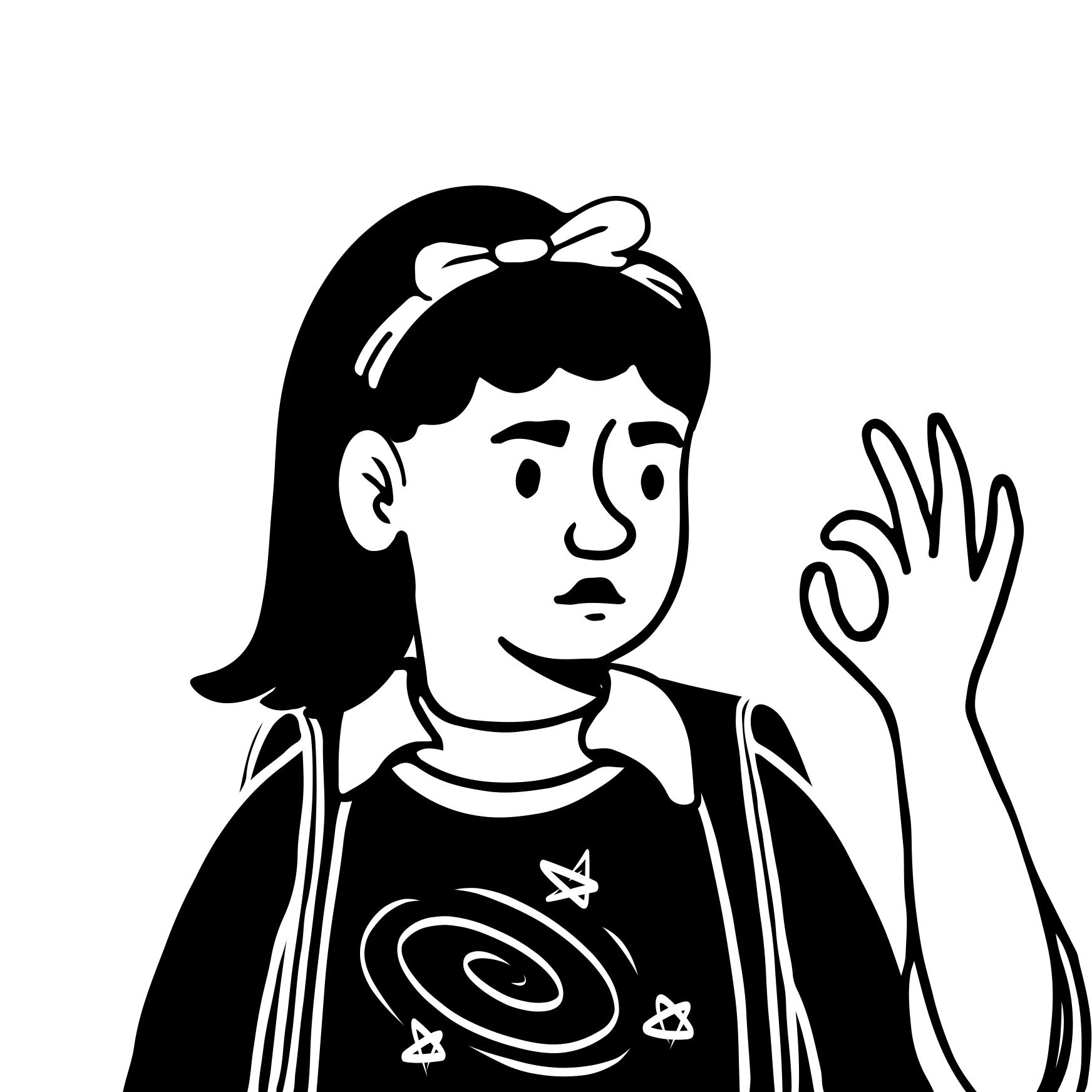
Nah. Got better things to do than make small talk.
Meanings
A social gathering of people for dancing, drinking, and eating.
"We are throwing a surprise party for her birthday."
An organized political group with a set of shared goals and opinions.
"He decided to join the Labour Party after university."
A person or group of people involved in a legal agreement, dispute, or transaction.
"The third party was not mentioned in the original contract."
To enjoy oneself at a party or engage in festive activities.
"They spent the entire weekend partying in Ibiza."
To celebrate something by having a party.
"We partied hard to celebrate the end of the semester."
Collocations & Compounds
party pooper
A person who spoils other people's enjoyment by being negative or disapproving.
Don't be such a party pooper; let's go dancing!
party animal
A person who enjoys parties and social events and behaves in an energetic and uninhibited way.
He's a real party animal, always the last to leave.
birthday party
A celebration of someone's birthday.
We're planning a surprise birthday party for Sarah.
dinner party
A social gathering at which a meal is served.
She's hosting a small dinner party next Saturday.
political party
A group of people who have the same or similar political aims and opinions.
He decided to join the Green Party.
Phrasal Verbs
party on
continue to celebrate or party regardless of circumstances
Even though the music stopped, they decided to party on until dawn.
party up
begin celebrating in an enthusiastic or loud manner
Once the results were announced, the whole team started to party up.
Idioms & Sayings
go to the highest bidder party
A situation where something is sold to the person who offers the most money.
In this market, it feels like every house is a go to the highest bidder party.
the party line
A set of beliefs or principles that are officially accepted by a political party or other organization.
He was criticized for not sticking to the party line.
throw a party
To organize and host a party.
Let's throw a party to celebrate your new job!