face
/feɪs/
The primary image is the 'front'—the most visible, exposed, or interactive surface of an object or person. It represents the point of contact between an entity and its environment. As a noun, it carries a strong association with identity and emotion. Because the human face is the primary tool for social signaling, the word often implies transparency or the masking of truth (e.g., "keeping a straight face"). As a verb, there is a sharp transition from physical orientation to psychological courage. While physically 'facing' something is passive positioning, mentally 'facing' something is an active, often reluctant, act of bravery and confrontation.
Countable when referring to the physical front of a human head or the specific oriented surface of an object, such as the 'face' of a cliff or a clock.
💬Casual Conversation
We need to schedule some face time for the Q3 report. It's still incomplete.
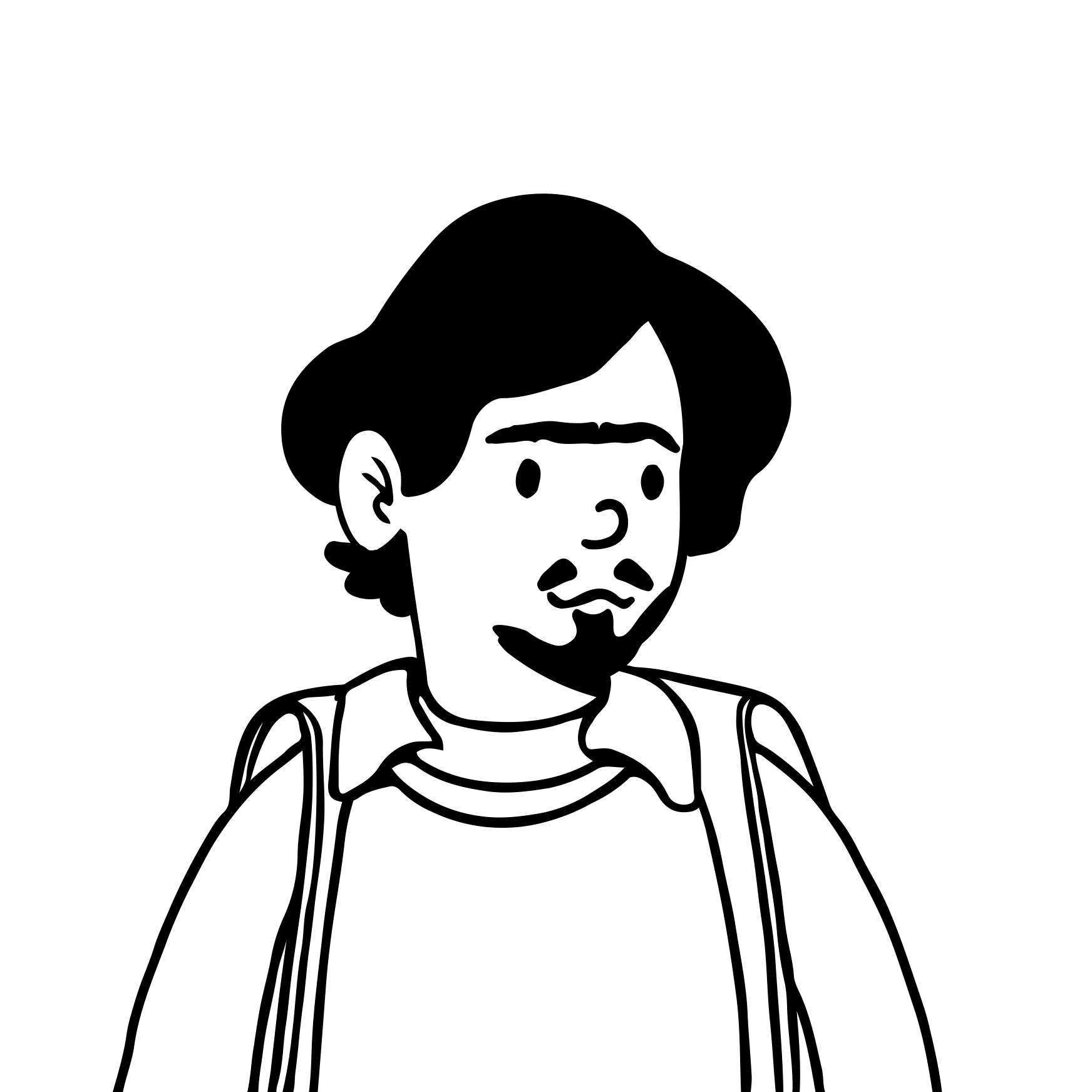
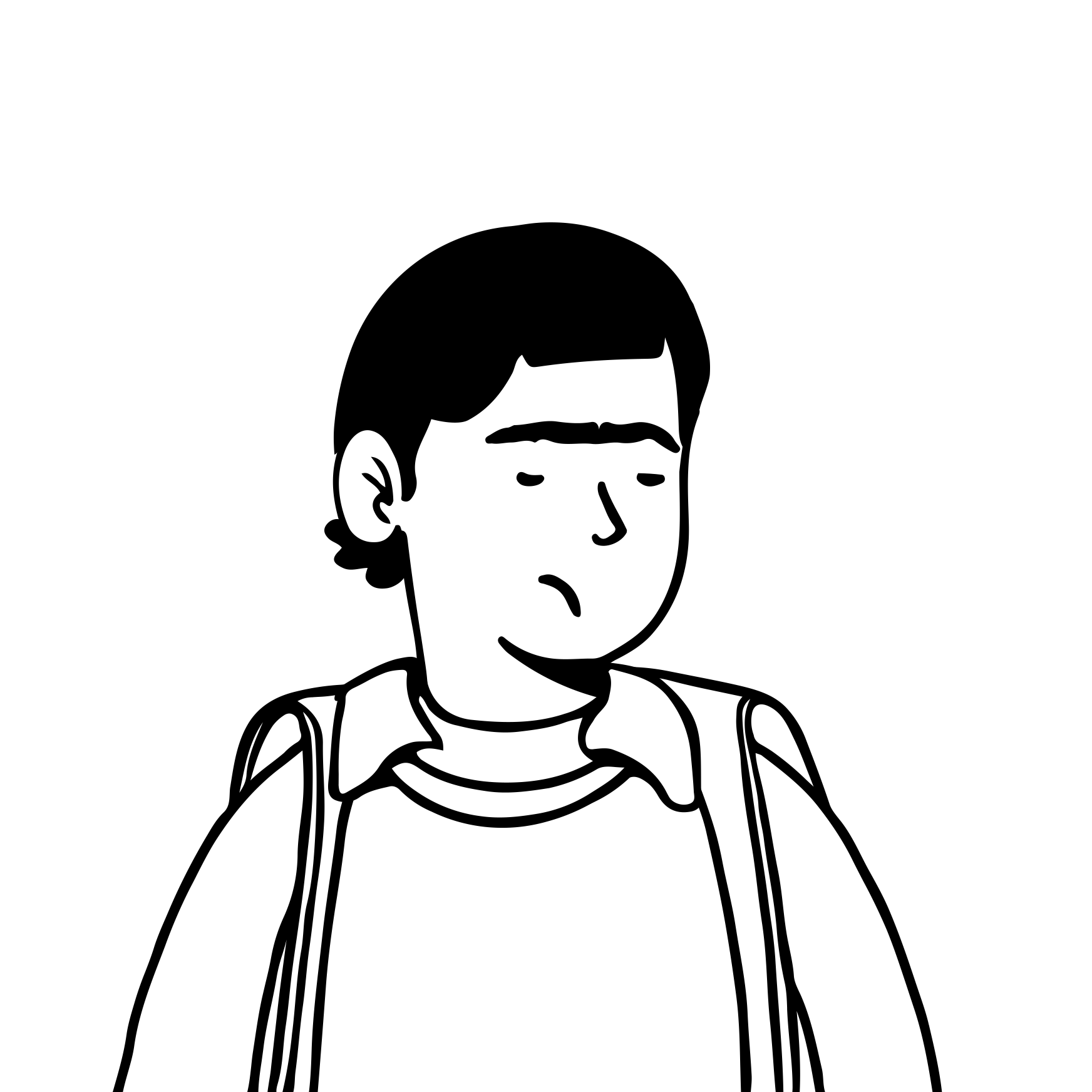
Whoa, chill. Can't we just run through it on a quick call? No need to go full face-to-face.
Meanings
The front part of a person's head from the forehead to the chin.
"She had a smile on her face."
The surface of something that is oriented toward a particular direction.
"The south-facing side of the house gets more sunlight."
Examples
She washed her face with cold water to wake up.
The north face of the mountain is covered in ice.
You must face the truth about your financial situation.
The new apartments face the city park.
Collocations & Compounds
face to face
Meeting or interacting directly with someone.
It was good to finally meet him face to face.
face value
The apparent worth or significance of something, not necessarily its true worth.
You shouldn't take his promises at face value.
front face
The part of an object that is intended to be seen or used first.
The front face of the building was made of stone.
blank face
A facial expression showing no emotion or understanding.
He looked at me with a blank face when I asked the question.
ugly face
A very unpleasant or unattractive appearance of a person's face.
He made an ugly face when he tasted the sour candy.
Phrasal Verbs
face up to
To accept and deal with a difficult or unpleasant situation.
You need to face up to the reality of the situation.
face off
To confront or compete directly with someone.
The two teams will face off in the championship game.
face out
To have a particular side or surface pointing outwards.
Make sure the printed side of the paper faces out.
face down
To intimidate someone into submission by looking directly at them.
She faced down her accusers with a calm demeanor.
Idioms & Sayings
keep a straight face
To manage not to laugh or smile, especially in a situation where it would be inappropriate.
It was so funny, I could barely keep a straight face.
lose face
To be humiliated or lose respect.
He feared he would lose face if the project failed.
save face
To avoid humiliation or embarrassment.
They tried to find a way to save face after the scandal.
put on a brave face
To pretend to be happy or confident when you are not.
Despite her worries, she put on a brave face for the children.
face the music
To accept the unpleasant consequences of one's actions.
After breaking the vase, he had to go face the music with his parents.
Etymology
The word 'face' comes from the Latin word 'facies', meaning 'form, appearance, countenance, face'. It entered Old French as 'face' and then into Middle English around the 14th century. Initially, it referred to the front part of the head, but its meaning expanded metaphorically to include appearance, expression, and even surface or facade.