draw
/dɹɔː/
The unifying concept across all meanings is the act of 'pulling'—whether pulling a pencil across paper to create a line, pulling curtains shut, or pulling water from a well. In an artistic context, it suggests a focus on form and line rather than color (which would be "painting"). It carries a neutral tone but can range from casual sketching to rigorous technical drafting. When used for extraction or movement, the word implies a deliberate, often steady motion. This differs from "yank" or "jerk," which suggest suddenness. In competitive contexts, it describes a state of equilibrium where neither side prevails. It is more common in British English to use "draw" as a noun for this outcome, whereas American English frequently prefers "tie".
💬Casual Conversation
Your mom says you're stressing. Just draw a bath and chill out.
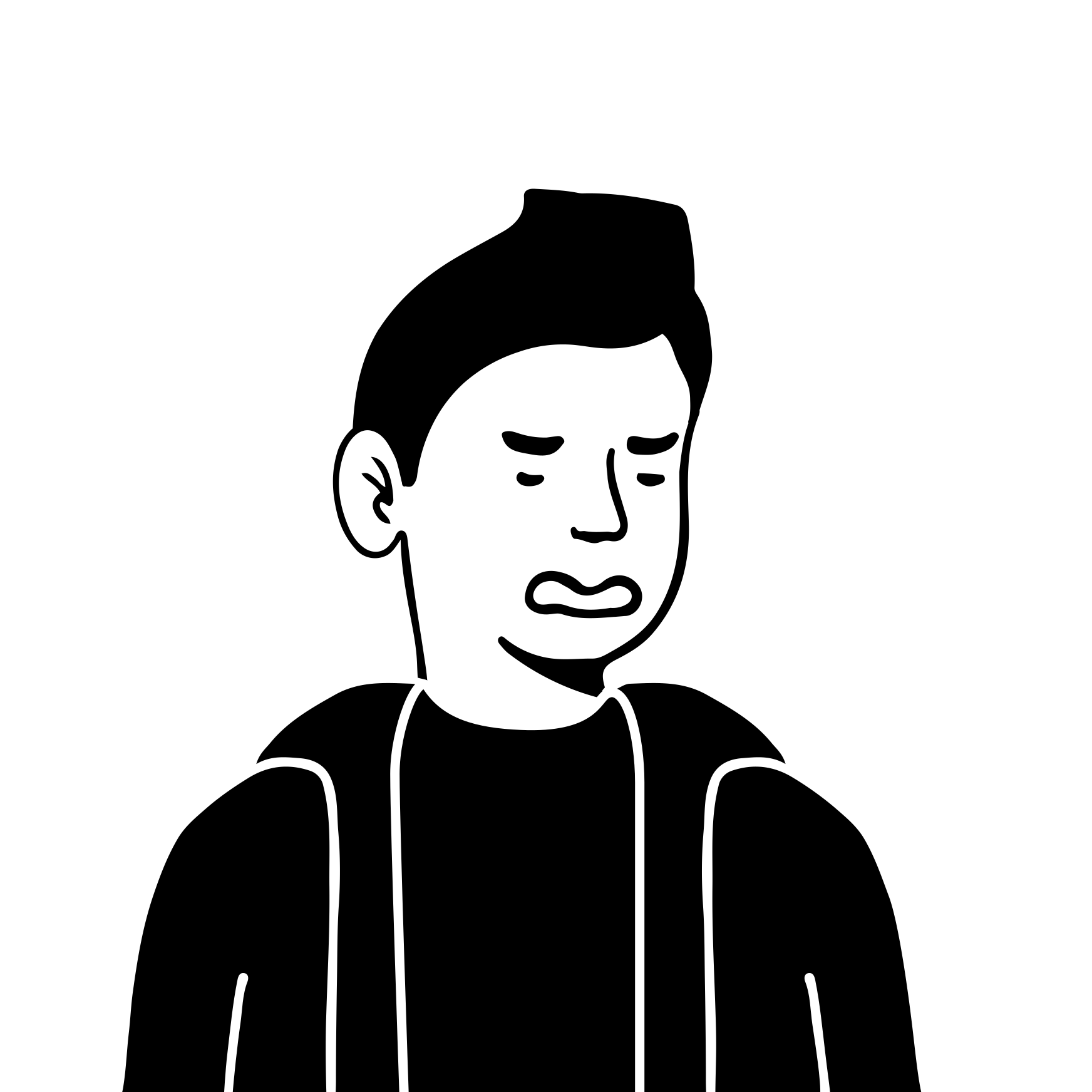
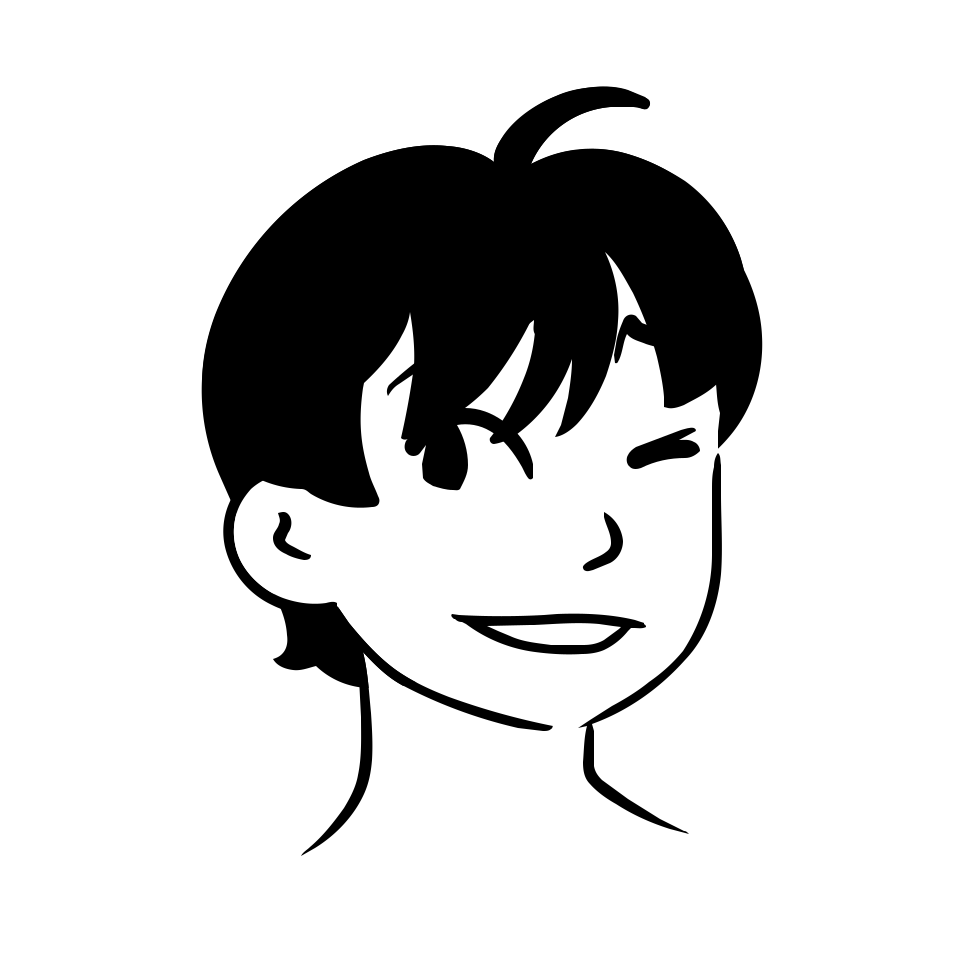
I'm literally drowning in finals, dad. A bath isn't gonna cut it.
Meanings
To produce a picture or diagram by making lines and marks on paper.
"She decided to draw a portrait of her grandmother."
To pull or drag something in a particular direction.
"He had to draw the heavy curtains closed to block out the light."
Etymology
Derived from the Old English dragan, meaning to pull, drag, or carry. This root evolved from the Proto-Germanic dreganan, which shares an ancestral link with the Old Norse draga. Over centuries, the meaning expanded from the physical act of pulling an object to the act of pulling a tool across a surface to create a line, and eventually to the concept of extracting a liquid or reaching a stalemate in a competition.