crown
The word evokes a sense of peak status, whether physical, political, or metaphorical. It is inextricably linked to the concept of sovereignty and divine right, carrying a weight of tradition, formality, and absolute authority. When used physically, it refers to the highest point. This creates a conceptual bridge between the literal top of a head or hill and the figurative 'top' of a social hierarchy. As a verb, it moves beyond simple placement to imply a culmination. To "crown" an achievement suggests that the final act was the most prestigious or perfect part of the process, turning a sequence of events into a completed masterpiece.
Countable when referring to the physical object worn by a king or a dental cap ('The museum displays three ancient crowns'). Uncountable when referring to the anatomical top of the head ('He rubbed the crown of his head').
💬Casual Conversation
dude hurry up and hop on. i'm about to secure the crown.

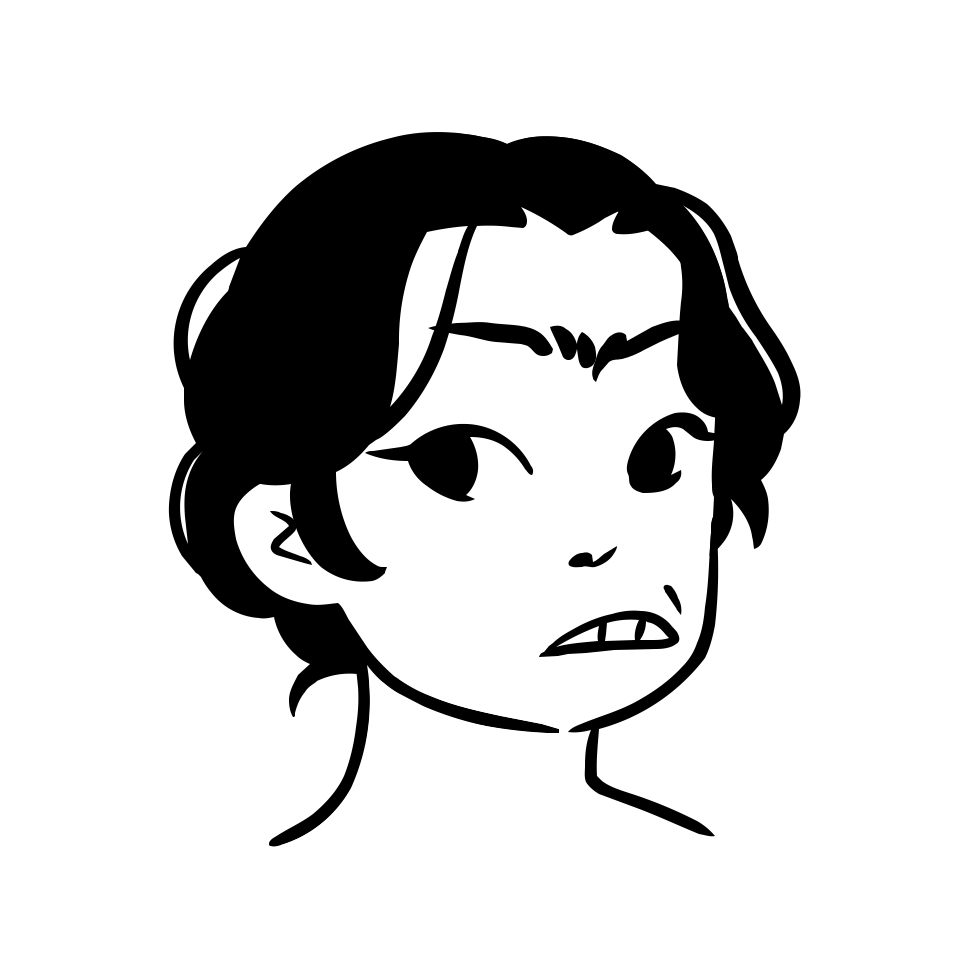
bet. just gotta finish this sandwich first.
Meanings
A circular ornamental headdress worn by a monarch as a symbol of authority.
"The king wore a gold crown encrusted with diamonds during the coronation."
The top part of the head, or the highest part of something (such as a hill or a tooth).
"He felt a sharp pain at the crown of his head."
To invest someone with regal power; to place a crown on the head of.
"The archbishop will crown the new queen tomorrow."
To complete or perfect something in a superlative way.
"A magnificent firework display served to crown the evening's celebrations."