contradiction
/ˌkɒntɹəˈdɪkʃən/
A collision of opposing ideas, statements, or features that cannot both be true at the same time. It suggests a logical failure or a structural clash where one element cancels out another. In formal logic and law, it is a precise error—a 'smoking gun' of falsehood. In social or artistic contexts, however, it often describes a human paradox, such as someone who preaches peace but acts with aggression. Unlike "disagreement," which is a difference of opinion between people, a contradiction is an internal inconsistency within a single source or system. It feels colder and more definitive than a "conflict," implying a mathematical impossibility rather than just a tension.
Countable when referring to a specific instance of conflicting statements (e.g., there were three contradictions in the report). Uncountable when referring to the general state of inconsistency or the logical concept of opposing forces.
💬Casual Conversation
Dude, this spreadsheet is melting my brain.

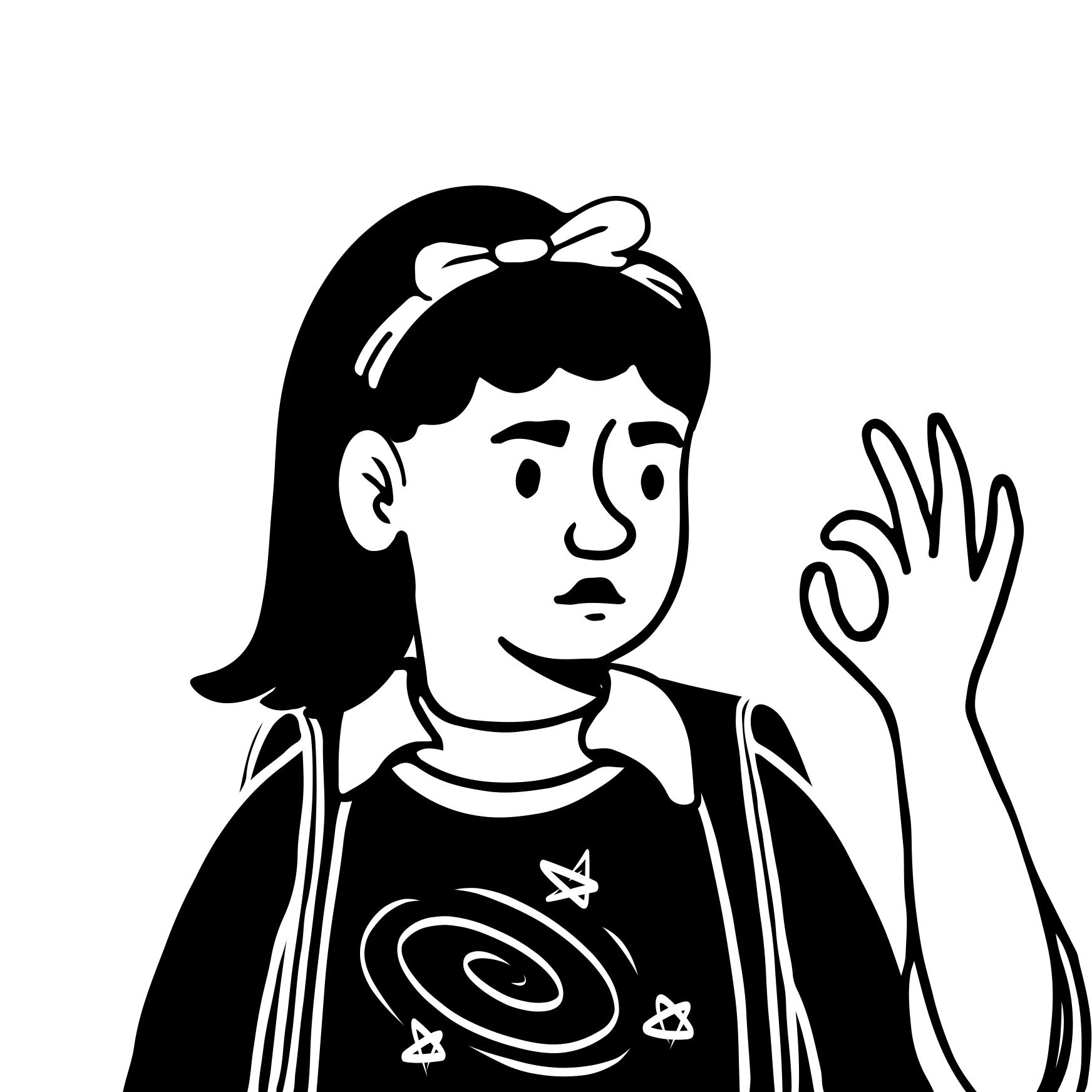
That's a contradiction. Didn't you just ace that Python script?
Meanings
Collocations & Compounds
internal contradiction
A contradiction that exists within a system, theory, or statement itself.
The internal contradiction in the company's strategy made it difficult to implement.
obvious contradiction
A contradiction that is easily perceived or recognized.
There was an obvious contradiction between his words and his actions.
logical contradiction
A statement or situation that defies the principles of logic.
The argument presented a logical contradiction that invalidated its conclusion.
flagrant contradiction
A contradiction that is blatant and shocking.
His apology was a flagrant contradiction of his previous behavior.
source of contradiction
The origin or cause of a contradiction.
We need to identify the source of contradiction in the data.
Etymology
The word 'contradiction' comes from the Latin verb 'contradīcere', meaning 'to speak against'. It's formed from 'contra-' (against) and 'dicere' (to say). This root structure clearly shows the core idea of opposition or saying the opposite of something else. The word entered Middle English around the 14th century, retaining its Latinate sense of an assertion that goes against another assertion.