cheek
/tʃiːk/
At its core, "cheek" refers to the fleshy part of the face below the eye and beside the mouth. In a literal sense, it is neutral and anatomical.
Metaphorically, the word shifts toward a social nuance of boldness or irreverence. When used to describe behavior, it suggests a playful yet slightly inappropriate defiance. It sits between 'rudeness' (which is purely negative) and 'confidence' (which is purely positive).
In British English specifically, "cheek" often carries a connotation of 'lovable mischief.' A person with cheek is seen as daring or impertinent, but often in a way that is amusing or charming rather than truly offensive.
💬Casual Conversation
Yo, can you just bypass this security thing for my game?
Yo, can you just bypass this security thing for my game?
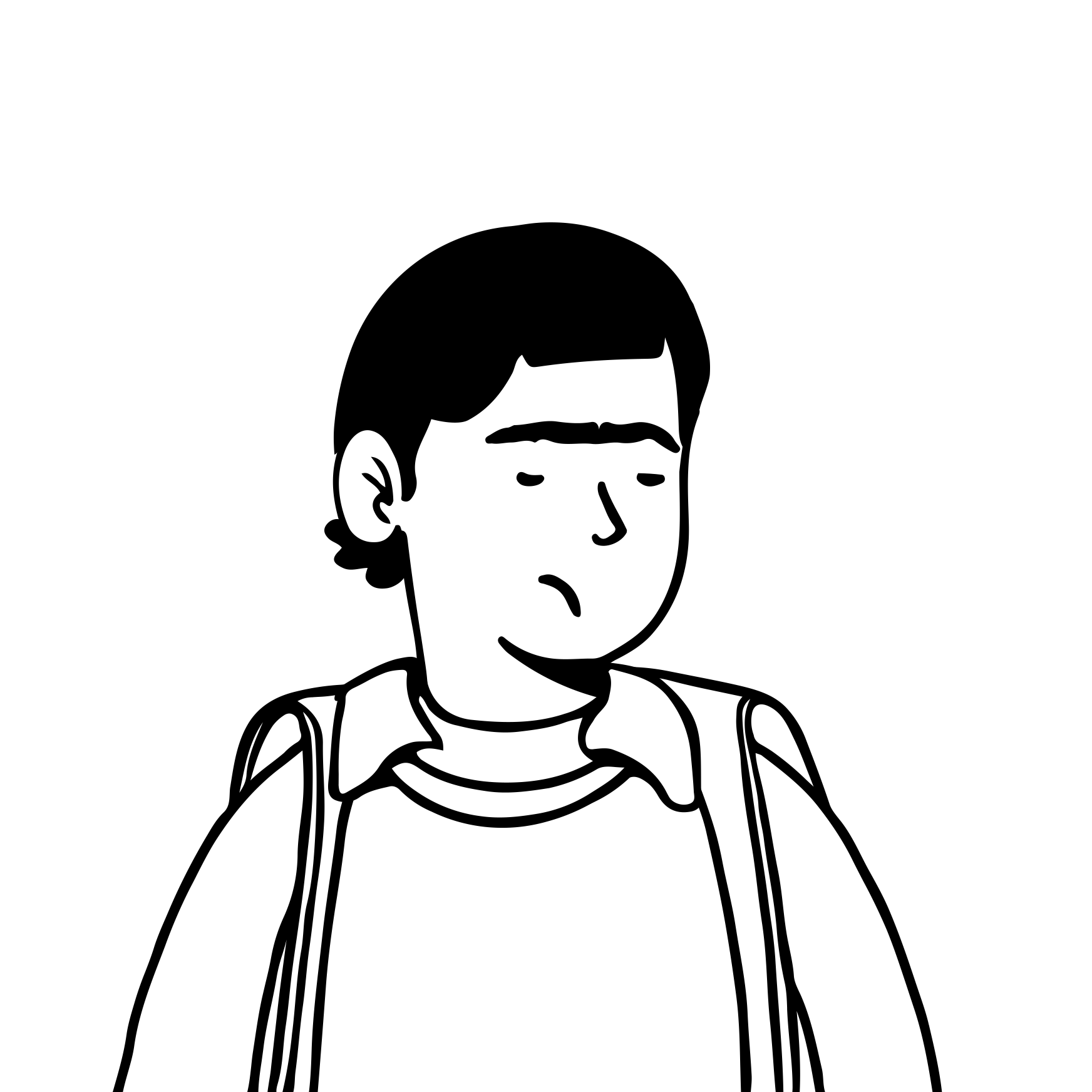
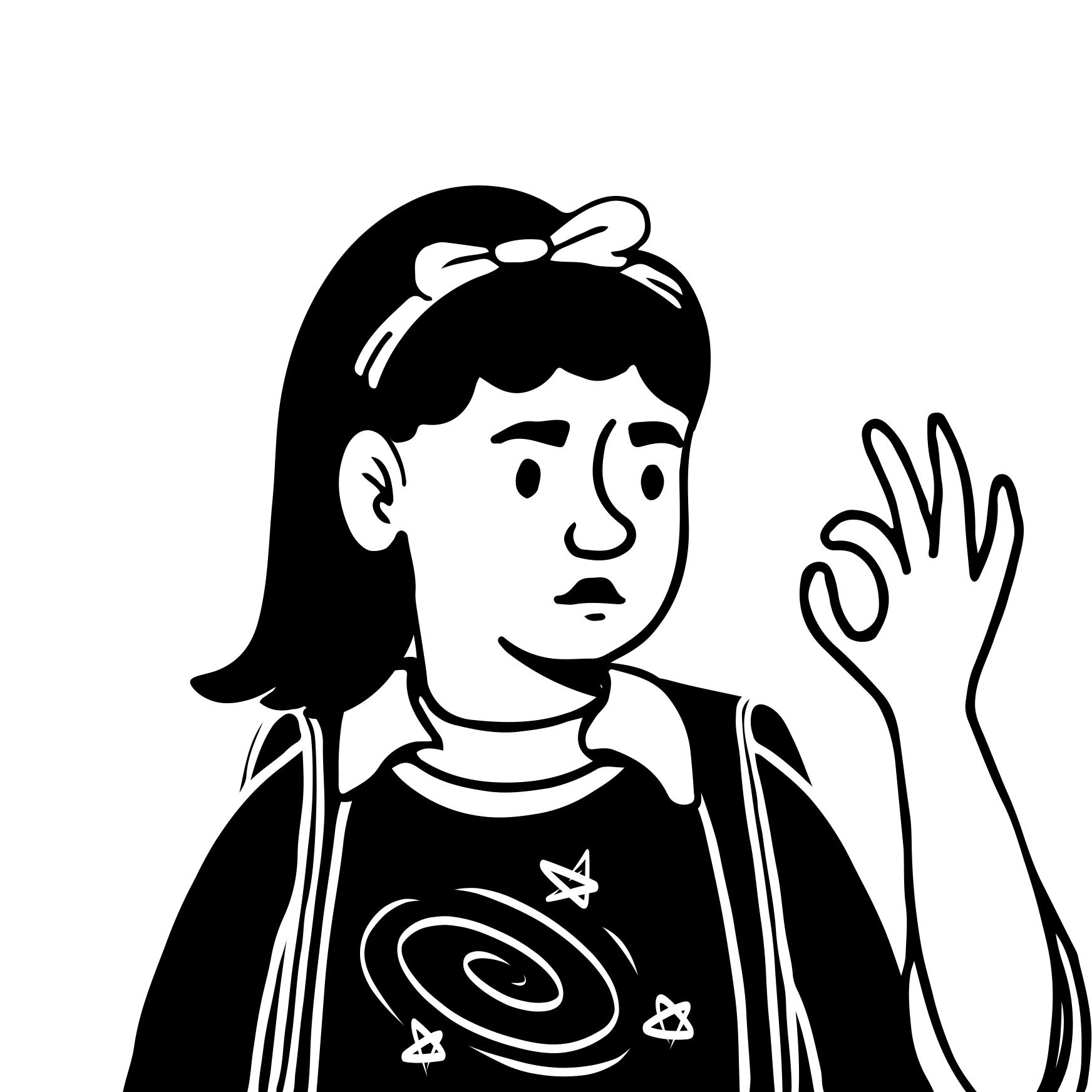
You've got some cheek asking for that. Did you restart your machine?
You've got some cheek asking for that. Did you restart your machine?
Meanings
Collocations & Compounds
red cheek
A cheek that is flushed with color, often due to embarrassment, exertion, or cold.
Her red cheek indicated she had been out in the cold.
rosy cheek
A cheek that is naturally pink or healthy-looking.
The child had rosy cheeks from playing outside.
pale cheek
A cheek that lacks color, often due to illness or fear.
His pale cheek showed he was not feeling well.
high cheekbone
The bone at the upper and outer part of the face below the eye.
She had striking features with high cheekbones.
sunburned cheek
A cheek that has become red and sore from overexposure to the sun.
After a day at the beach, his sunburned cheek stung.
Phrasal Verbs
cheek out
To look at or examine something, often in a casual or admiring way.
You should cheek out this new website.
Idioms & Sayings
cheek by jowl
Very close together; side by side.
The houses were built cheek by jowl along the narrow street.
turn the other cheek
To not retaliate when someone attacks or insults you; to forgive.
Despite the insults, he decided to turn the other cheek.
have the cheek to do something
To have the audacity or impudence to do something considered inappropriate or rude.
He had the cheek to ask for more money after wasting the first amount.
cheeky grin
A playful, impudent, or mischievous smile.
The child gave a cheeky grin after playing a prank.
Etymology
The word 'cheek' originates from the Old English word 'cēce', meaning 'the side of the face below the eye'. It has cognates in other Germanic languages, such as Old Norse 'kjāki' and Dutch 'kaak'. The word has remained remarkably consistent in its form and meaning throughout its history, primarily referring to the fleshy part of the face between the upper and lower jaws.