D
Dicread
HomeDictionaryBbear

bear

endure / carry / produce / possess / pay / move / animal

/bɛə(ɹ)/

Transitive VerbIntransitive Verb
pl: bearspast: borepp: borneing: bearing

As a noun, the word evokes images of raw power, solitude, and wildness. It is neutral in biological contexts but often carries a connotation of danger or unpredictability in storytelling.

As a verb, there is a strong theme of 'carrying'—whether that weight is physical (a bridge), emotional (grief), or biological (fruit). The sense of endurance is often heavy and strained, suggesting a struggle against a burden rather than easy acceptance.

In directional contexts, it suggests a gradual shift rather than a sharp turn, implying a fluid movement along a path.

💬Casual Conversation

🎬Tuesday afternoon; David is in a high-stress board meeting while Eleanor is at home.
Eleanor Smith

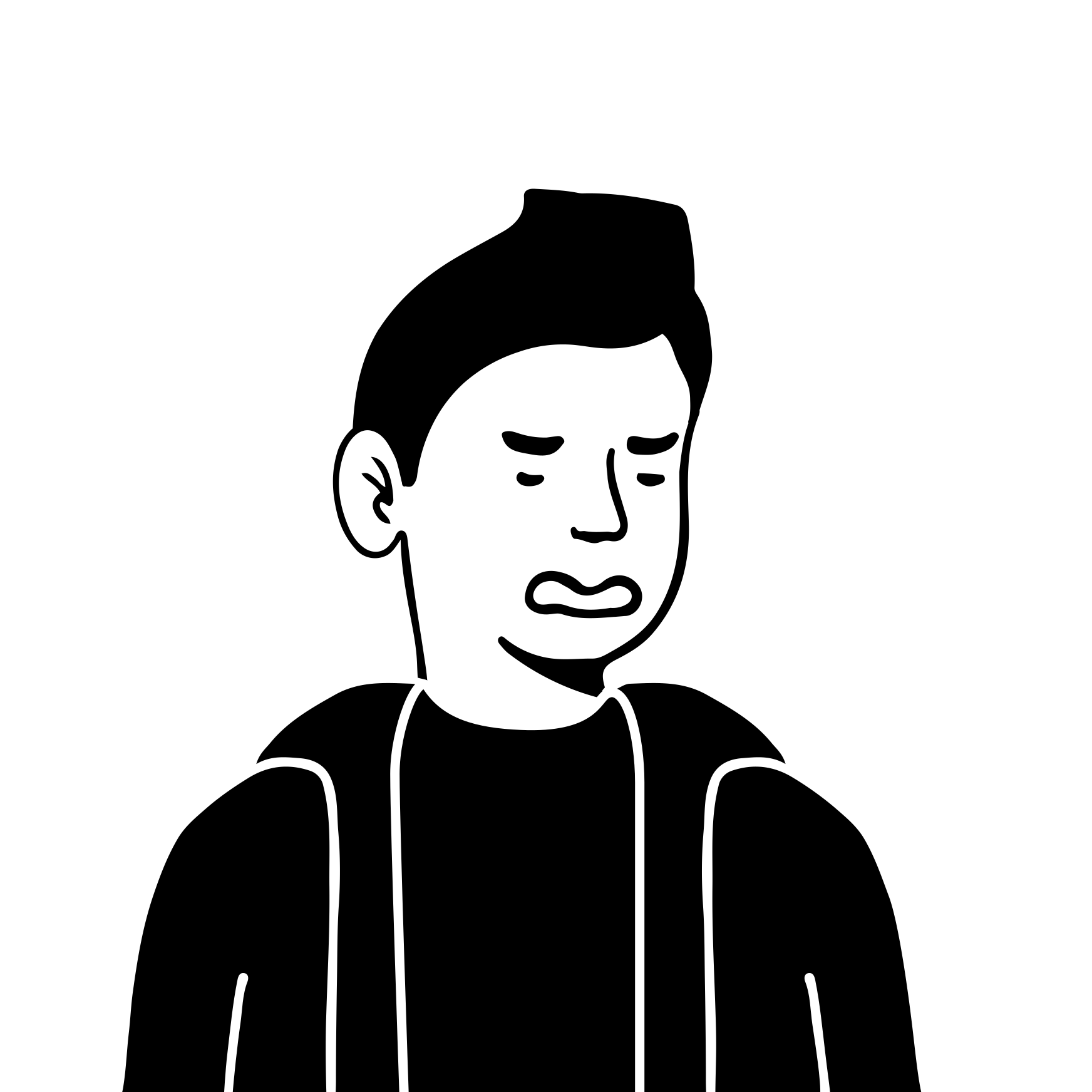
DAVID THE GARDEN GATE IS BROKEN I CANT BEAR THE SIGHT OF IT

DAVID THE GARDEN GATE IS BROKEN I CANT BEAR THE SIGHT OF IT

Eleanor Smith
David Smith
David Smith

Mom, please. I'm literally in the middle of a deep dive with the VPs.

Mom, please. I'm literally in the middle of a deep dive with the VPs.

Meanings

Transitive Verbendure
[~ something]

To accept or tolerate something unpleasant.

I cannot bear pain.

Transitive Verbcarry
[~ something]

To support the weight of something.

Pillars bear weight.

Transitive Verbproduce
[~ something]

To produce fruit, flowers, or offspring.

Trees bear fruit.

Transitive Verbpossess
[~ something]

To have a specific feature, name, or mark.

Letters bear dates.

Transitive Verbpay
[~ something]

To accept the responsibility for a cost.

They bear costs.

Intransitive Verbmove
[~ direction]

To move in a specific direction.

Bear right.

Nounanimal

A large, heavy mammal with thick fur and claws.

See a bear.

Examples

I see a brown bear.

The bear is big.

Bears like honey.

The pillars bear the roof.

Please bear left at the sign.

The cherry tree will bear blossoms soon.

School Life

I cannot bear his arrogance any longer.

Romance

The ancient walls bear the scars of war.

History
Business

I humbly ask you to bear with me.

Apology

Few species can bear such extreme temperatures.

Trivia

Etymology

Derived from two distinct roots: the noun comes from Old English bera, originating from a Proto-Germanic root meaning the brown one, while the verb stems from Old English beran, meaning to carry or bring, rooted in the Proto-Indo-European base bher-.

Related Words

Last Updated: May 2026Report an Error