party
/ˈpɑ(ː)ɾi/
A 'party' typically refers to a social gathering of friends or acquaintances, often for celebration or entertainment. It can also refer to a group of people acting together for a common purpose, especially in politics (e.g., a political party) or in a legal context (e.g., the plaintiff and the defendant are opposing parties in a lawsuit). When referring to a social gathering, 'party' is a countable noun. You can have 'a party', 'two parties', etc. In informal speech, 'party' can sometimes be used humorously to describe any group of people doing something together, even if it's not a formal celebration.
💬Casual Conversation
Dude, you hitting that party Sarah's throwing Friday?
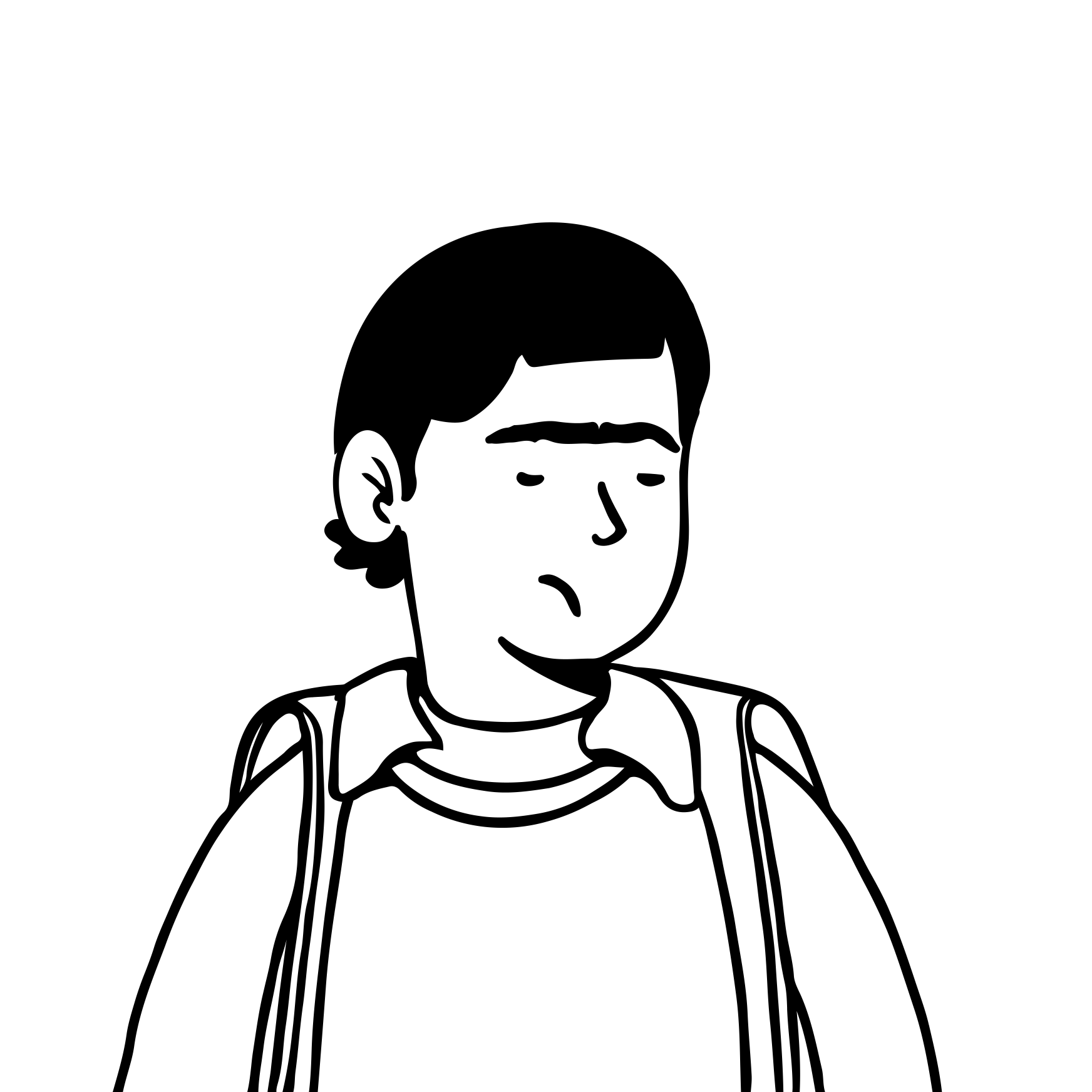
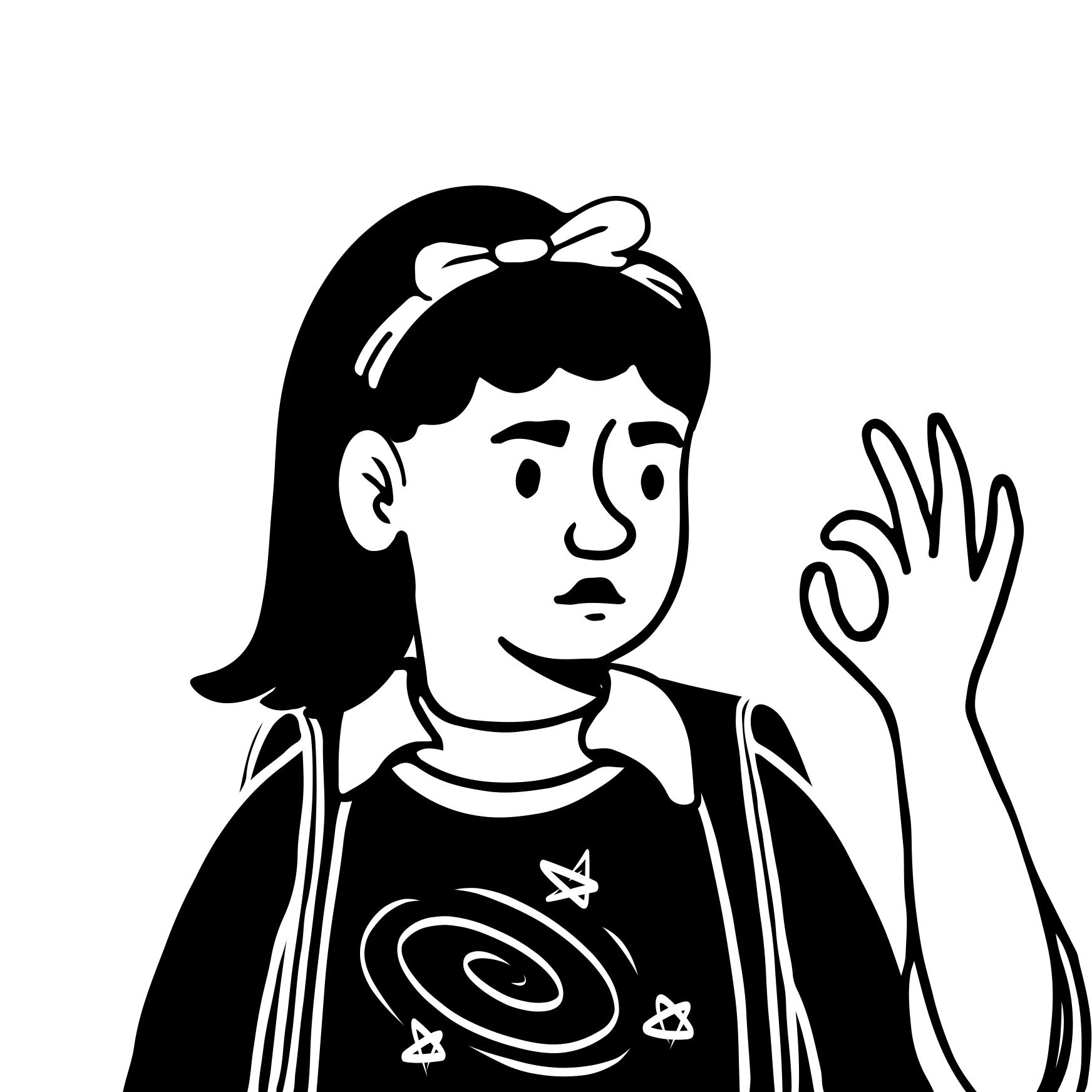
Nah. Got better things to do than make small talk.
Collocations & Compounds
party pooper
A person who spoils other people's enjoyment by being negative or disapproving.
Don't be such a party pooper; let's go dancing!
party animal
A person who enjoys parties and social events and behaves in an energetic and uninhibited way.
He's a real party animal, always the last to leave.
birthday party
A celebration of someone's birthday.
We're planning a surprise birthday party for Sarah.
dinner party
A social gathering at which a meal is served.
She's hosting a small dinner party next Saturday.
political party
A group of people who have the same or similar political aims and opinions.
He decided to join the Green Party.
Idioms & Sayings
go to the highest bidder party
A situation where something is sold to the person who offers the most money.
In this market, it feels like every house is a go to the highest bidder party.
the party line
A set of beliefs or principles that are officially accepted by a political party or other organization.
He was criticized for not sticking to the party line.
throw a party
To organize and host a party.
Let's throw a party to celebrate your new job!
Cultural Context
The Party's Over: How a Medieval Feast Became a Symbol of Decline
The word 'party' conjures images of revelry, celebration, and joyous gatherings. Yet, its etymology also carries a darker, more somber connotation, particularly when we consider its historical evolution from a simple division to a political faction, and ultimately, to a metaphor for an ending.
In medieval times, 'party' could refer to a group of people, often assembled for a specific purpose, which could include feasting or merrymaking. However, the word also developed strong associations with division and separation. Think of a 'party to a contract' – two distinct sides agreeing. This sense of division is crucial.
This dual nature of 'party' – as a gathering and as a division – became particularly potent in political discourse. A 'political party' is, by definition, a group that seeks power, often in opposition to others. This inherent oppositionality means that every political party, by its very nature, creates a division within the larger body politic.
This leads to the evocative phrase, 'the party's over.' It doesn't just mean the fun has stopped; it implies a fundamental shift, a conclusion to a particular era or state of affairs. When a political party loses power, or when a dominant ideology wanes, we can say 'the party's over.' It signifies the end of an influence, a reign, or a particular chapter.
This is deeply rooted in human psychology. We are drawn to the collective energy of a party, but we also recognize the inevitable cycles of rise and fall, of coming together and breaking apart. The word 'party' thus encapsulates both the vibrant pulse of human connection and the melancholic understanding that all gatherings, all eras, eventually must conclude. The end of a party is not just a cessation of activity; it's a marker of time's passage and the inherent impermanence of human endeavors.