consequence
/ˈkɒnsɪkwɛns/
The word 'consequence' is typically used to refer to the result of an action or event. It often implies a negative or significant outcome, but can also be neutral or even positive in some contexts. It is generally used as an uncountable noun, especially when referring to the general idea of results (e.g., 'We must consider the consequence'). However, it can be used in the plural ('consequences') when referring to multiple specific results (e.g., 'The consequences of his actions were severe'). 'Consequence' is a fairly formal word. In very casual conversation, people might use simpler words like 'result', 'outcome', or 'effect'. However, 'consequence' is widely understood and used in everyday English, especially when discussing important matters or responsibilities.
💬Casual Conversation
Mark, the Q3 numbers are still missing. There will be a real consequence if we don't hit send by 3.
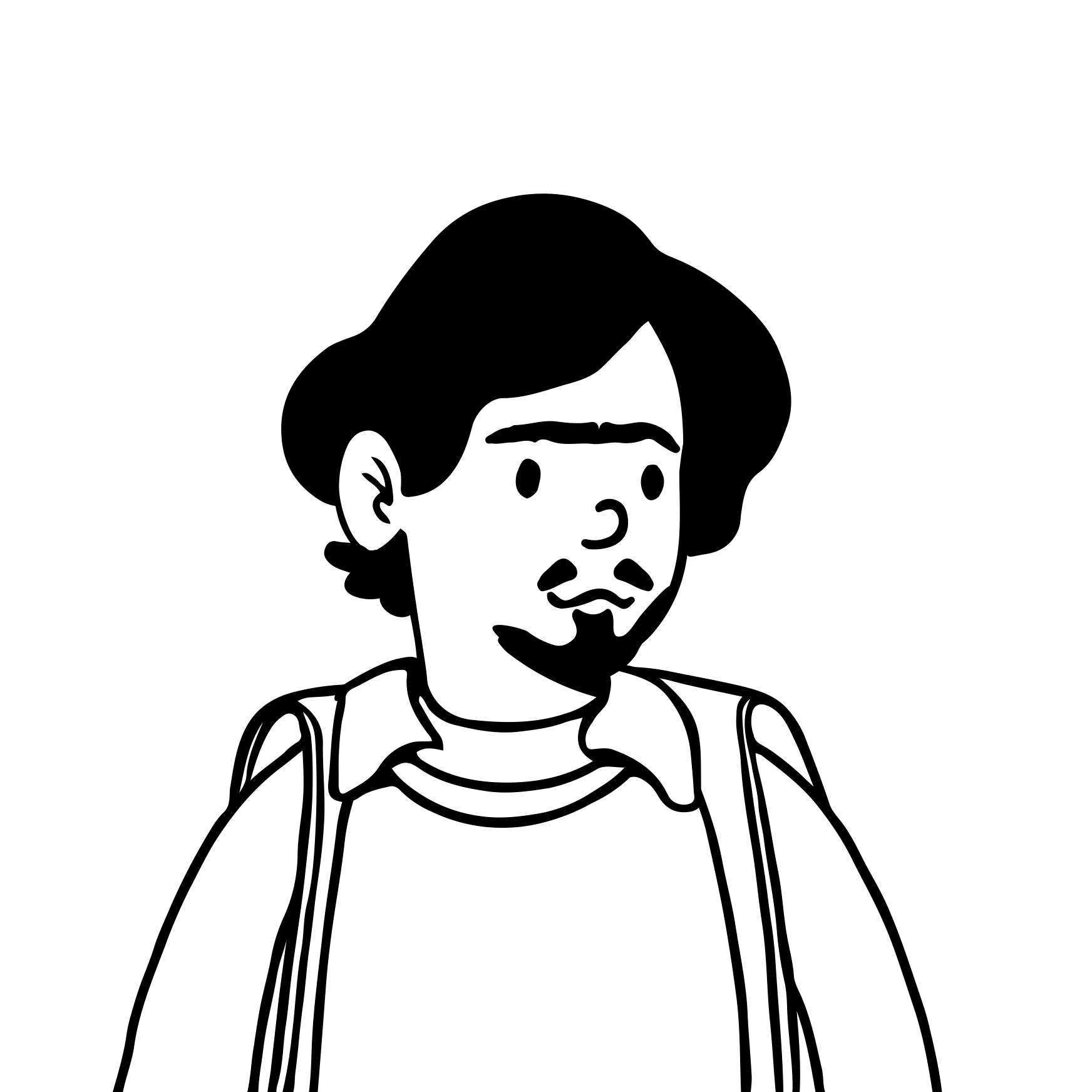
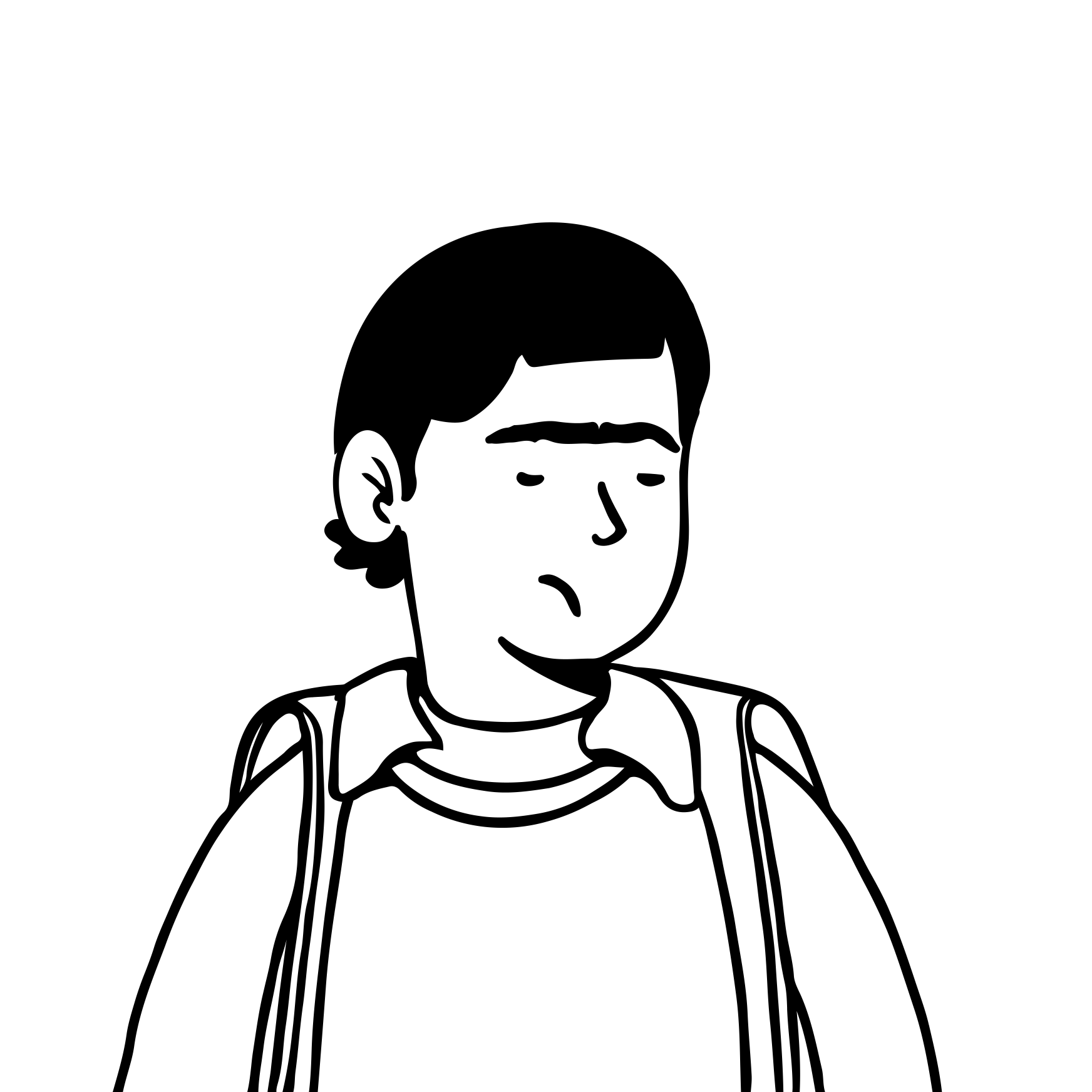
Dude, chill. What's the actual consequence? Just a few extra clicks.
Collocations & Compounds
direct consequence
A result that follows immediately from an action or event.
The accident was a direct consequence of his reckless driving.
natural consequence
A result that is a logical or expected outcome of an action.
Forgetting to study had the natural consequence of failing the exam.
unforeseen consequence
A result that was not anticipated or expected.
The new policy had several unforeseen consequences.
immediate consequence
A result that happens right after an action or event.
The immediate consequence of the strike was a shortage of goods.
serious consequence
A result that is important or has a significant impact.
His actions had serious consequences for his career.
Idioms & Sayings
face the consequences
To accept the negative results of one's actions.
If you break the rules, you will have to face the consequences.
the consequence of
The result or effect of something.
We must consider the consequence of our decisions.
in consequence of
As a result of; because of.
The meeting was postponed in consequence of the bad weather.
Cultural Context
The Unseen Consequence: How Causality Shapes Our World
Every action, no matter how small, sends ripples through the fabric of existence. This fundamental principle, the understanding that every event has a reaction, is the essence of causality, and its most potent manifestation is the concept of consequence.
In physics, this is as simple as Newton's third law: for every action, there is an equal and opposite reaction. Push a wall, and you feel the force pushing back. But the true depth of consequence lies in the complex, interconnected systems that govern our lives. Think of the butterfly effect, a cornerstone of chaos theory. A butterfly flapping its wings in Brazil might, through an unimaginably long chain of atmospheric interactions, contribute to a hurricane in Texas weeks later. This isn't mere speculation; it's a profound illustration of how minuscule initial conditions can lead to vastly different outcomes, demonstrating the far-reaching consequence of seemingly insignificant events.
Beyond the physical, the psychological and social realms are equally governed by this principle. In psychology, our choices have internal consequences, shaping our beliefs, habits, and self-perception. The consequence of a repeated negative thought pattern can lead to anxiety or depression, while the consequence of consistent self-compassion can foster resilience and well-being. Socially, every decision we make, from a casual comment to a major policy change, has a cascade of consequences that affect individuals, communities, and even global dynamics. Understanding this intricate web of cause and effect, and the inevitable consequence that follows, is crucial for navigating our world with wisdom and foresight. It reminds us that we are not isolated actors, but integral parts of a vast, interconnected system where every choice matters.
Etymology
The word 'consequence' entered English in the late 14th century. It comes from the Anglo-French 'consequence' and directly from the Latin word 'consequentia', meaning 'a following after, a sequence'. This Latin term is derived from 'consequi', which means 'to follow closely, overtake, attain'. The root is 'com-' (together) + 'sequi' (to follow). Initially, it referred to a logical inference or conclusion, and later evolved to mean the result or outcome of an action or condition.