adjust
/əˈdʒʌst/
The verb 'adjust' is generally used in a neutral to slightly formal context. It implies making small changes to correct, improve, or adapt something. It can be used for physical objects (adjusting a chair, a dial) or abstract concepts (adjusting plans, expectations, strategy). It is often followed by a preposition like 'to' when referring to adaptation: 'adjust to a new environment'. 'Adjust' is a regular verb, so its past tense and past participle are 'adjusted', and the present participle is 'adjusting'.
💬Casual Conversation
Ugh, this new internship schedule is honestly killing my vibe. I just can't adjust.
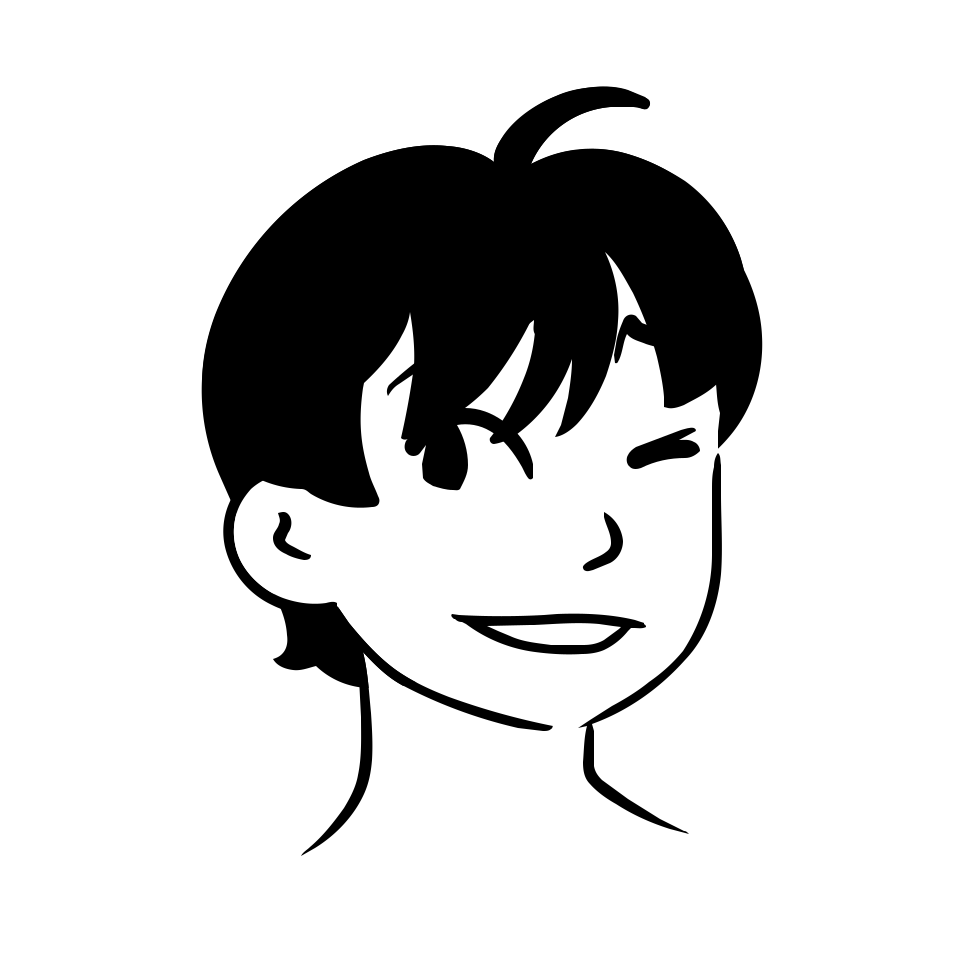
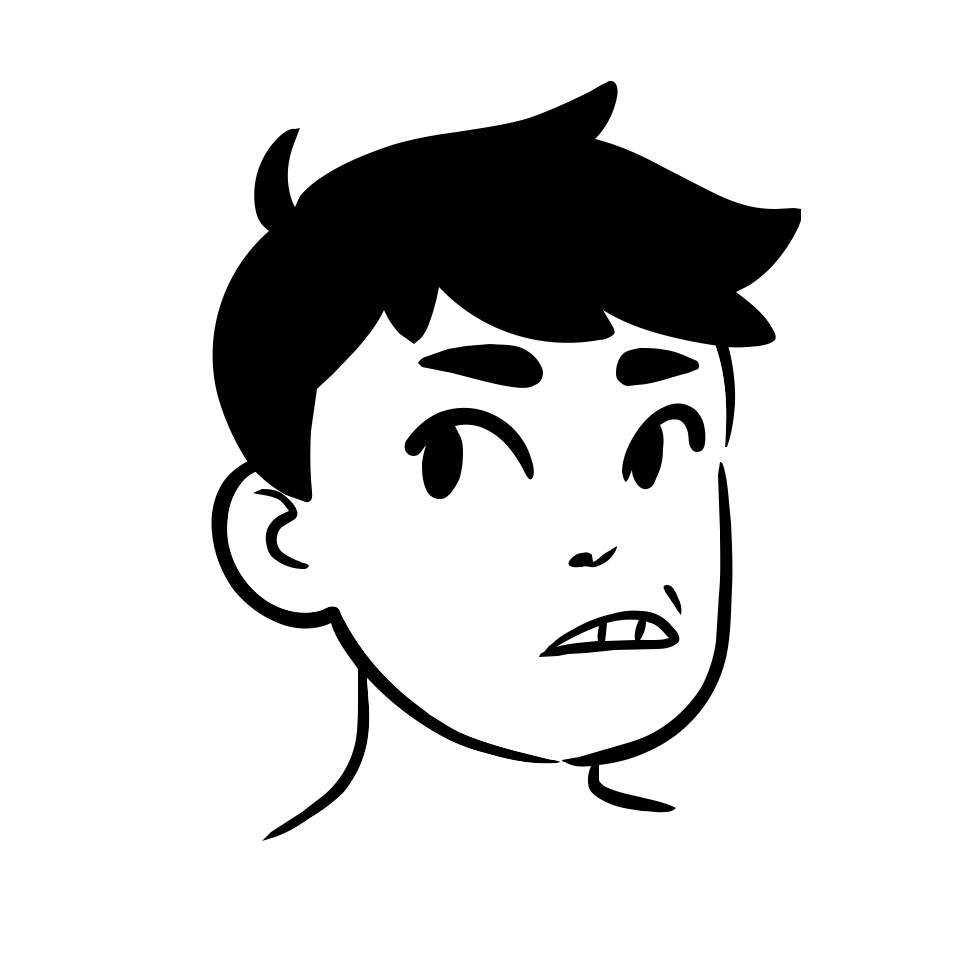
DON'T WORRY DARLING. IT ALWAYS TAKES A BIT TO GET THE HANG OF NEW THINGS.
Collocations & Compounds
adjust settings
To change the settings of a device or system to make it work better or suit a particular need.
You may need to adjust settings on your camera for low-light photography.
adjust the volume
To change the loudness of sound.
Please adjust the volume so everyone can hear the presentation.
adjust the height
To change the vertical position of something.
You can adjust the height of the chair to fit your desk.
adjust the temperature
To change the degree of heat or cold.
It's a bit chilly in here; let me adjust the temperature.
adjust the focus
To change the point at which rays of light converge to form a clear image.
The photographer had to quickly adjust the focus on the moving subject.
Phrasal Verbs
adjust to
To become familiar with a new situation or environment, or to change your behavior or expectations to deal with it successfully.
It took him a while to adjust to the new work schedule.
Cultural Context
The Art of the Adjust: How We Adapt to a World in Flux
The word 'adjust' is more than just a verb; it's a fundamental aspect of human existence and survival. From the moment we are born, our lives become a continuous process of adjustment. We adjust to new environments, new relationships, new challenges, and even to the subtle shifts within ourselves.
Think about the biological marvel of adaptation. Our bodies constantly adjust to maintain homeostasis – that delicate balance of internal conditions necessary for life. When you step out into the cold, your blood vessels constrict to conserve heat; when you eat, your digestive system adjusts to process the nutrients. This is biological adjustment at its finest, an unconscious, intricate dance of physiological responses.
Beyond the biological, our psychology is deeply intertwined with the ability to adjust. Cognitive psychologists study how we adjust our beliefs and behaviors when confronted with new information that challenges our existing worldview. This process, often uncomfortable, is crucial for learning and growth. The ability to adjust our perspective, to be flexible in our thinking, is a hallmark of emotional intelligence and resilience. When we can't adjust, we become rigid, prone to stress and conflict.
In a broader societal sense, 'adjust' speaks to our capacity for innovation and progress. Societies adjust to technological advancements, economic shifts, and evolving social norms. The Industrial Revolution, the digital age – these were periods of massive societal adjustment. Our ability to collectively adjust, to learn and implement new ways of living and working, is what propels civilization forward. Even in the smallest daily interactions, we adjust our tone, our body language, and our expectations to navigate the complexities of human connection. The simple act of adjusting is, in essence, the engine of life itself.
Etymology
The word 'adjust' comes from Old French 'ajuster', meaning 'to make right, to put in order'. This, in turn, derives from Vulgar Latin 'adiustare', a blend of Latin 'ad-' ('to') and 'iustare' ('to make equal, to align'), which itself comes from 'iustus' ('just, right'). The word entered English in the late 14th century, initially meaning 'to make conformable or consistent'. Its sense of 'to bring into proper alignment or position' developed in the 15th century, and the meaning of 'to adapt oneself to new conditions' emerged in the 17th century.