young
/jʌŋ/
This term primarily denotes a chronological state of existence, but it often carries a strong connotation of innocence, malleability, or lack of experience. When applied to humans, it can describe a specific age bracket or a state of mind characterized by curiosity and energy. In a broader sense, the word can be applied to non-human entities, such as a young company or a young star, where it indicates the early stages of development or the beginning of a lifecycle. This versatility allows the word to bridge the gap between biological age and conceptual onset.
💬Casual Conversation
Look at how much the young kids have grown!
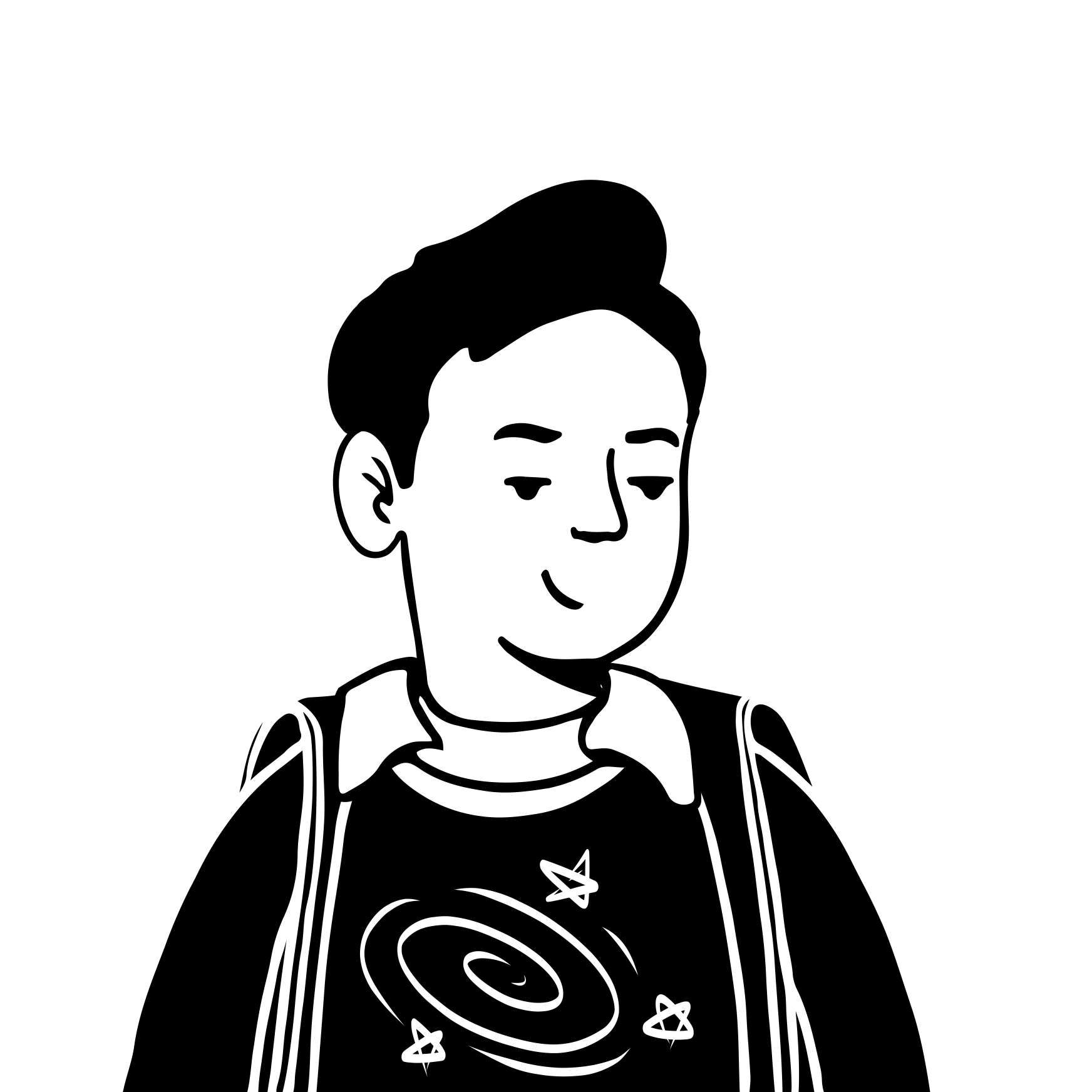

It is crazy how fast they age.
Meanings
Examples
The young scientist discovered a new species of fungi.
Collocations & Compounds
young adult
a person transitioning from adolescence to adulthood
The bookstore has a large section for young adult novels.
young age
the early period of a person's life
She began playing the piano at a very young age.
young man
a male person who is not yet old
A young man helped the lady carry her groceries.
young generation
the people of the current youth demographic
The young generation is more tech-savvy than their parents.
young animal
a juvenile creature
The young animal stayed close to its mother for protection.
Idioms & Sayings
young at heart
having a youthful spirit regardless of age
My grandfather is eighty, but he is still young at heart.
Cultural Context
The concept of remaining young forever has haunted human imagination for millennia, most famously embodied in the legend of the Fountain of Youth. This mythical spring was said to restore the youth of anyone who drank or bathed in its waters, turning the aged back into the young and vibrant versions of themselves.<br><br>During the 16th century, the Spanish explorer Juan Ponce de Leon is often credited with searching for this fountain in Florida, though historical records suggest his motivations were more about colonization and gold than a magical spring. Despite the lack of scientific evidence, the obsession with youth reflects a universal human fear of decay and a deep psychological longing for the vitality and potential associated with being young.<br><br>In modern times, this quest has shifted from mythology to biotechnology. From skincare serums to CRISPR gene editing, the human drive to stop the clock remains. We treat youth not just as a chronological stage of life, but as a prized commodity, proving that the allure of being young is one of the most powerful drivers of human innovation and desire.
Etymology
From Old English geong, from Proto-Germanic jungaz.