worst
/wɜːst/
The superlative form of 'bad', representing the absolute nadir of a scale. It conveys an ultimate sense of failure, unpleasantness, or deficiency from which there is no further descent. While 'worst' describes the lowest quality, it often carries a heavy emotional weight of dread or disappointment. In casual speech, it is frequently used as a hyperbolic expression to emphasize extreme dissatisfaction (e.g., "the worst movie ever"). Unlike 'poorest', which often refers to lack of resources or technical skill, 'worst' typically describes an overall negative experience or a moral/qualitative failure.
💬Casual Conversation
My system just crashed again. Honestly, Monday mornings are the absolute worst.

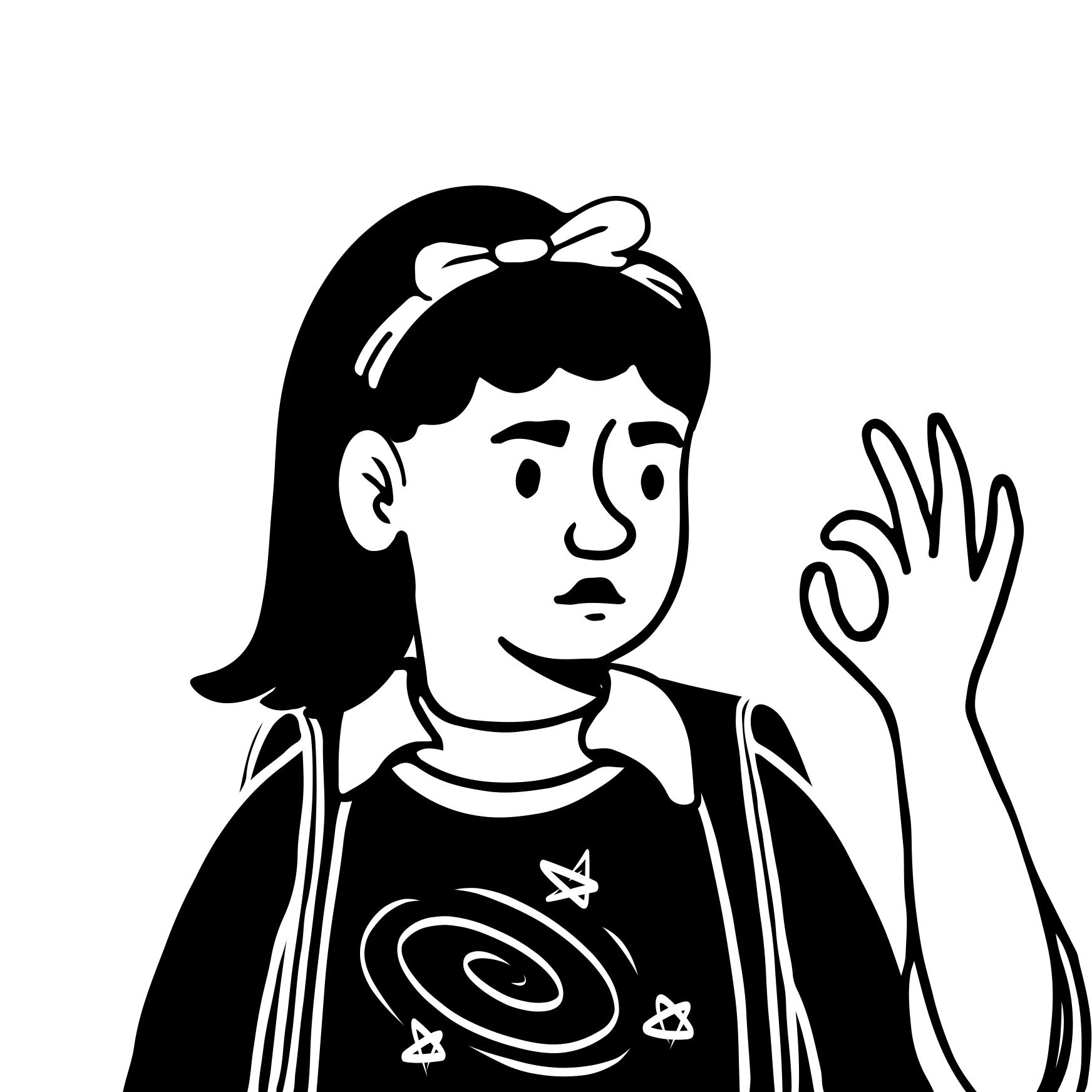
Did you even try a hard reboot?
Meanings
Collocations & Compounds
worst-case scenario
the worst possible thing that could happen in a particular situation
We need to plan for the worst-case scenario.
worst offender
a person or thing that is most responsible for something bad
He was identified as the worst offender in the group.
worst nightmare
a situation that is more frightening or unpleasant than you could ever imagine
This traffic jam is my worst nightmare.
worst-case basis
planning or considering the most unfavorable outcome
The budget was prepared on a worst-case basis.
worst fears
the things that one is most afraid of happening
Unfortunately, our worst fears were realized.
Idioms & Sayings
if the worst comes to the worst
in the most extreme situation possible
If the worst comes to the worst, we can always sell the house.
make matters worse
to make a bad situation even worse
His refusal to apologize only served to make matters worse.
the worst is yet to come
a difficult or unpleasant situation is expected to become even more severe in the future
Many fear that the worst is yet to come for the economy.
the worst of it
the most severe part of an illness, difficulty, or unpleasant experience
I think I've had the worst of it now, and I'm starting to feel better.
Etymology
The word 'worst' is the superlative form of the Old English word 'wers', meaning 'bad' or 'evil'. It evolved from Proto-Germanic 'wersaz', which also meant 'bad'. The comparative form is 'worse'. It is part of a set of irregular comparatives and superlatives in English, like 'good', 'better', 'best'.