weather
/ˈwɛðə/
The primary sense describes the immediate, transient state of the air around us. It is distinct from 'climate', which refers to long-term averages; weather is what happens today or this week. In a social context, talking about the weather is the universal "safe" topic for small talk, used to establish rapport without risking controversy or deep emotional exposure. When used metaphorically to describe a 'prevailing tendency', it suggests an atmospheric shift in mood or circumstance that affects everyone in a given environment, often implying a sense of inevitability.
Uncountable when talking about the daily rain, sun, or wind ('The weather is lovely'). Countable in rare, literary contexts referring to a specific type of atmospheric condition or a prevailing mood of change ('the weathers of life').
💬Casual Conversation
The weather for the offsite looks iffy. What's our backup plan?

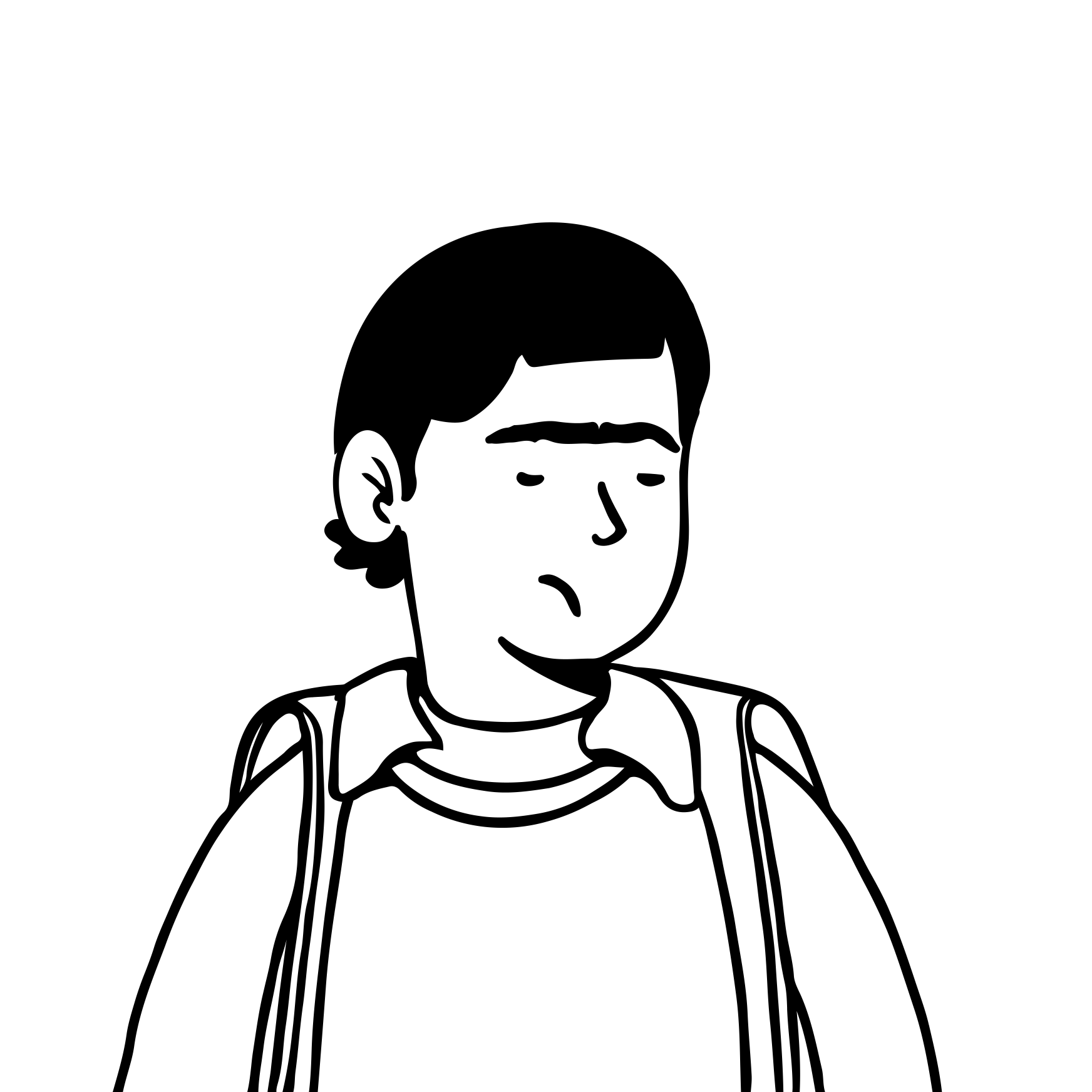
Chill, Jess. We'll just roll with it.
Meanings
The state of the atmosphere at a particular place and time as regards heat, cloudiness, dryness, sunshine, wind, rain, etc.
"The weather in London is often overcast and rainy."
To wear away or change the appearance of something through long exposure to the atmosphere.
"The rocks had been weathered by centuries of wind and rain."
To come safely through a difficult period or experience.
"The company managed to weather the financial crisis without filing for bankruptcy."
Collocations & Compounds
bad weather
Unpleasant atmospheric conditions, such as heavy rain, strong winds, or snow.
We had to cancel the picnic due to bad weather.
good weather
Pleasant atmospheric conditions, such as sunshine and mild temperatures.
The good weather made it a perfect day for the beach.
weather forecast
A prediction of future atmospheric conditions.
I always check the weather forecast before planning outdoor activities.
weather report
A description of current and predicted atmospheric conditions.
The weather report indicated a chance of thunderstorms this afternoon.
changing weather
Atmospheric conditions that are in the process of shifting.
The changing weather made it difficult to decide what to wear.
Idioms & Sayings
under the weather
Feeling slightly unwell or sick.
I'm feeling a bit under the weather today, so I'll stay home.
weather the storm
To survive a difficult period or situation.
The company managed to weather the storm of the economic recession.
fair-weather friend
A person who is only a friend when things are going well.
He turned out to be a fair-weather friend when I really needed help.
Etymology
The word 'weather' originates from the Old English word 'weder,' which referred to wind, storm, or fair weather. Its roots can be traced back to Proto-Germanic 'wedrōm' and further to the Proto-Indo-European root 'we-' meaning 'to blow.' This Indo-European root is also the source of words like 'wind' and 'vapor.' The evolution from the concept of 'blowing' to atmospheric conditions is a common linguistic development. The word entered Middle English as 'wedir' and has remained largely unchanged in spelling and meaning since then, reflecting its fundamental and ancient connection to the atmospheric phenomena it describes.