span
/spæn/
The word evokes a sense of connection or coverage across a gap. Whether dealing with physical distance or time, it implies a continuous stretch that bridges two distinct points. In a spatial context, it often carries an architectural or engineering connotation, suggesting stability and reach (e.g., the span of a bridge). It differs from 'width' by emphasizing the act of crossing over a void. When applied to time, it describes a bounded duration. While 'duration' is neutral, 'span' often suggests a limit or a capacity, as seen in terms like "attention span" or "life span," where the focus is on how long something can possibly last before ending.
💬Casual Conversation
Leo's attention span is non-existent today. He's totally zoning out.
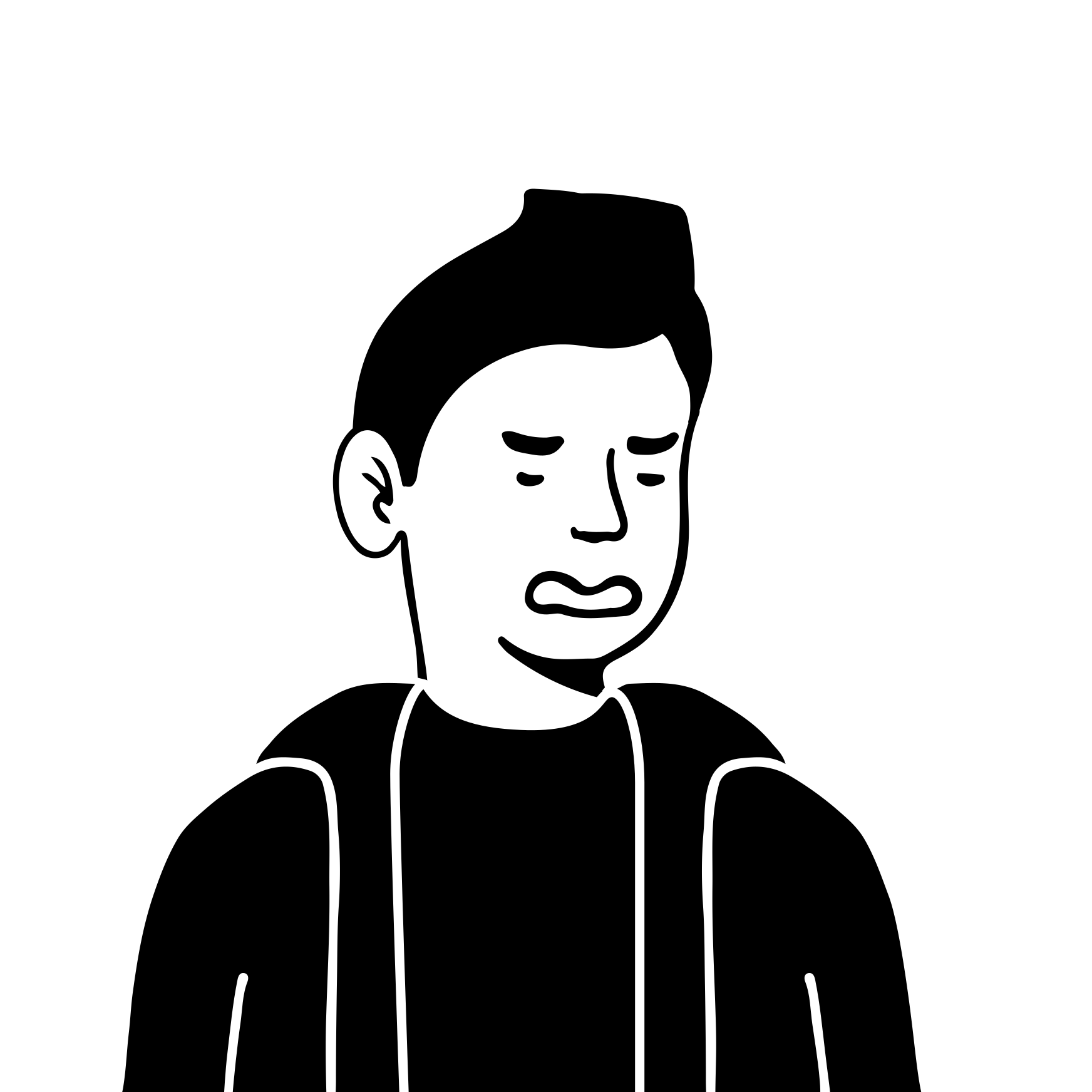

He gets that from you. Just deal with it.
Meanings
Etymology
Derived from the Old English word spanna, which referred to the distance from the tip of the thumb to the tip of the little finger when the hand is fully extended. This original measurement served as a rudimentary unit of length in early Germanic languages, eventually evolving from a specific physical measurement of the hand into a general term for any distance or duration.