respect
/ɹɪˈspɛkt/
The word carries a dual weight: one based on emotional admiration and the other on social boundaries. When used as an expression of esteem, it is an earned quality, often linked to authority, wisdom, or moral character.
In its more functional sense, it describes a form of restraint. It is not necessarily about liking someone, but about acknowledging their rights or space (e.g., "respecting privacy"). This creates a neutral, professional tone compared to the warmth of "admiration."
When used as a noun meaning "a particular aspect," the word shifts from an emotional state to a logical tool for categorization. It is common in formal analysis or debates to isolate specific points of comparison.
Uncountable when referring to the feeling of admiration you hold for a mentor ('He has immense respect for her'). Countable when discussing specific details or features of a subject ('The two plans differ in several respects').
💬Casual Conversation
my prof just gave me a B+ on that essay. honestly have some respect for my struggle.
my prof just gave me a B+ on that essay. honestly have some respect for my struggle.

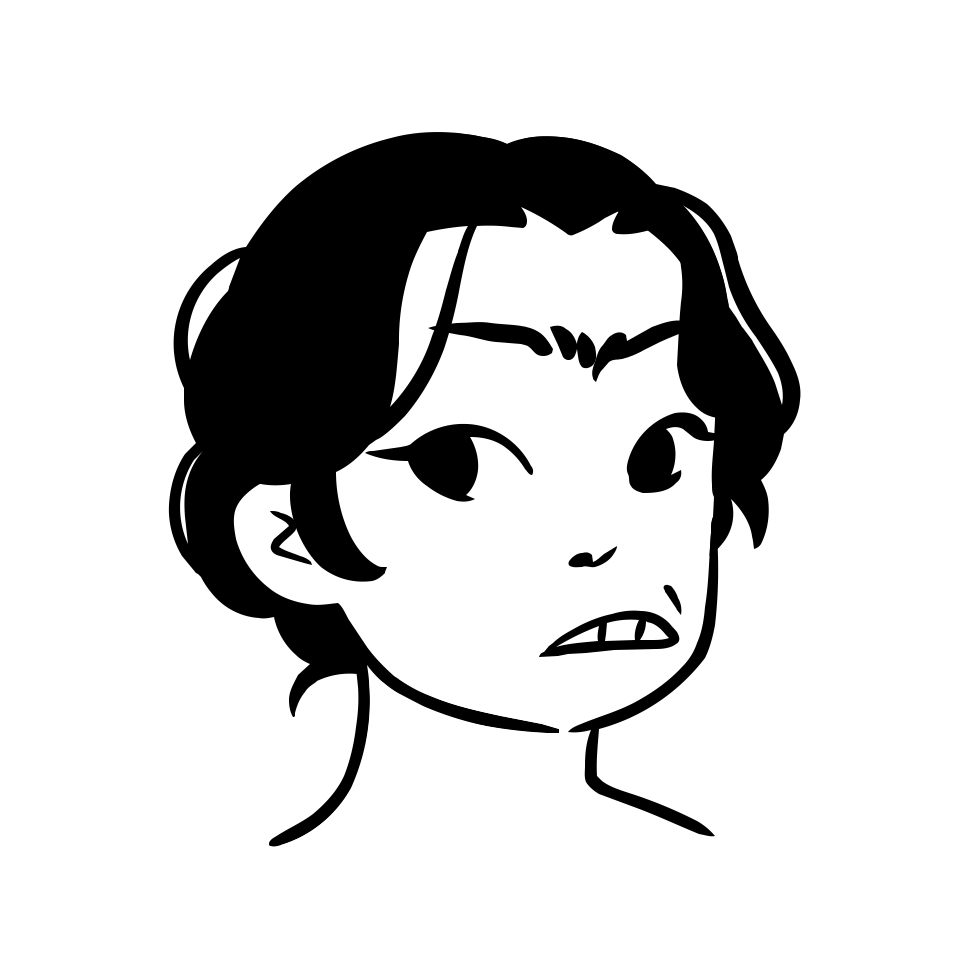
bet. sounds like a win tbh.
bet. sounds like a win tbh.
Meanings
A feeling of deep admiration for someone or something elicited by their abilities, qualities, or achievements.
He has the utmost respect for his former mentor.
A particular aspect, feature, or detail of a situation or person.
The two plans are similar in every respect.
To admire someone deeply due to their qualities or achievements.
I respect her for her courage and honesty.
Etymology
Derived from the Latin word respectus, which is the past participle of respicere, meaning to look back at. This is formed from the prefix re- meaning back and specere meaning to look. Originally, the term referred to a literal act of looking back, which evolved into the sense of considering something carefully or regarding someone with a particular feeling of esteem.