disturbance
/dɪˈstɜːbn̩s/
A break in the normal state of things, often characterized by noise, violence, or emotional agitation. It suggests an interruption of peace or stability that is unwelcome and intrusive. In a physical context, it refers to a commotion or a public brawl (e.g., 'a disturbance in the street'), carrying a connotation of disorder that requires intervention. In a psychological or medical sense, it describes a disruption of mental health or sleep patterns. Here, the feeling is one of imbalance or dysfunction rather than active chaos. Unlike 'disruption', which often implies a systemic break or a strategic interruption (like a disruptive technology), 'disturbance' usually feels more chaotic, irritating, or distressing.
💬Casual Conversation
Ugh, my parents are yelling again. This disturbance is killing my K/D.

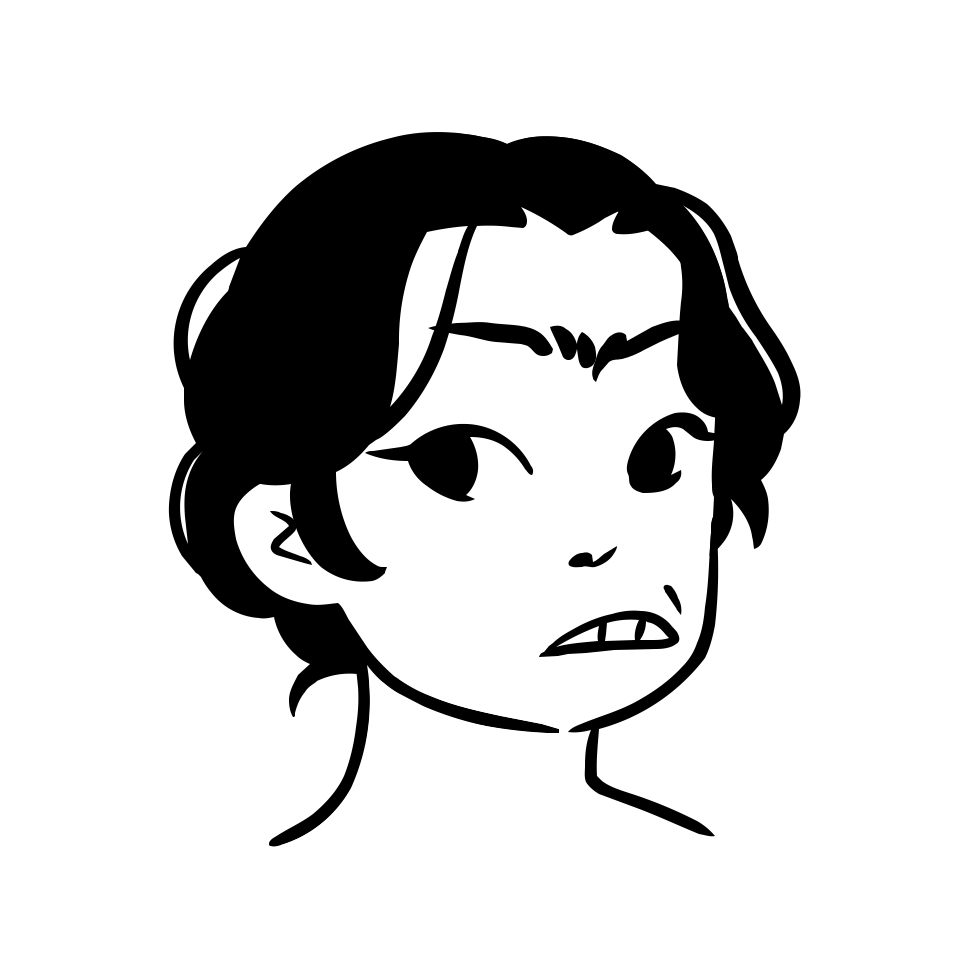
Damn that's crazy. Just mute them.
Meanings
An interruption of a settled state of peace, quiet, or order.
"The loud music caused a disturbance in the neighborhood."
A state of emotional agitation or mental distress.
"The news left her in a state of great emotional disturbance."
Collocations & Compounds
minor disturbance
A small event that interrupts the normal state of things or causes a slight problem.
There was a minor disturbance at the concert, but the police quickly resolved it.
civil disturbance
Disorderly conduct by a group of people, often involving public unrest or violence.
The government declared a state of emergency due to widespread civil disturbance.
public disturbance
An act that causes annoyance, alarm, or inconvenience to the public.
Loud music late at night can be considered a public disturbance.
commotion or disturbance
A state of confused and noisy disturbance.
The sudden commotion or disturbance in the street drew everyone's attention.
sensory disturbance
An impairment or disruption of the senses.
Migraines can cause visual sensory disturbance.
Idioms & Sayings
without disturbance
In a way that is not interrupted or disturbed.
He preferred to work in silence, without disturbance.
cause a disturbance
To create a situation that interrupts the normal peace or order.
Please do not cause a disturbance during the exam.
suffer from disturbance
To be negatively affected by an interruption or problem.
The ecosystem began to suffer from disturbance after the dam was built.
Etymology
The word 'disturbance' comes from the Latin verb 'disturbare', meaning 'to disturb, confuse, trouble'. It's formed from 'dis-' (apart, away) and 'turbare' (to throw into confusion, from 'turba', meaning 'a crowd, confusion'). It entered Middle English in the 14th century, initially referring to mental or emotional agitation, and later evolving to mean physical disruption or commotion.