close
/kləʊz/
The word functions as a bridge between physical barriers and emotional proximity. When used as a verb, it implies the completion of a circuit or the sealing of a gap, moving from an open state to a restricted one. As an adjective, it describes a lack of distance. This applies both physically (spatial proximity) and psychologically (intimacy). Unlike "near," which is often purely directional, "close" frequently suggests a tightness or intensity in the connection. In its noun form, it signifies finality. It carries a more formal and deliberate tone than "end," often suggesting a structured conclusion to a process or event.
Uncountable when referring to the general conclusion of a period or event ('bring things to a close'). Countable when referring to a specific residential dead-end street or cul-de-sac ('he lives at number 12 in the close').
💬Casual Conversation
Hey Mark, how close are we to getting that Q3 analysis buttoned up?

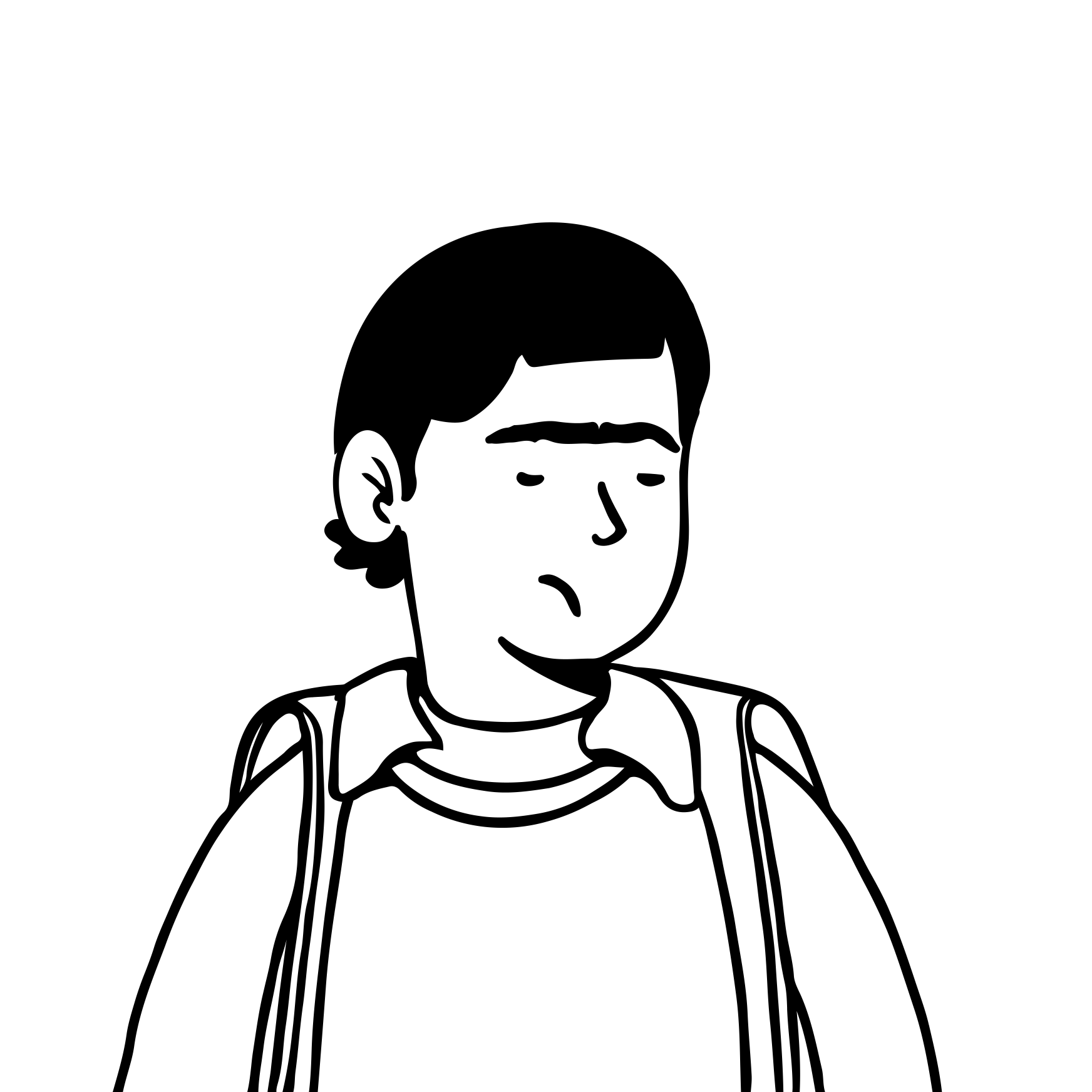
Uh, pretty close, dude. Just need to circle back on a few data points.
Meanings
To move something so that it covers an opening.
"Please close the door behind you."
To stop operating or cease to do business.
"The local library closes at 6 PM on Fridays."
Located a short distance away; near in space or time.
"The hotel is very close to the airport."
Having a strong emotional bond or relationship.
"She has a very close relationship with her sister."
Collocations & Compounds
close call
a situation where something bad almost happened
That was a close call; I almost missed my flight.
close quarters
a situation where people are in a small space together
They had to live in close quarters during the expedition.
close shave
an instance of narrowly escaping danger
The driver had a close shave with a deer on the highway.
close combat
fighting that takes place at very short range
The soldiers were trained for close combat.
close season
a period when it is illegal to hunt or catch a particular animal
Fishing is prohibited during the close season.
Phrasal Verbs
close down
to stop being in business
The factory had to close down due to lack of funding.
close off
to block a road or an opening
The police decided to close off the street.
close in
to surround someone or something
The enemy troops began to close in on the city.
close up
to shut something, such as a shop or a building, for the night or for a period
We need to close up the store by 9 PM.
Idioms & Sayings
close at hand
nearby in time or space
The holidays are close at hand.
close-mouthed
unwilling to talk or reveal information
He was very close-mouthed about his plans.
in close succession
happening one after another very quickly
The goals came in close succession.
Etymology
The word 'close' originates from Old French 'clos', meaning 'shut' or 'enclosed'. This, in turn, comes from the Latin 'clausus', the past participle of 'claudere', meaning 'to shut'. It entered Middle English around the 12th century, initially referring to something shut or enclosed, and gradually evolved to encompass the meanings of bringing things together, finishing, or being near.