Note: The translation for this entry is currently under quality review. Some content is temporarily displayed in English only.
uncertain
/ʌnˈsɜːtən/
It describes a state of instability or hesitation where a definitive answer or outcome is missing. Unlike "unknown," which suggests a total lack of information, "uncertain" often implies that some information exists but it is contradictory or insufficient to provide confidence.
When applied to situations, it carries a tone of precariousness or risk. It is the feeling of standing on shifting sand where the next step cannot be predicted with certainty.
When applied to people, it denotes a psychological state of doubt or fragility. It differs from "indecisive" (which can be a personality trait) by often focusing on a specific moment of hesitation caused by external ambiguity.
💬Casual Conversation
I'm super uncertain about how to even tackle this electricity bill, it's wild.

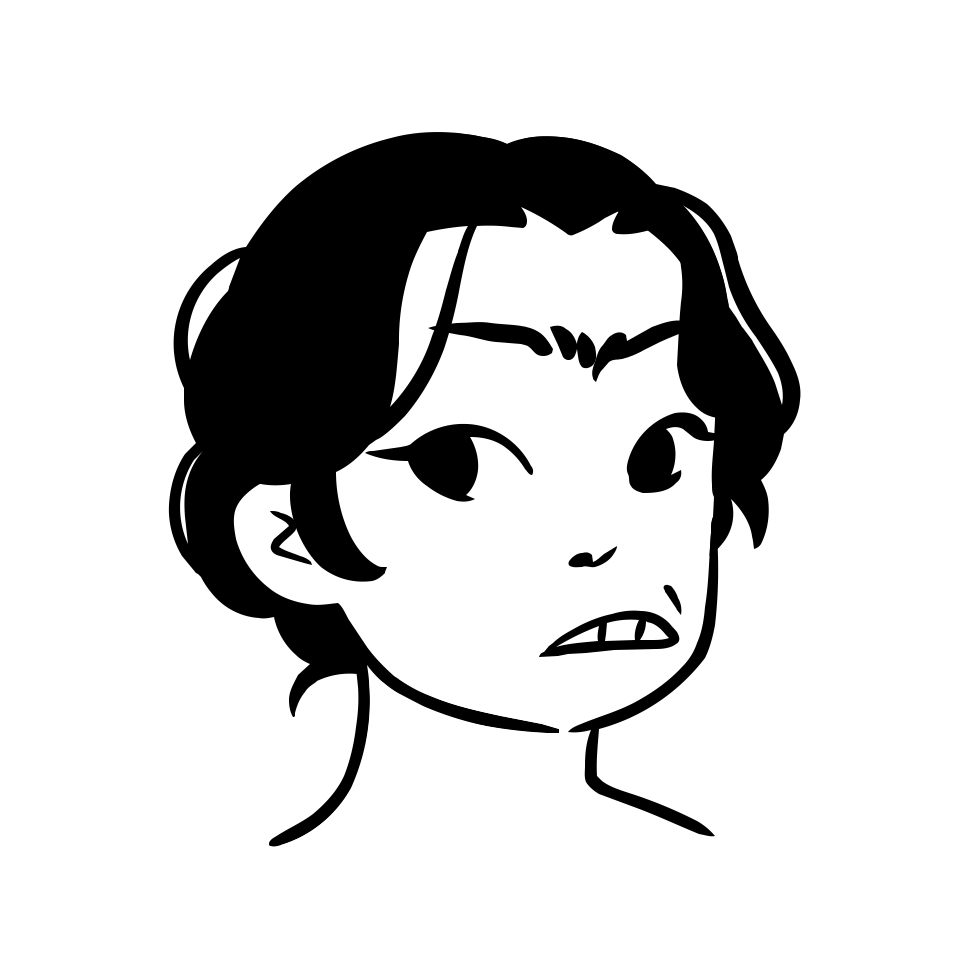
Just pay it online like always. What's the big deal?
Meanings
Examples
I am uncertain.
Collocations & Compounds
uncertain future
A future about which there is doubt or lack of knowledge.
The company faces an uncertain future due to the economic downturn.
uncertain economic conditions
Economic circumstances that are unpredictable and unstable.
Investors are hesitant to commit funds during uncertain economic conditions.
uncertain outcome
A result that is not known or definite.
The final score of the match remained uncertain outcome until the last minute.
uncertain times
Periods characterized by doubt, instability, or lack of clear direction.
Many people felt anxious living through uncertain times.
uncertain situation
A circumstance that is not clear, settled, or definite.
The police are investigating the uncertain situation at the border.
Etymology
The word 'uncertain' comes from the Latin word 'incertus', meaning 'not fixed, not sure, doubtful'. It's formed from the prefix 'in-' (meaning 'not') and 'certus' (meaning 'sure, settled'). This Latin root was adopted into Old French as 'incertain' and then entered Middle English in the 14th century.