Note: The translation for this entry is currently under quality review. Some content is temporarily displayed in English only.
massive
This word conveys a sense of overwhelming weight and solidity. It is not just about size, but about a presence that dominates the space or the situation. When describing a physical object, it suggests something heavy and immovable, like a boulder or a mountain.
In a non-physical sense, it describes an intensity that is almost crushing or impossible to ignore. It is frequently used in news reports and business contexts to emphasize the scale of a disaster, a success, or a change, moving beyond simple bigness into the realm of the monumental.
💬Casual Conversation
I've just had a massive epiphany about our synergy strategy!
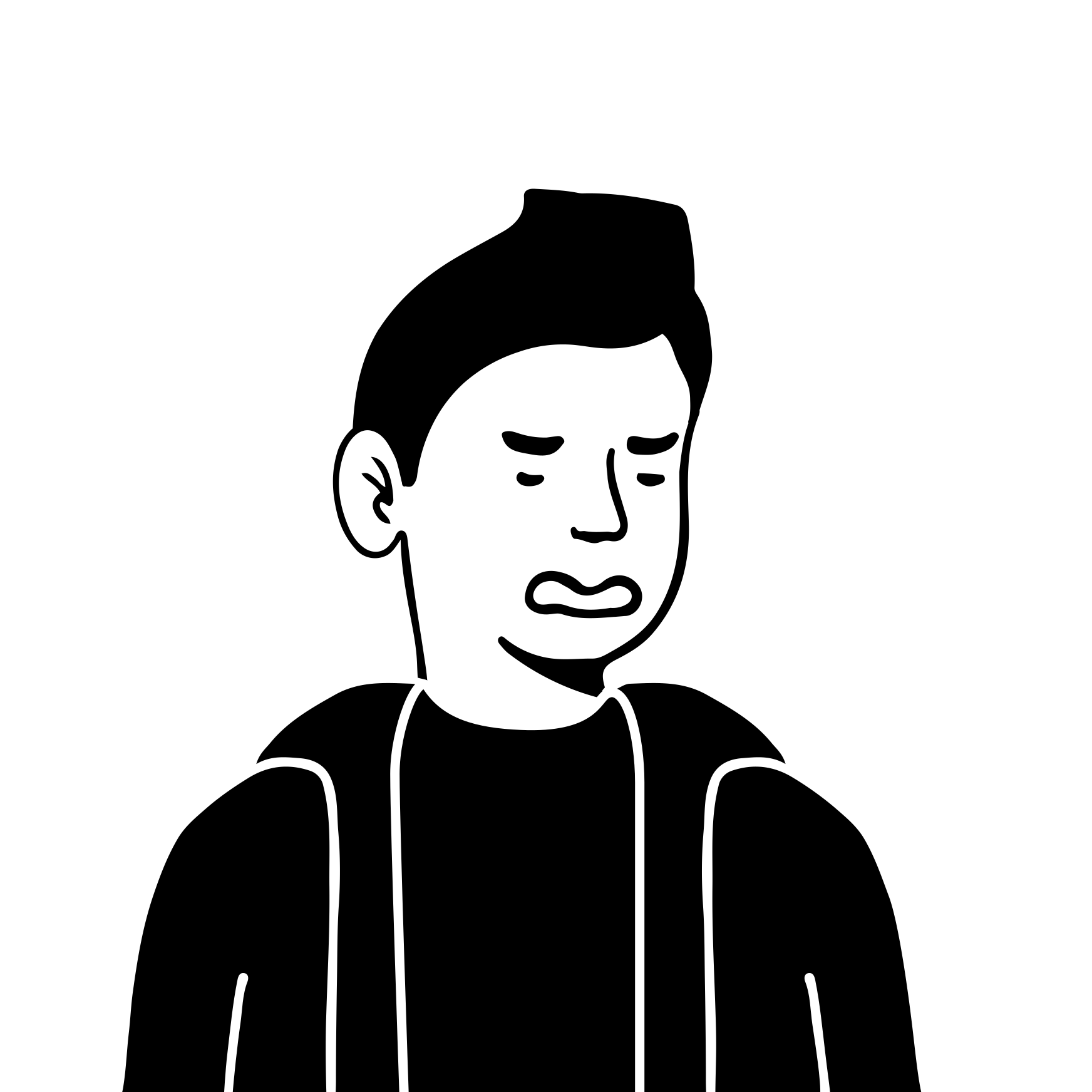

I'm on my third coffee and I literally cannot deal with this.
Meanings
Examples
Look at that massive dog! It is literally the size of a pony.
I can't believe we just took a massive loss on that trade.
Wait, is that a massive hole in the drywall?
I have a massive headache and I can't even think straight.
Sir, the massive leak in your basement is causing structural failure.
My portfolio shows a massive increase in organic reach.
God, this project is a massive waste of my time.
Why is there a massive pile of laundry on my bed?
I just had a massive realization about why this isn't working.
Collocations & Compounds
massive heart attack
a severe medical event involving the heart
He suffered a massive heart attack last year.
massive scale
an extremely large extent or size
The project was implemented on a massive scale.
massive amount
a very large quantity
They spent a massive amount of money on the wedding.
massive impact
a powerful or significant effect
The new law had a massive impact on small businesses.
massive success
an overwhelming achievement
The product launch was a massive success.
Cultural Context
When we think of something as massive, we often evoke the feeling of "monumentality"—the psychological effect of scale that makes a human feel insignificant. This is the core of Brutalist architecture, a movement that peaked in the mid-20th century. Characterized by raw, exposed concrete (béton brut), Brutalism sought to express honesty in materials and function through massive, imposing forms.
These structures were designed to be "massive" not just for utility, but as a statement of social stability and strength. However, the sheer scale of these buildings often created a paradoxical effect; while intended to be egalitarian and protective, their massive presence often felt oppressive or alienating to the people living within them. This tension between the massive scale and human comfort is why many Brutalist landmarks are now polarizing, serving as towering reminders of a utopian vision that sometimes forgot the individual in favor of the monolith.